Rory Walsh - Böcker
Visar alla böcker från författaren Rory Walsh. Handla med fri frakt och snabb leverans.
2 produkter
2 produkter
181 kr
Skickas inom 7-10 vardagar
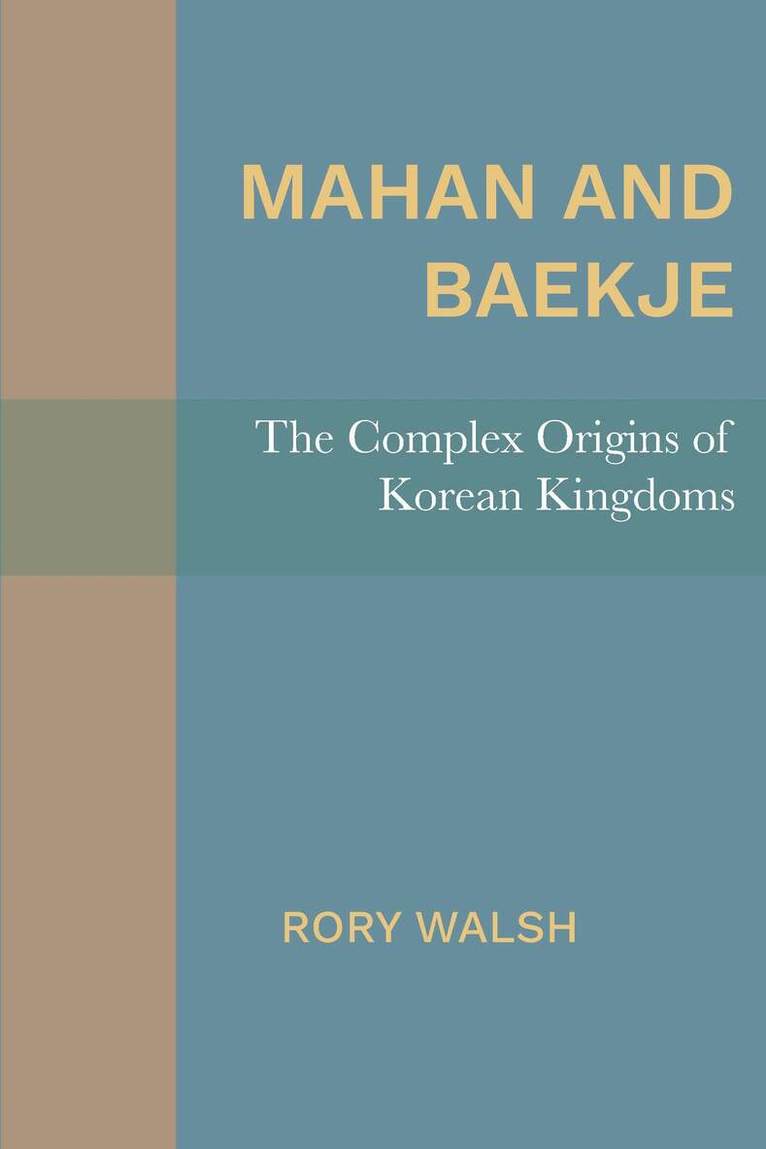
Mahan and Baekje is a pioneering study of the Korean past from the perspective of everyday objects: ceramics made, used, and left behind by ancient Koreans themselves. Focusing on the third to fifth centuries CE in southwestern Korea, this book reexamines the social, political, and economic construction of the interconnected societies known as Mahan and the kingdom of Baekje. Pottery, which played central roles in Mahan’s and Baekje’s culinary practices, community gatherings, trade, and ritual, now sheds new light on the origins of Korean civilization. Using advanced archaeological and geochemical techniques, this book traces the production, exchange, and use of pottery from Mahan and Baekje. The patterns reveal the shared underpinnings of Mahan and Baekje political economy, showing that the Baekje kingdom developed locally and not as the result of outside forces. Long-distance trade in Mahan and Baekje suggest a cosmopolitan ethos with roots in the deep past, while smaller scale exchanges hint at the complex web of social interactions that typified early Korean societies. Mahan and Baekje provides exciting new details of life at an epochal moment in ancient Korea.
738 kr
Kommande
Korea Around the Table: Food and Global Korean Identities brings together leading scholars to examine how Korean cuisine encodes identity, memory, and belonging across local and global contexts. From the early adoption of chili peppers on the Korean peninsula to the proliferation of sundubu jjigae restaurants in suburban New Jersey, this groundbreaking volume shows how food is not merely sustenance but a powerful site where history, culture, and community intersect. As Korean food enters the global marketplace, the idea of what is and is not authentic Korean food becomes more contentious. Korea, long marked by division and diaspora, emerges here as more heterogeneous than nationalist narratives suggest, with its food culture continually reshaped by intercultural exchanges. The growing worldwide popularity of Korean cuisine highlights the tension between preserving traditions and reducing "Koreanness" to a fixed menu of recognizable dishes. Drawing on perspectives from sociology, history, literature, and anthropology, the contributors explore how everyday eating practices express and contest social identities, raising questions of gender, class, ethnicity, race, and the meanings of being Korean in the twenty-first century. As the first edited volume devoted entirely to food in Korea and the Korean diaspora, Korea Around the Table offers a vital resource for Korean studies, food studies, and global cultural history, while inviting readers to consider how something as ordinary as a meal can illuminate the most complex dimensions of identity.