Ros Ballaster - Böcker
Visar alla böcker från författaren Ros Ballaster. Handla med fri frakt och snabb leverans.
10 produkter
10 produkter
1 219 kr
Skickas inom 5-8 vardagar
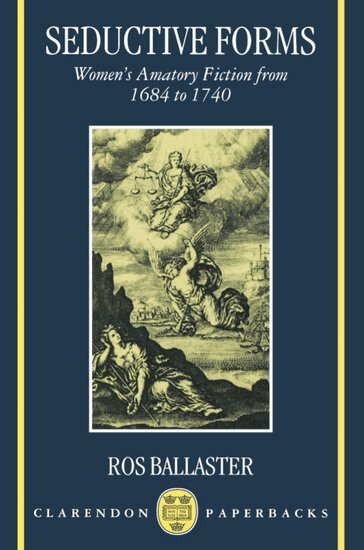
Historicist and feminist accounts of the `rise of the novel' have neglected the phenomenon of the professional woman writer in England prior to the advent of the sentimental novel in the 1740s. Seductive Forms explores the means by which the three leading Tory women novelists of the late seventeenth and early eighteenth centuries challenged and reworked both contemporary gender ideologies and generic convention. The seduction plot provided Aphra Behn, Delarivier Manley, and Eliza Haywood with a vehicle for dramatizing their own appropriation of the `masculine' power of fiction-making. Seduction is employed in these fictions as a metaphor for both novelistic production (the seduction of the reader by the writer) and party political machination (the seduction of the public by the politician). This challenging and lively book also explores the debts early prose fiction owed to French seventeenth-century models of fiction-writing and argues that Behn, Manley, and Haywood succeed in producing a distinctively `English' and female `form' for the amatory novel.
718 kr
Skickas inom 5-8 vardagar
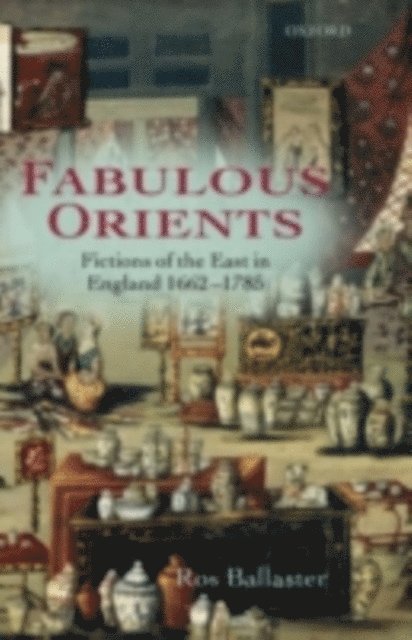
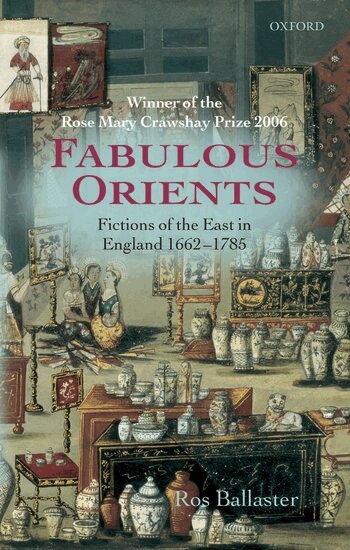
Narrative moves. Stories migrate from one culture to another, over vast distances sometimes, but their path is often difficult to trace and obscured by time. Fabulous Orients looks at the traffic of narrative between Orient and Occident in the eighteenth century, and challenges the assumption that has dominated since the publication of Edward Said's Orientalism (1978) that such traffic is always one-way. Eighteenth-century readers in the West came to draw their mental maps of oriental territories and distinctions between them from their experience of reading tales 'from' the Orient. In this proto-colonial period the English encounter with the East was largely mediated through the consumption of material goods such as silks, indigo, muslin, spices, or jewels, imported from the East, together with the more 'moral' traffic of narratives about the East, both imaginary and ethnographic. Through analyses of fictional representations (including travellers' accounts, letter narratives such as Letters Writ by a Turkish Spy, and popular sequences of tales such as the Arabian Nights Entertainments) of four oriental territories (Persia, Turkey, China and India), Ros Ballaster demonstrates the ways in which the East came to be understood as a source of story, a territory of fable and narrative. Fabulous Orients is structured according to territory rather than genre. Each section opens by re-narrating an oriental story in which a feminine character serves to 'figure' western desire for the territory she represents: the courtesan queen of the Ottoman seraglio Roxolana; the riddling Chinese princess Turandocte; and the illusory sati of India, Canzade. The book goes on to explore the range of fabulous writings relating to each territory in order to illustrate how certain narrative tropes can come to dominate its representation: the conflict between the male look and female speech staged in the seraglio in the case of Turkey and Persia, the inauthenticity and/or dullness associated with China and its products such as porcelain, and the illusory dreams that are woven in the space of India and associated with its textile industries. This is the first book-length study of the oriental tale to appear for almost a century. Informed by recent historiographical and literary re-assessments of western constructions of the East, it develops an original argument about the use of narrative as a form of sympathetic and imaginative engagement with otherness, a disinvestment of the self rather than a confident expression of colonial or imperial ambition.
1 237 kr
Skickas inom 5-8 vardagar
Narrative moves. Stories migrate from one culture to another, over vast distances sometimes, but their path is often difficult to trace and obscured by time. Fabulous Orients looks at the traffic of narrative between Orient and Occident in the eighteenth century, and challenges the assumption that has dominated since the publication of Edward Said's Orientalism (1978) that such traffic is always one-way. Eighteenth-century readers in the West came to draw their mental maps of oriental territories and distinctions between them from their experience of reading tales 'from' the Orient.In this proto-colonial period the English encounter with the East was largely mediated through the consumption of material goods such as silks, indigo, muslin, spices, or jewels, imported from the East, together with the more 'moral' traffic of narratives about the East, both imaginary and ethnographic. Through analyses of fictional representations (including travellers' accounts, letter narratives such as Letters Writ by a Turkish Spy, and popular sequences of tales such as the Arabian Nights Entertainments) of four oriental territories (Persia, Turkey, China and India), Ros Ballaster demonstrates the ways in which the East came to be understood as a source of story, a territory of fable and narrative.Fabulous Orients is structured according to territory rather than genre. Each section opens by re-narrating an oriental story in which a feminine character serves to 'figure' western desire for the territory she represents: the courtesan queen of the Ottoman seraglio Roxolana; the riddling Chinese princess Turandocte; and the illusory sati of India, Canzade. The book goes on to explore the range of fabulous writings relating to each territory in order to illustrate how certain narrative tropes can come to dominate its representation: the conflict between the male look and female speech staged in the seraglio in the case of Turkey and Persia, the inauthenticity and/or dullness associated with China and its products such as porcelain, and the illusory dreams that are woven in the space of India and associated with its textile industries. This is the first book-length study of the oriental tale to appear for almost a century. Informed by recent historiographical and literary re-assessments of western constructions of the East, it develops an original argument about the use of narrative as a form of sympathetic and imaginative engagement with otherness, a disinvestment of the self rather than a confident expression of colonial or imperial ambition.
2 472 kr
Skickas inom 5-8 vardagar
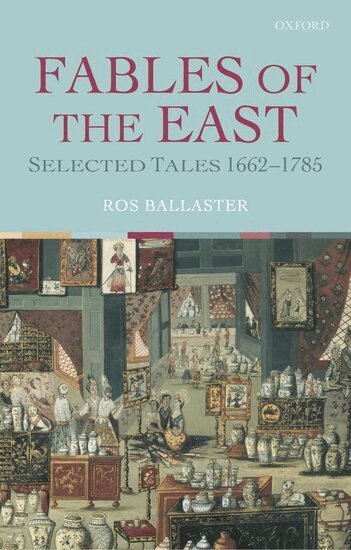
Fables of the East is the first anthology to provide textual examples of representations of oriental cultures in the early modern period drawn from a variety of genres: travel writing, histories, and fiction. Organized according to genre in order to illustrate the diverse shapes the oriental tale adopted in the period, the extracts cover the popular sequence of oriental tales, the pseudo-oriental tale, travels and history, and letter fictions. Authors represented range from the familiar - Joseph Addison, Horace Walpole, Montesquieu, Oliver Goldsmith - to authors of great popularity in their own time who have since faded in reputation such as James Ridley, Alexander Dow, and Eliza Haywood. The selection has been devised to call attention to the diversity in the ways that different oriental cultures are represented to English readers. Readers of this anthology will be able to identify a contrast between the luxury, excess, and sexuality associated with Islamic Turkey, Persia, and Mughal India and the wisdom, restraint, and authority invested in Brahmin India and Confucian China. Fables of the East redraws the cultural map we have inherited of the eighteenth century, demonstrating contemporary interest in gentile and 'idolatrous' religions, in Confucianism and Buddhism especially, and that the construction of the Orient in the western imagination was not exclusively one of an Islamic Near and Middle East. Ros Ballster's introduction addresses the importance of the idea of 'fable' to traditions of narrative and representations of the East. Each text is accompanied by explanatory head and footnotes, also provided is a glossary of oriental terms and places that were familiar to the texts' eighteenth-century readers.
758 kr
Skickas inom 5-8 vardagar
Fables of the East is the first anthology to provide textual examples of representations of oriental cultures in the early modern period drawn from a variety of genres: travel writing, histories, and fiction. Organized according to genre in order to illustrate the diverse shapes the oriental tale adopted in the period, the extracts cover the popular sequence of oriental tales, the pseudo-oriental tale, travels and history, and letter fictions. Authors represented range from the familiar - Joseph Addison, Horace Walpole, Montesquieu, Oliver Goldsmith - to authors of great popularity in their own time who have since faded in reputation such as James Ridley, Alexander Dow, and Eliza Haywood. The selection has been devised to call attention to the diversity in the ways that different oriental cultures are represented to English readers. Readers of this anthology will be able to identify a contrast between the luxury, excess, and sexuality associated with Islamic Turkey, Persia, and Mughal India and the wisdom, restraint, and authority invested in Brahmin India and Confucian China. Fables of the East redraws the cultural map we have inherited of the eighteenth century, demonstrating contemporary interest in gentile and 'idolatrous' religions, in Confucianism and Buddhism especially, and that the construction of the Orient in the western imagination was not exclusively one of an Islamic Near and Middle East. Ros Ballster's introduction addresses the importance of the idea of 'fable' to traditions of narrative and representations of the East. Each text is accompanied by explanatory head and footnotes, also provided is a glossary of oriental terms and places that were familiar to the texts' eighteenth-century readers.
608 kr
Skickas inom 10-15 vardagar
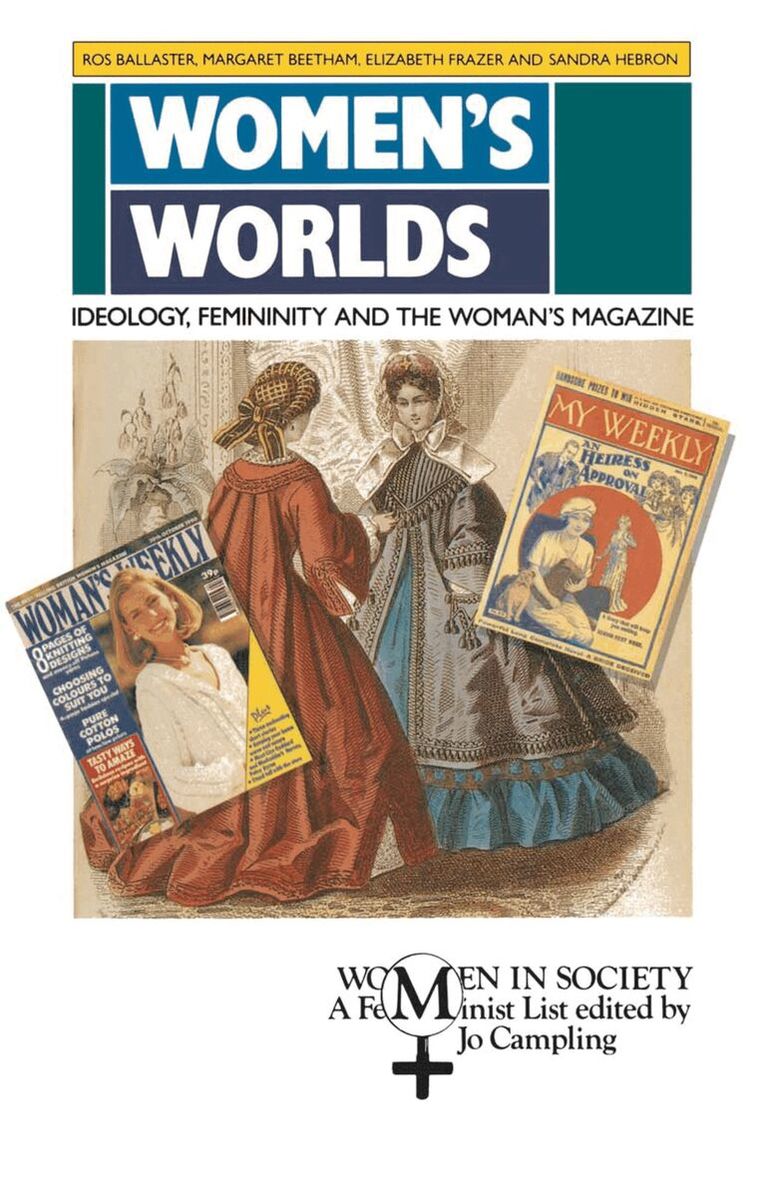
This book integrates new material, using sources from the eighteenth and nineteenth century periodical press, research with contemporary readers, the authors' critical reading of past and present magazines, and a clear discussion of theoretical approaches from literary criticism. The development of the genre, and its part in the historical process of forging modern definitions of gender, class and race are analysed through critical readings and a discussion of readers' negotiations with the contradictory pleasures of the magazine, and its constricting ideal of femininity.
1 620 kr
Skickas inom 5-8 vardagar
"An erotic scandal chronicle so popular it became a byword...Expertly tailored for contemporary readers. It combines scurrilous attacks on the social and political celebritites of the day, disguised just enough to exercise titillating speculatuion, with luscious erotic tales." --Belles Lettres This story concerns the return of to earth of the goddess of Justice, Astrea, to gather information about private and public behavior on the island of Atalantis. Manley drew on her experience as well as on an obsessive observation of her milieu to produce this fast paced narrative of political and erotic intrigue.
175 kr
Skickas inom 7-10 vardagar
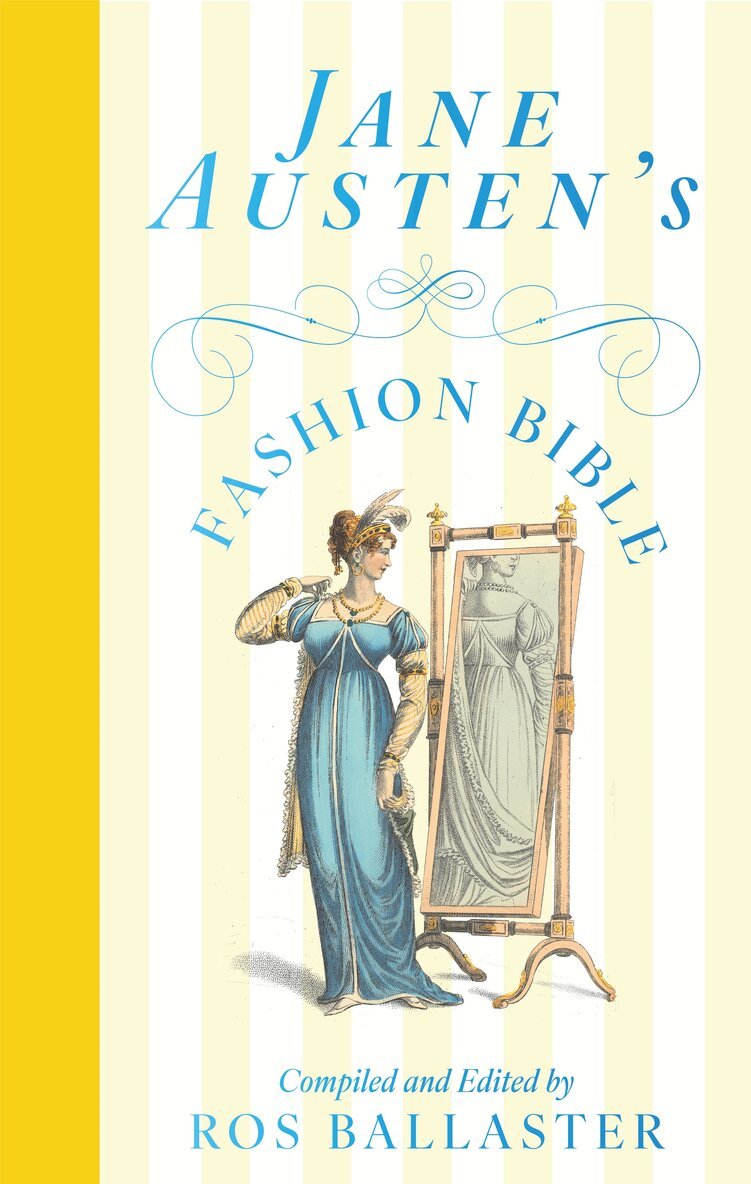
“A stunning gift edition” - Hasty Book List “Janeites will treasure this.” - Publishers Weekly“Packed with charm and lovely illustrations, this is tailor-made for Austen fans” - BooklistTwo beautifully crafted worlds are brought together in this celebration of Regency fashion and the writing of Jane Austen.Exquisite colour drawings from Regency magazine La Belle Assemblée and their entertaining descriptions are matched with much-loved passages from Jane Austen’s published novels, letters and manuscript fiction. Professor Ros Ballaster’s lively commentary guides the reader through this fascinating book.From elaborate evening gowns and elegant walking dresses to charming seaside outfits, Jane Austen's Fashion Bible brings to life the world of Jane Austen.
Del 9 - Studies in the Eighteenth Century
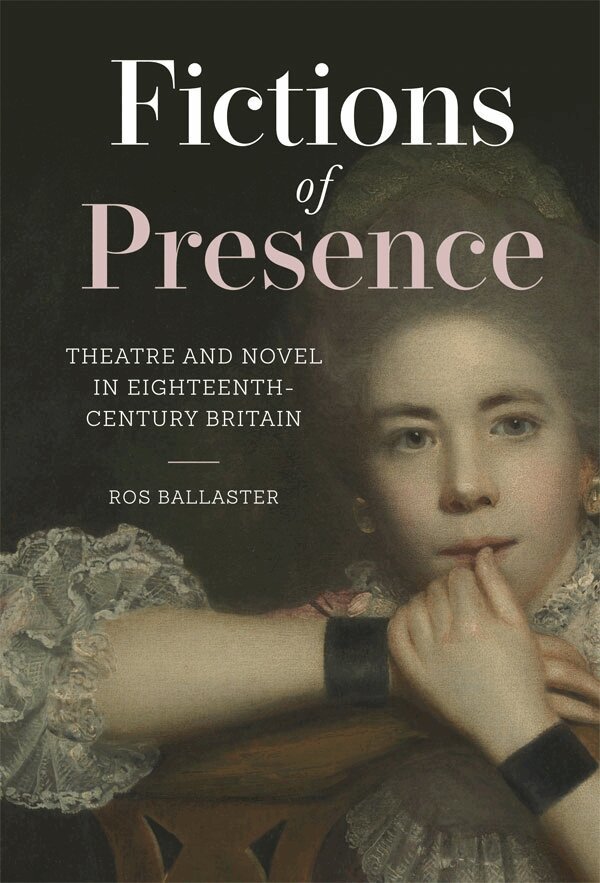
Fictions of Presence
Theatre and Novel in Eighteenth-Century Britain
Inbunden, Engelska, 2020
1 334 kr
Skickas inom 7-10 vardagar
An absorbing study of the contested embodiment of the idea of "presence" in the plays and novels of the eighteenth century.In the years following the 1737 Licensing Act, the English stage found itself for the first time facing serious competition from the novel - newly respectable and increasingly fashionable. But the story is not one of theatre's decline and the novel's rise. As Ros Ballaster shows in this lively and innovative study, the relationship between the two media was one of an intensely creative and productive rivalry. Novelists sent their heroes to the theatre, dramatists appropriated the plots of popular novels, the celebrity status of actors was advanced through guest appearances in printed prose fictions. Some figures, like Richardson's virtuous serving maid Pamela, or Sterne's eccentrichumourist Tristram Shandy, acquired such independent lives in the minds of the public that they migrated into the mainstream of popular culture.Fictions of Presence describes how major authors of the period - Eliza Haywood, Henry Fielding, Charlotte Lennox and Oliver Goldsmith - spanned both genres. It charts the movement of popular fictional characters between stage and page. And it looks at the representation of contemporary audiences and readers in the new types of the (female) mimic and the (male) critic. Crucially, Ballaster delineates the ground over which the two media competed: the ability to create 'presence' - a sense of being present with the moment of action, of finding 'being' in fictional worlds - in the mind's eye of readers and theatregoers. In so doing, she not only illuminates the shared history of the theatre and the novel, but describes the power of aesthetic experience itself.
Del 9 - Studies in the Eighteenth Century
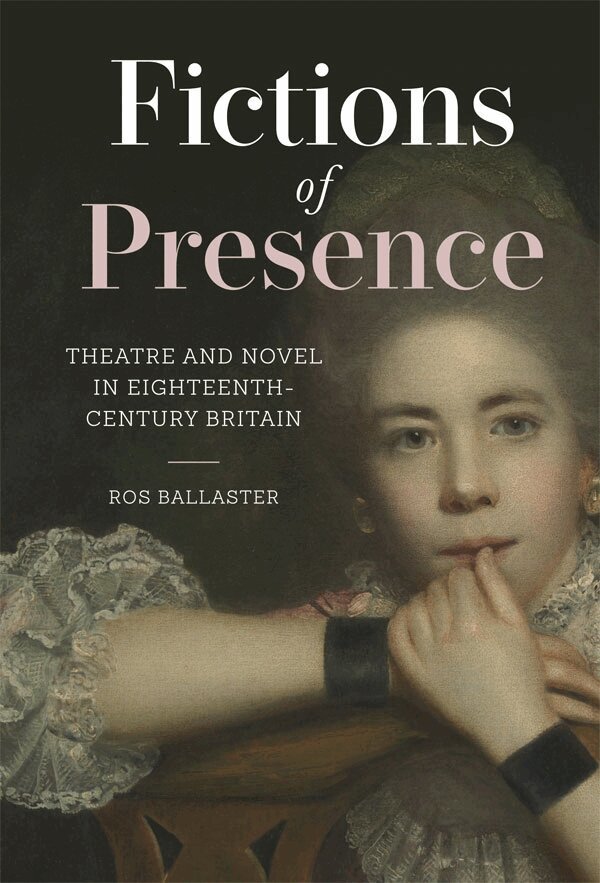
Fictions of Presence
Theatre and Novel in Eighteenth-Century Britain
Häftad, Engelska, 2024
385 kr
Skickas inom 7-10 vardagar
An absorbing study of the contested embodiment of the idea of "presence" in the plays and novels of the eighteenth century.In the years following the 1737 Licensing Act, the English stage found itself for the first time facing serious competition from the novel - newly respectable and increasingly fashionable. But the story is not one of theatre's decline and the novel's rise. As Ros Ballaster shows in this lively and innovative study, the relationship between the two media was one of an intensely creative and productive rivalry. Novelists sent their heroes to the theatre, dramatists appropriated the plots of popular novels, the celebrity status of actors was advanced through guest appearances in printed prose fictions. Some figures, like Richardson's virtuous serving maid Pamela, or Sterne's eccentrichumourist Tristram Shandy, acquired such independent lives in the minds of the public that they migrated into the mainstream of popular culture.Fictions of Presence describes how major authors of the period - Eliza Haywood, Henry Fielding, Charlotte Lennox and Oliver Goldsmith - spanned both genres. It charts the movement of popular fictional characters between stage and page. And it looks at the representation of contemporary audiences and readers in the new types of the (female) mimic and the (male) critic. Crucially, Ballaster delineates the ground over which the two media competed: the ability to create 'presence' - a sense of being present with the moment of action, of finding 'being' in fictional worlds - in the mind's eye of readers and theatregoers. In so doing, she not only illuminates the shared history of the theatre and the novel, but describes the power of aesthetic experience itself.