Rosalva Aída Hernández Castillo - Böcker
Visar alla böcker från författaren Rosalva Aída Hernández Castillo. Handla med fri frakt och snabb leverans.
3 produkter
3 produkter
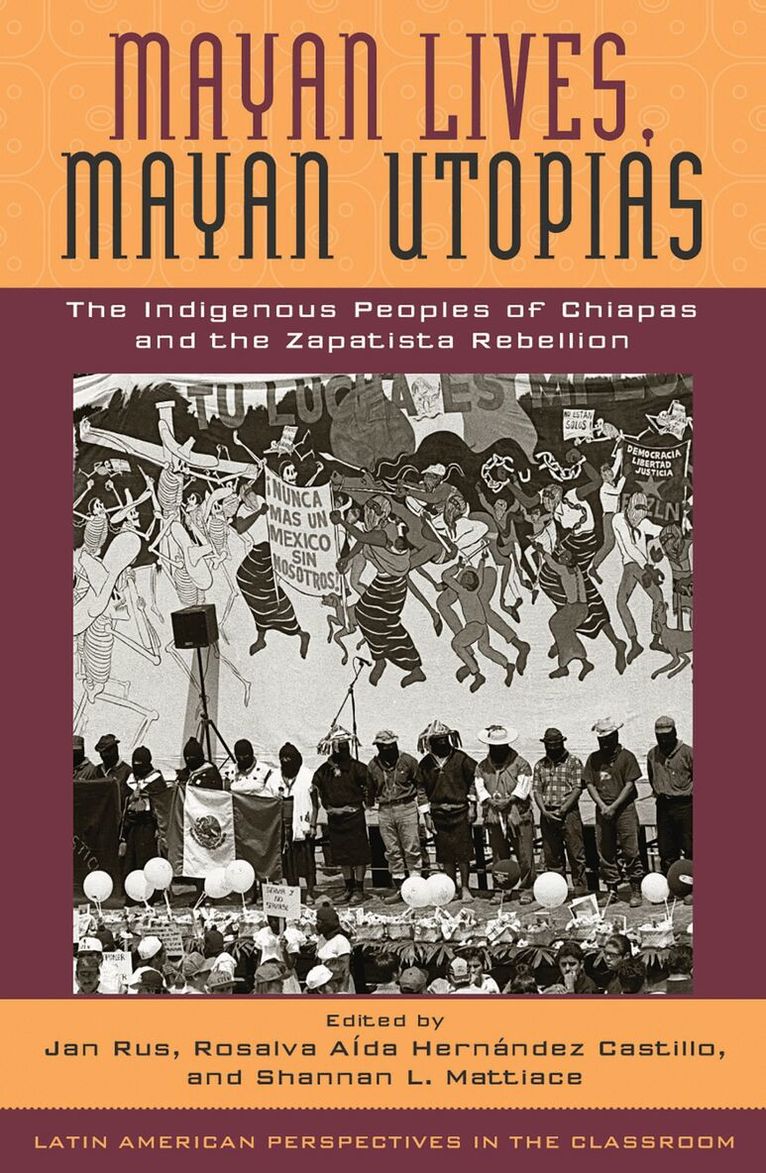
Mayan Lives, Mayan Utopias
The Indigenous Peoples of Chiapas and the Zapatista Rebellion
Inbunden, Engelska, 2003
2 022 kr
Skickas inom 10-15 vardagar
The dramatic January 1, 1994, emergence of the Zapatista Army of National Liberation (EZLN) in Chiapas, Mexico, brought the state's indigenous peoples to the attention of the international community. Yet indigenous peoples in Chiapas had been politically active and organized for years prior to the uprising. This compelling volume examines in detail these local and regional histories of power and resistance, powerfully bolstered by gripping and heartrending details of oppression and opposition. Situated broadly within the field of political anthropology, the authors trace the connections between indigenous culture and indigenous resistance. Their case studies include the Tzotzils and Tzeltals of the highland region, the Tojolabals of eastern Chiapas, northern Ch'ol communities, the Mams of eastern and southeastern Chiapas, and the settler communities of the Lacandon rain forest. In the wake of the Chiapas rebellion, all of these groups have increasingly come together around common goals, the most important of which is autonomy. Three essays focus specifically on the issue of Indian autonomy—in both Zapatista and non-Zapatista communities. Offering a consistent and cohesive vision of the complex evolution of a region and its many cultures and histories, this work is a fundamental source for understanding key issues in nation building. In a unique collaboration, the book brings together recognized authorities who have worked in Chiapas for decades, many linking scholarship with social and political activism. Their combined perspectives, many previously unavailable in English, make this volume the most authoritative, richly detailed, and authentic work available on the people behind the Zapatista movement.
Mayan Lives, Mayan Utopias
The Indigenous Peoples of Chiapas and the Zapatista Rebellion
Häftad, Engelska, 2003
833 kr
Skickas inom 10-15 vardagar
The dramatic January 1, 1994, emergence of the Zapatista Army of National Liberation (EZLN) in Chiapas, Mexico, brought the state's indigenous peoples to the attention of the international community. Yet indigenous peoples in Chiapas had been politically active and organized for years prior to the uprising. This compelling volume examines in detail these local and regional histories of power and resistance, powerfully bolstered by gripping and heartrending details of oppression and opposition. Situated broadly within the field of political anthropology, the authors trace the connections between indigenous culture and indigenous resistance. Their case studies include the Tzotzils and Tzeltals of the highland region, the Tojolabals of eastern Chiapas, northern Ch'ol communities, the Mams of eastern and southeastern Chiapas, and the settler communities of the Lacandon rain forest. In the wake of the Chiapas rebellion, all of these groups have increasingly come together around common goals, the most important of which is autonomy. Three essays focus specifically on the issue of Indian autonomy—in both Zapatista and non-Zapatista communities. Offering a consistent and cohesive vision of the complex evolution of a region and its many cultures and histories, this work is a fundamental source for understanding key issues in nation building. In a unique collaboration, the book brings together recognized authorities who have worked in Chiapas for decades, many linking scholarship with social and political activism. Their combined perspectives, many previously unavailable in English, make this volume the most authoritative, richly detailed, and authentic work available on the people behind the Zapatista movement.
410 kr
Skickas inom 5-8 vardagar
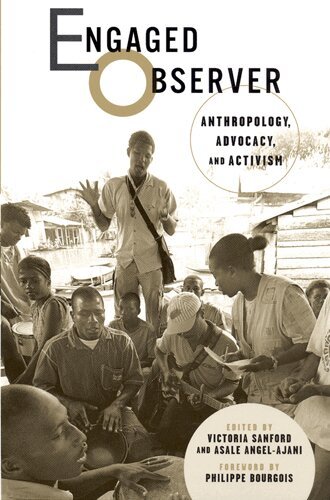
Anthropology has long been associated with an ethos of “engagement.” The field’s core methods and practices involve long-term interpersonal contact between researchers and their study participants, giving major research topics in the field a distinctively human face. Can research findings be authentic and objective? Are anthropologists able to use their data to aid the participants of their study, and is that aid always welcome?In Engaged Observer, Victoria Sanford and Asale Angel-Ajani bring together an international array of scholars who have been embedded in some of the most conflict-ridden and dangerous zones in the world to reflect on the role and responsibility of anthropological inquiry. They explore issues of truth and objectivity, the role of the academic, the politics of memory, and the impact of race, gender, and social position on the research process. Through ethnographic case studies, they offer models for conducting engaged research and illustrate the contradictions and challenges of doing so.