Rosella Cappella Zielinski - Böcker
Visar alla böcker från författaren Rosella Cappella Zielinski. Handla med fri frakt och snabb leverans.
5 produkter
5 produkter
875 kr
Skickas inom 7-10 vardagar
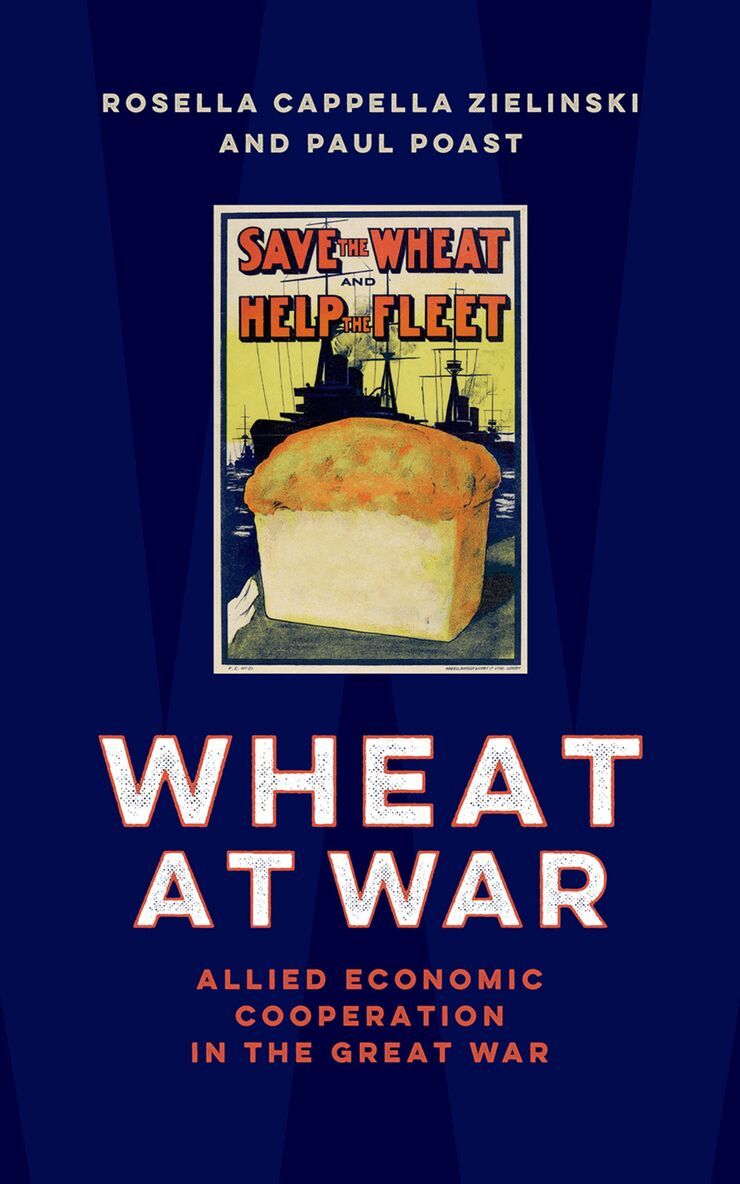
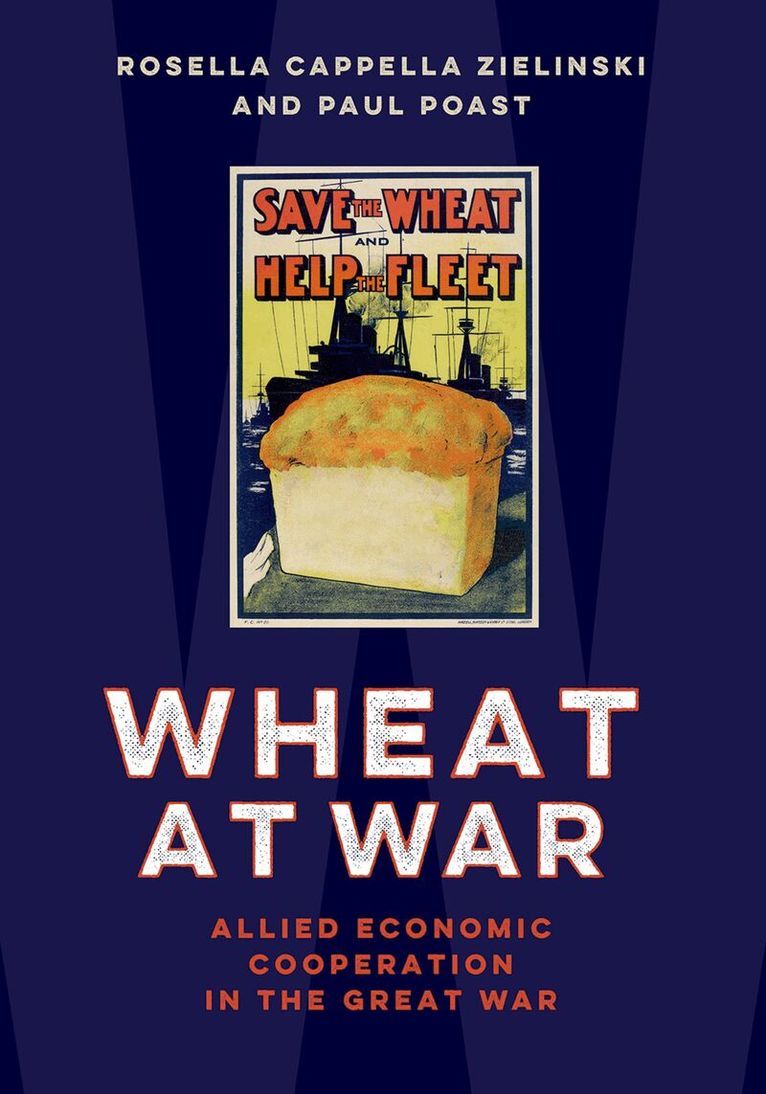
The battlefields were not the only places that threatened death during World War I. As conflict raged on and supply lines tightened, the allied powers of France, Britain, and Italy faced a fundamental problem: keeping their soldier and civilian populations safe from starvation.Wheat at War describes how, faced with this immense challenge, the Allies devised a multilateral institution--the Wheat Executive--to do what no state could do alone. Rosella Cappella Zielinski and Paul Poast examine the difficult considerations made by the allied powers when ceding authority to an international body that would make decisions for them. Beyond successfully managing wheat shipping and distribution, they argue, the Wheat Executive proved to have significant influence in the evolving landscape of interstate cooperation. As a case study, the Wheat Executive improves our understanding of international institutional design, the importance of commodities during wartime, economic coordination amongst wartime coalition members, and the legacies of international cooperation during the First World War. As one of the first great experiments in supranationalism, the Allies' management of wheat while at war provides lessons about the emergence of international organizations and their contours.
278 kr
Skickas inom 5-8 vardagar
The battlefields were not the only places that threatened death during World War I. As conflict raged on and supply lines tightened, the allied powers of France, Britain, and Italy faced a fundamental problem: keeping their soldier and civilian populations safe from starvation.Wheat at War describes how, faced with this immense challenge, the Allies devised a multilateral institution--the Wheat Executive--to do what no state could do alone. Rosella Cappella Zielinski and Paul Poast examine the difficult considerations made by the allied powers when ceding authority to an international body that would make decisions for them. Beyond successfully managing wheat shipping and distribution, they argue, the Wheat Executive proved to have significant influence in the evolving landscape of interstate cooperation. As a case study, the Wheat Executive improves our understanding of international institutional design, the importance of commodities during wartime, economic coordination amongst wartime coalition members, and the legacies of international cooperation during the First World War. As one of the first great experiments in supranationalism, the Allies' management of wheat while at war provides lessons about the emergence of international organizations and their contours.
2 166 kr
Skickas inom 10-15 vardagar
This book improves our understanding of battlefield coalitions, providing novel theoretical and empirical insight into their nature and capabilities, as well as the military and political consequences of their combat operations. The volume provides the first dataset of battlefield coalitions, uses primary sources to understand how non-state actors of varying types form such groupings, reports interviews with policymakers illuminating North Atlantic Treaty Organization operations, and uses cases studies of various wars waged throughout the nineteenth, twentieth, and twenty-first centuries to understand how other such collectives have operated. Part I introduces battlefield coalitions as an object of study, demonstrating how they are distinct from other wartime collectives. Using a novel dataset of actors fighting in 492 battles during interstate wars waged between 1900 and 2003, it provides, for the first time, a comprehensive portrait of the universe of battlefield coalitions. Part II explores processes and dynamics involved in the formation of battlefield coalitions, addressing how potential coalition members prepare for future battles in peacetime (as well as the consequences of such preparations) and the dynamics of mission design. Part III focuses on how battlefield coalitions are organised and fight when combat ensues, notably their decision-making rules and practices, command structures, and learning capacities. Part IV addresses three curious tendencies observed in the operations of battlefield coalitions: partners under-providing effort in combat, rebels and terrorist networks persisting in cooperation even when their interests diverge, and members defecting from the collective. Part V concludes with a chapter outlining for future researchers what we know about battlefield coalitions and what remains to be understood.This book will be of much interest to students of military and strategic studies, defence studies and International Relations.
575 kr
Skickas inom 10-15 vardagar
This book improves our understanding of battlefield coalitions, providing novel theoretical and empirical insight into their nature and capabilities, as well as the military and political consequences of their combat operations. The volume provides the first dataset of battlefield coalitions, uses primary sources to understand how non-state actors of varying types form such groupings, reports interviews with policymakers illuminating North Atlantic Treaty Organization operations, and uses cases studies of various wars waged throughout the nineteenth, twentieth, and twenty-first centuries to understand how other such collectives have operated. Part I introduces battlefield coalitions as an object of study, demonstrating how they are distinct from other wartime collectives. Using a novel dataset of actors fighting in 492 battles during interstate wars waged between 1900 and 2003, it provides, for the first time, a comprehensive portrait of the universe of battlefield coalitions. Part II explores processes and dynamics involved in the formation of battlefield coalitions, addressing how potential coalition members prepare for future battles in peacetime (as well as the consequences of such preparations) and the dynamics of mission design. Part III focuses on how battlefield coalitions are organised and fight when combat ensues, notably their decision-making rules and practices, command structures, and learning capacities. Part IV addresses three curious tendencies observed in the operations of battlefield coalitions: partners under-providing effort in combat, rebels and terrorist networks persisting in cooperation even when their interests diverge, and members defecting from the collective. Part V concludes with a chapter outlining for future researchers what we know about battlefield coalitions and what remains to be understood.This book will be of much interest to students of military and strategic studies, defence studies and International Relations.
593 kr
Skickas inom 10-15 vardagar
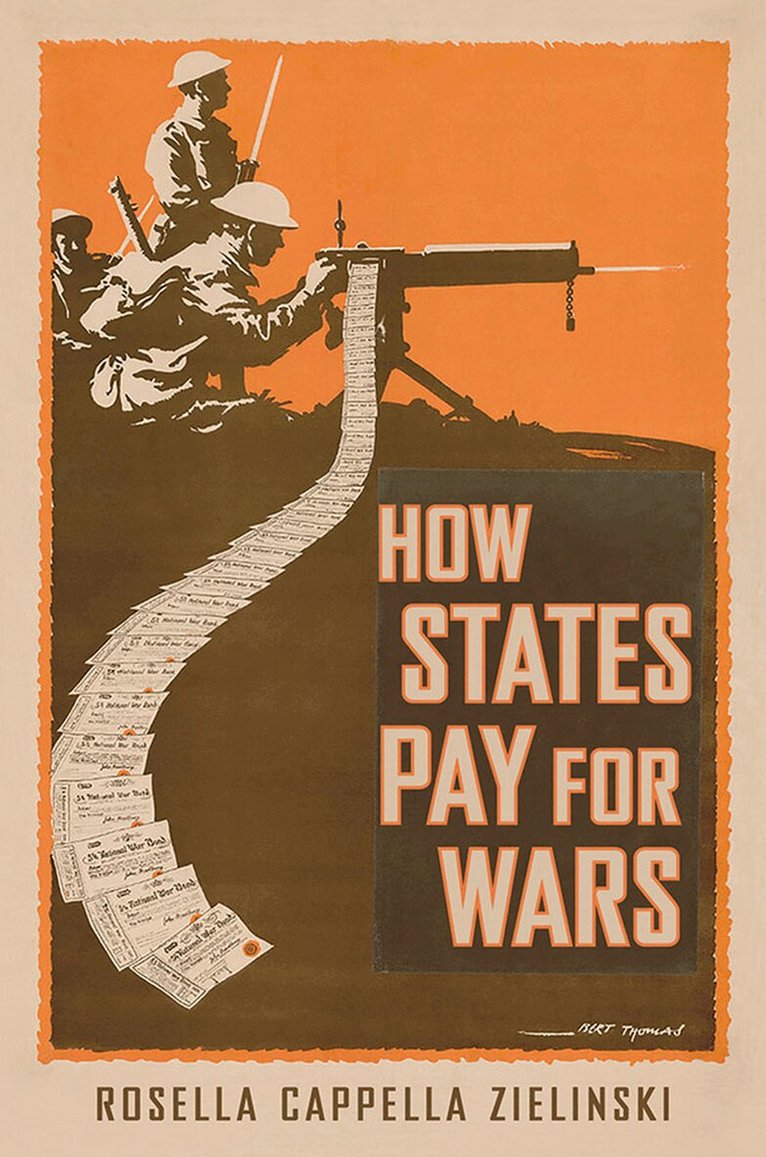
Armies fight battles, states fight wars. To focus solely on armies is to neglect the broader story of victory and defeat. Military power stems from an economic base, and without wealth, soldiers cannot be paid, weapons cannot be procured, and food cannot be bought. War finance is among the most consequential decisions any state makes: how a state finances a war affects not only its success on the battlefield but also its economic stability and its leadership tenure. In How States Pay for Wars, Rosella Cappella Zielinski clarifies several critical dynamics lying at the nexus of financial and military policy.Cappella Zielinski has built a custom database on war funding over the past two centuries, and she combines those data with qualitative analyses of Truman's financing of the Korean War, Johnson's financing of the Vietnam War, British financing of World War II and the Crimean War, and Russian and Japanese financing of the Russo-Japanese War. She argues that leaders who attempt to maximize their power at home, and state power abroad, are in a constant balancing act as they try to win wars while remaining in office. As a result of political risks, they prefer war finance policies that meet the needs of the war effort within the constraints of the capacity of the state.