Rosemary Moore – författare
Visar alla böcker från författaren Rosemary Moore. Handla med fri frakt och snabb leverans.
7 produkter
Light in Their Consciences
The Early Quakers in Britain, 1646–1666
Häftad, 2000
407 kr
Lägg i varukorg
The Society of Friends, also known as the Quakers, originated in England during the civil wars of the mid-seventeenth century. Early Quakers have been variously described as founders of a fundamentally new form of spiritual practice, as the radical end of the Protestant Reformation, and as …
Quakers, 1656–1723
The Evolution of an Alternative Community
Av Richard C. Allen, Rosemary Moore
Inbunden, 2018
533 kr
Lägg i varukorg
This landmark volume is the first in a century to examine the “Second Period” of Quakerism, a time when the Religious Society of Friends experienced upheavals in theology, authority and institutional structures, and political trajectories as a result of the persecution Quakers faced in the first …
Light in Their Consciences
Early Quakers in Britain, 1646–1666
Häftad, 2020
396 kr
Lägg i varukorg
Hailed upon its publication as “history at its finest” by H. Larry Ingle and called “the essential foundation to explore early Quaker history” by Sixteenth Century Journal, Rosemary Moore’s The Light in Their Consciences is the most comprehensive, readable history of the first decades of the life …
History of the Life of Thomas Ellwood
Written by Himself
Häftad, 2010
463 kr
Lägg i varukorg
"There are many greater Quakers than Ellwood, but few more likeable," quips editor Rosemary Moore in her prologue. Her new edition of Thomas Ellwood's autobiography will be of interest to social and religious historians, Quakers, English literary scholars, and many others. Ellwood's story vividly …
Protestant Nonconformist Texts Volume 1
Av R Tudur Jones, Arthur Long m. fl.
Häftad, 2015
491 kr
Lägg i varukorg
Protestant Nonconformist Texts Volume 1
1550 - 1700
Av Rosemary Moore, Arthur Long m. fl.
E-bok, 2015
883 kr
Lägg i varukorg
Like the other volumes in the four-volume series of which it is a part, this book breaks new ground in gathering and introducing texts relating to the origins of English and Welsh Dissent. Through contemporary writings it provides a lively insight into the life and thought of early Presbyterians, …
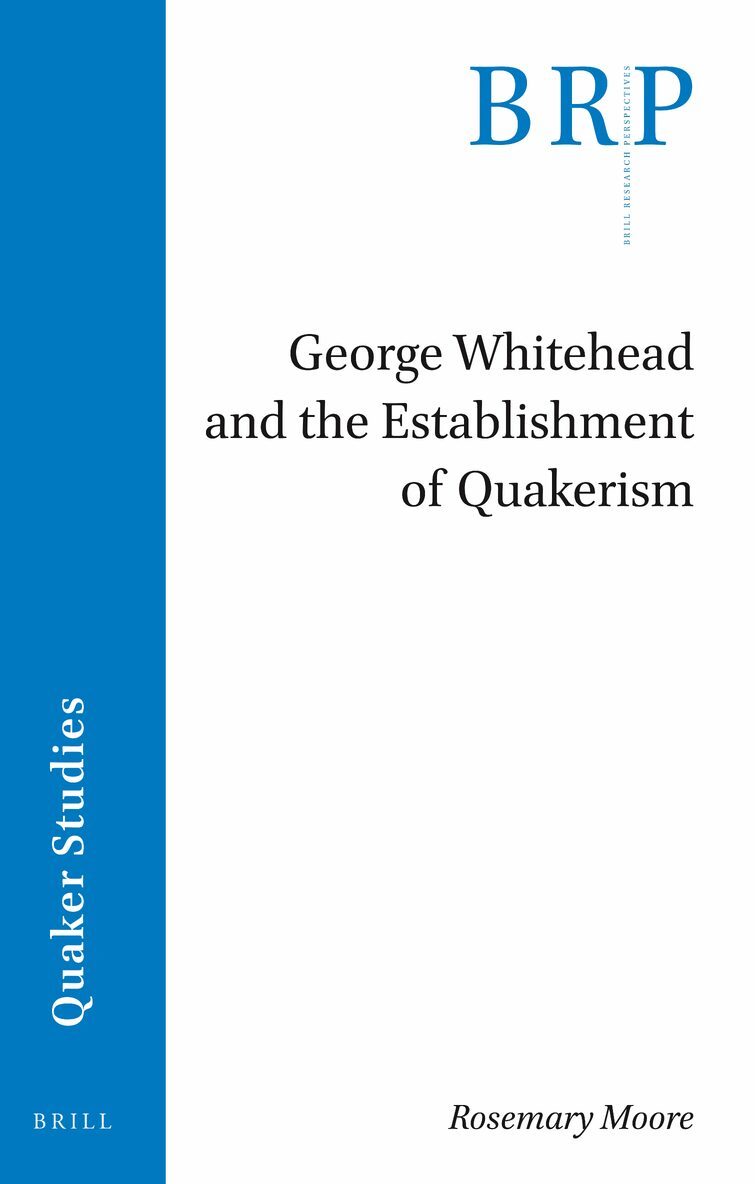
George Whitehead and the Establishment of Quakerism
Häftad, 2021
1240 kr
Lägg i varukorg
George Whitehead was a key figure in Quakerism from around 1660 until his death in 1723, but he has been neglected in recent scholarship. He was an effective political lobbyist in the struggle for religious toleration and was active in the developing work of the national Quaker bodies, Yearly …