Ross D.E. MacPhee – författare
Visar alla böcker från författaren Ross D.E. MacPhee. Handla med fri frakt och snabb leverans.
6 produkter
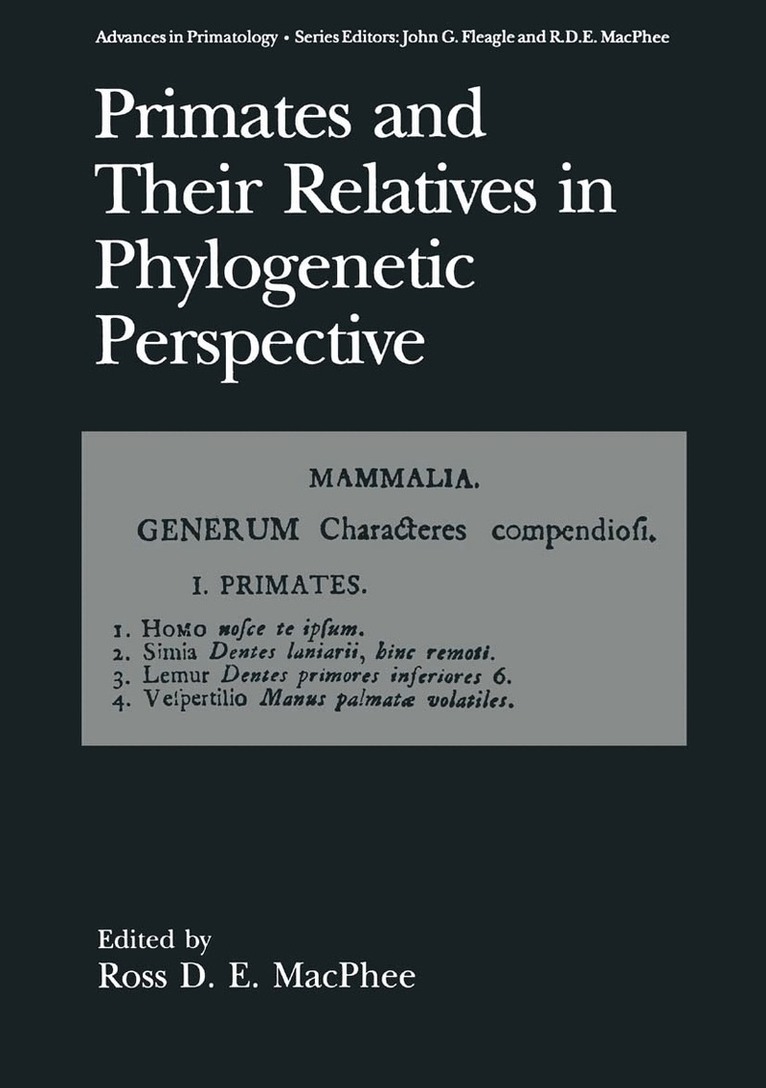
Primates and Their Relatives in Phylogenetic Perspective
Inbunden, 1993
1641 kr
Lägg i varukorg
This book has the modest aim of bringing together methodological, theo- retical, and empirical studies that bear on the phylogenetic placement of primates and their relatives, and continues a tradition started by Phylogeny of the Primates: A Multidisciplinary Approach (edited by W. P. Luckett and …
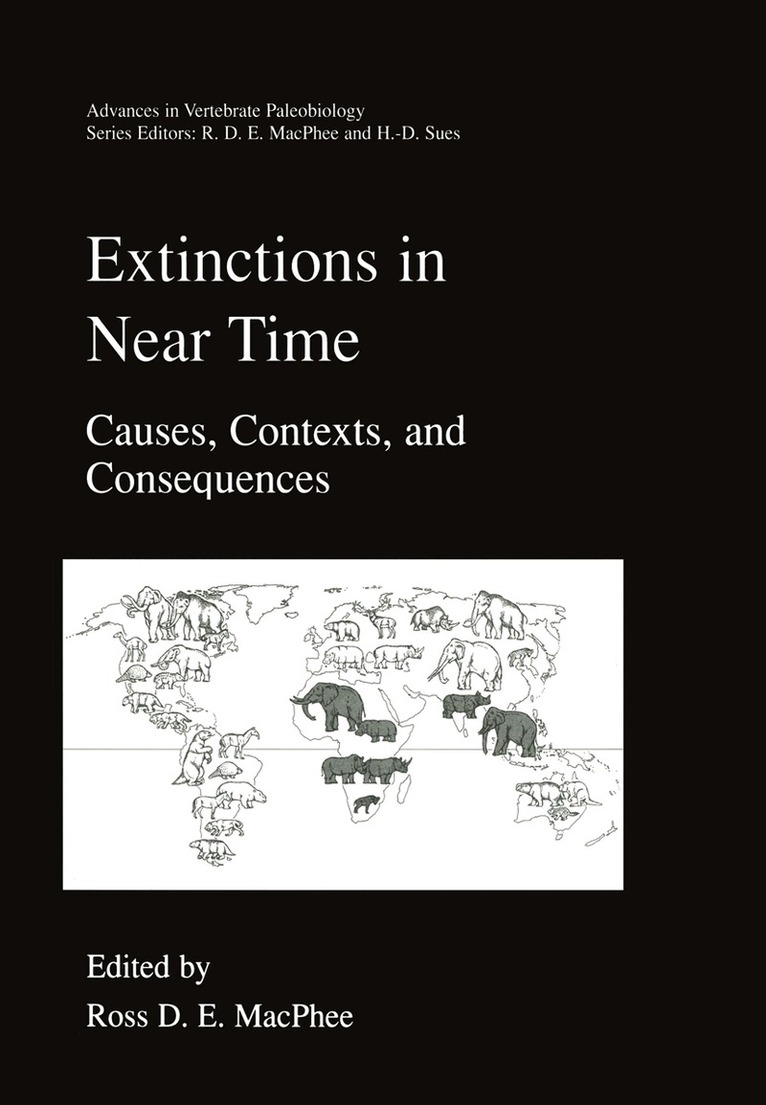
Extinctions in Near Time
Causes, Contexts, and Consequences
Av Ross D.E. MacPhee, Hans-Dieter Sues
Inbunden, 1999
2185 kr
Lägg i varukorg
"Near time" -an interval that spans the last 100,000 years or so of earth history-qualifies as a remarkable period for many reasons. From an anthropocentric point of view, the out standing feature of near time is the fact that the evolution, cultural diversification, and glob al spread of Homo …
Extinctions in Near Time
Causes, Contexts, and Consequences
Av Ross D.E. MacPhee, Hans-Dieter Sues
Häftad, 2010
2185 kr
Lägg i varukorg
"Near time" -an interval that spans the last 100,000 years or so of earth history-qualifies as a remarkable period for many reasons. From an anthropocentric point of view, the out standing feature of near time is the fact that the evolution, cultural diversification, and glob al spread of Homo …
Extinctions in Near Time
Causes, Contexts, and Consequences
Av Hans-Dieter Sues, Ross D.E. MacPhee
E-bok, 2013
2925 kr
Lägg i varukorg
"Near time" -an interval that spans the last 100,000 years or so of earth history-qualifies as a remarkable period for many reasons. From an anthropocentric point of view, the out standing feature of near time is the fact that the evolution, cultural diversification, and glob al spread of Homo …
Primates and Their Relatives in Phylogenetic Perspective
Häftad, 2013
1641 kr
Lägg i varukorg
This book has the modest aim of bringing together methodological, theo- retical, and empirical studies that bear on the phylogenetic placement of primates and their relatives, and continues a tradition started by Phylogeny of the Primates: A Multidisciplinary Approach (edited by W. P. Luckett and …