Roxanne L. Euben - Böcker
Visar alla böcker från författaren Roxanne L. Euben. Handla med fri frakt och snabb leverans.
5 produkter
5 produkter
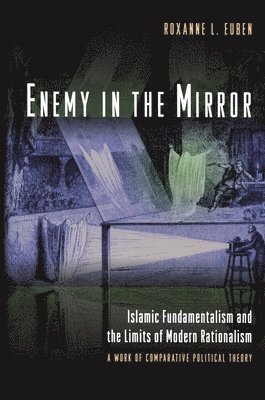
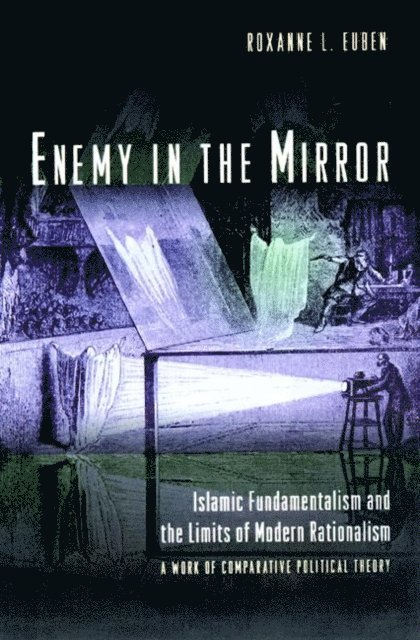
Enemy in the Mirror
Islamic Fundamentalism and the Limits of Modern Rationalism: A Work of Comparative Political Theory
Häftad, Engelska, 1999
452 kr
Skickas inom 7-10 vardagar
A firm grasp of Islamic fundamentalism has often eluded Western political observers, many of whom view it in relation to social and economic upheaval or explain it away as an irrational reaction to modernity. Here Roxanne Euben makes new sense of this belief system by revealing it as a critique of and rebuttal to rationalist discourse and post-Enlightenment political theories. Euben draws on political, postmodernist, and critical theory, as well as Middle Eastern studies, Islamic thought, comparative politics, and anthropology, to situate Islamic fundamentalist thought within a transcultural theoretical context. In so doing, she illuminates an unexplored dimension of the Islamist movement and holds a mirror up to anxieties within contemporary Western political thought about the nature and limits of modern rationalism--anxieties common to Christian fundamentalists, postmodernists, conservatives, and communitarians. A comparison between Islamic fundamentalism and various Western critiques of rationalism yields formerly uncharted connections between Western and Islamic political thought, allowing the author to reclaim an understanding of political theory as inherently comparative.Her arguments bear on broad questions about the methods Westerners employ to understand movements and ideas that presuppose nonrational, transcendent truths. Euben finds that first, political theory can play a crucial role in understanding concrete political phenomena often considered beyond its jurisdiction; second, the study of such phenomena tests the scope of Western rationalist categories; and finally, that Western political theory can be enriched by exploring non-Western perspectives on fundamental debates about coexistence.
Princeton Readings in Islamist Thought
Texts and Contexts from al-Banna to Bin Laden
Häftad, Engelska, 2009
423 kr
Skickas inom 7-10 vardagar
This anthology of key primary texts provides an unmatched introduction to Islamist political thought from the early twentieth century to the present, and serves as an invaluable guide through the storm of polemic, fear, and confusion that swirls around Islamism today. Roxanne Euben and Muhammad Qasim Zaman gather a broad selection of texts from influential Islamist thinkers and place these figures and their writings in their multifaceted political and historical contexts. The selections presented here in English translation include writings of Ayatollah Khomeini, Usama bin Laden, Muslim Brotherhood founder Hasan al-Banna, and Moroccan Islamist leader Nadia Yassine, as well as the Hamas charter, an interview with a Taliban commander, and the final testament of 9/11 hijacker Muhammad Ata. Illuminating the content and political appeal of Islamist thought, this anthology brings into sharp relief the commonalities in Islamist arguments about gender, democracy, and violence, but it also reveals significant political and theological disagreements among thinkers too often grouped together and dismissed as extremists or terrorists.No other anthology better illustrates the diversity of Islamist thought, the complexity of its intellectual and political contexts, or the variety of ways in which it relates to other intellectual and religious trends in the contemporary Muslim world.
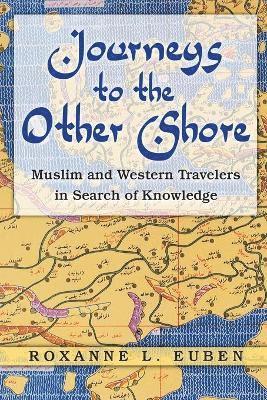
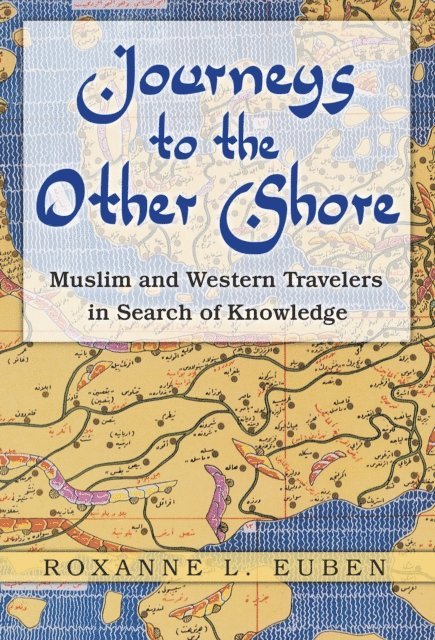
Journeys to the Other Shore
Muslim and Western Travelers in Search of Knowledge
Häftad, Engelska, 2008
323 kr
Skickas inom 7-10 vardagar
The contemporary world is increasingly defined by dizzying flows of people and ideas. But while Western travel is associated with a pioneering spirit of discovery, the dominant image of Muslim mobility is the jihadi who travels not to learn but to destroy. Journeys to the Other Shore challenges these stereotypes by charting the common ways in which Muslim and Western travelers negotiate the dislocation of travel to unfamiliar and strange worlds. In Roxanne Euben's groundbreaking excursion across cultures, geography, history, genre, and genders, travel signifies not only a physical movement across lands and cultures, but also an imaginative journey in which wonder about those who live differently makes it possible to see the world differently. In the book we meet not only Herodotus but also Ibn Battuta, the fourteenth-century Moroccan traveler. Tocqueville's journeys are set against a five-year sojourn in nineteenth-century Paris by the Egyptian writer and translator Rifa'a Rafi' al-Tahtawi, and Montesquieu's novel Persian Letters meets with the memoir of an East African princess, Sayyida Salme.This extraordinary book shows that curiosity about the unknown, the quest to understand foreign cultures, critical distance from one's own world, and the desire to remake the foreign into the familiar are not the monopoly of any single civilization or epoch. Euben demonstrates that the fluidity of identities, cultures, and borders associated with our postcolonial, globalized world has a long history--one shaped not only by Western power but also by an Islamic ethos of travel in search of knowledge.
242 kr
Skickas inom 7-10 vardagar
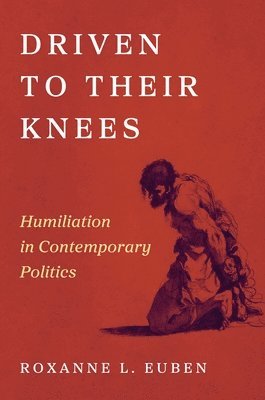
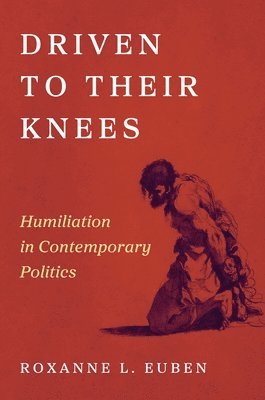
How the rhetoric of humiliation defines the powerful and the powerless in modern politicsHumiliation pervades our politics, from images of stripped Palestinian men in Gaza to mocking chants at MAGA rallies. It suffuses pictures and videos, speaks through bodies as well as words, and is expressed by those with too much power as well as by those with too little. In Driven to Their Knees, Roxanne Euben takes readers from conflicts in the Arabic-speaking world to America’s divided public square, advancing a theory of humiliation rooted in the ways people articulate and enact it. Euben analyzes some of the most conspicuous yet least studied Arabic expressions of humiliation, drawing on sources ranging from Qurʾānic commentary by Islamists to videos, poetry, songs, and tweets from the 2011 Egyptian revolution.Driven to Their Knees reveals what the language of humiliation says—and also how it works. This groundbreaking book shows how humiliation expresses the imposition of impotence by those with undeserved power, and the way it converts relations of power into crises of virility. Humiliation rhetoric defines both the humiliated and the humiliator and issues an urgent call for a remedy in the viscerally charged language of emasculation. For Donald Trump and Usama bin Laden alike, this means driving their enemy to his knees for all to see, and then boasting about it to compound the degradation. But for others, humiliation galvanizes their struggle to “stand erect,” uniting them in a refusal to be bowed low. Humiliation is not just about power but is itself a powerful language that does far more than reflect contemporary politics. The language of humiliation remakes the very world in which we live.
1 542 kr
Skickas inom 3-6 vardagar
How the rhetoric of humiliation defines the powerful and the powerless in modern politicsHumiliation pervades our politics, from images of stripped Palestinian men in Gaza to mocking chants at MAGA rallies. It suffuses pictures and videos, speaks through bodies as well as words, and is expressed by those with too much power as well as by those with too little. In Driven to Their Knees, Roxanne Euben takes readers from conflicts in the Arabic-speaking world to America’s divided public square, advancing a theory of humiliation rooted in the ways people articulate and enact it. Euben analyzes some of the most conspicuous yet least studied Arabic expressions of humiliation, drawing on sources ranging from Qurʾānic commentary by Islamists to videos, poetry, songs, and tweets from the 2011 Egyptian revolution.Driven to Their Knees reveals what the language of humiliation says—and also how it works. This groundbreaking book shows how humiliation expresses the imposition of impotence by those with undeserved power, and the way it converts relations of power into crises of virility. Humiliation rhetoric defines both the humiliated and the humiliator and issues an urgent call for a remedy in the viscerally charged language of emasculation. For Donald Trump and Usama bin Laden alike, this means driving their enemy to his knees for all to see, and then boasting about it to compound the degradation. But for others, humiliation galvanizes their struggle to “stand erect,” uniting them in a refusal to be bowed low. Humiliation is not just about power but is itself a powerful language that does far more than reflect contemporary politics. The language of humiliation remakes the very world in which we live.