Muhammad Qasim Zaman - Böcker
Visar alla böcker från författaren Muhammad Qasim Zaman. Handla med fri frakt och snabb leverans.
9 produkter
9 produkter
706 kr
Skickas inom 3-6 vardagar
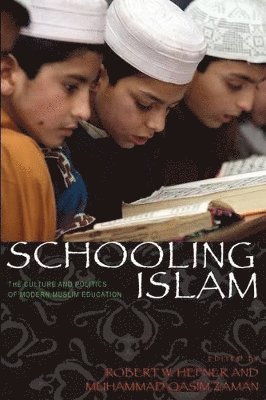
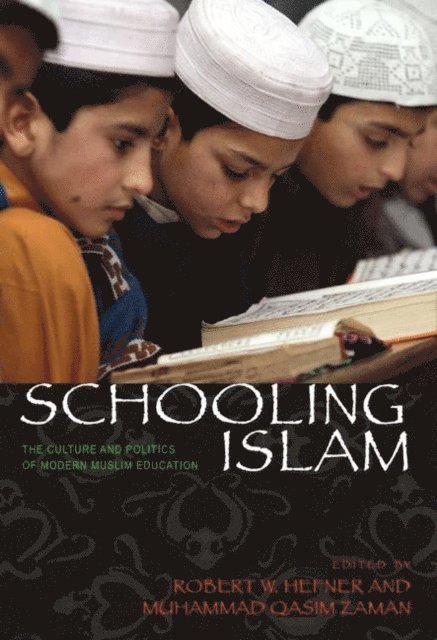
Since the Taliban seized Kabul in 1996, the public has grappled with the relationship between Islamic education and radical Islam. Media reports tend to paint madrasas--religious schools dedicated to Islamic learning--as medieval institutions opposed to all that is Western and as breeding grounds for terrorists. Others have claimed that without reforms, Islam and the West are doomed to a clash of civilizations. Robert Hefner and Muhammad Qasim Zaman bring together eleven internationally renowned scholars to examine the varieties of modern Muslim education and their implications for national and global politics. The contributors provide new insights into Muslim culture and politics in countries as different as Morocco, Egypt, Pakistan, India, Indonesia, Iran, and Saudi Arabia. They demonstrate that Islamic education is neither timelessly traditional nor medieval, but rather complex, evolving, and diverse in its institutions and practices. They reveal that a struggle for hearts and minds in Muslim lands started long before the Western media discovered madrasas, and that Islamic schools remain on its front line.Schooling Islam is the most comprehensive work available in any language on madrasas and Islamic education.
329 kr
Skickas inom 7-10 vardagar
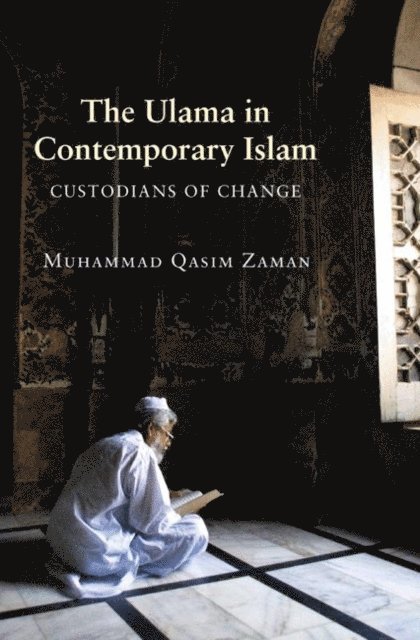
From the cleric-led Iranian revolution to the rise of the Taliban in Afghanistan, many people have been surprised by what they see as the modern reemergence of an antimodern phenomenon. This book helps account for the increasingly visible public role of traditionally educated Muslim religious scholars (the 'ulama) across contemporary Muslim societies. Muhammad Qasim Zaman describes the transformations the centuries-old culture and tradition of the 'ulama have undergone in the modern era--transformations that underlie the new religious and political activism of these scholars. In doing so, it provides a new foundation for the comparative study of Islam, politics, and religious change in the contemporary world. While focusing primarily on Pakistan, Zaman takes a broad approach that considers the Taliban and the 'ulama of Iran, Egypt, Saudi Arabia, India, and the southern Philippines. He shows how their religious and political discourses have evolved in often unexpected but mutually reinforcing ways to redefine and enlarge the roles the 'ulama play in society. Their discourses are informed by a longstanding religious tradition, of which they see themselves as the custodians.But these discourses are equally shaped by--and contribute in significant ways to--contemporary debates in the Muslim public sphere. This book offers the first sustained comparative perspective on the 'ulama and their increasingly crucial religious and political activism. It shows how issues of religious authority are debated in contemporary Islam, how Islamic law and tradition are continuously negotiated in a rapidly changing world, and how the 'ulama both react to and shape larger Islamic social trends. Introducing previously unexamined facets of religious and political thought in modern Islam, it clarifies the complex processes of religious change unfolding in the contemporary Muslim world and goes a long way toward explaining their vast social and political ramifications.
911 kr
Skickas inom 7-10 vardagar
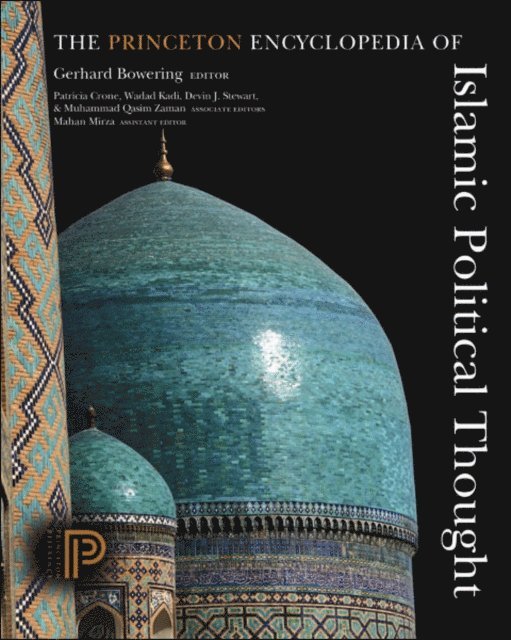
The first encyclopedia of Islamic political thought from the birth of Islam to today, this comprehensive, authoritative, and accessible reference provides the context needed for understanding contemporary politics in the Islamic world and beyond. With more than 400 alphabetically arranged entries written by an international team of specialists, the volume focuses on the origins and evolution of Islamic political ideas and related subjects, covering central terms, concepts, personalities, movements, places, and schools of thought across Islamic history. Fifteen major entries provide a synthetic treatment of key topics, such as Muhammad, jihad, authority, gender, culture, minorities, fundamentalism, and pluralism. Incorporating the latest scholarship, this is an indispensable resource for students, researchers, journalists, and anyone else seeking an informed perspective on the complex intersection of Islam and politics.* Includes more than 400 concise, alphabetically arranged entries * Features 15 in-depth entries on key topics * Covers topics such as: * Central themes and sources of Islamic political thought: caliph, modernity, knowledge, shari'a, government, revival and reform * Modern concepts, institutions, movements, and parties: civil society, Islamization, secularism, veil, Muslim Brotherhood * Islamic law and traditional Islamic societies: justice, taxation, fatwa, dissent, governance, piety and asceticism, trade and commerce * Sects, schools, regions, and dynasties: Mu'tazilis, Shi'ism, Quraysh, Mecca and Medina, Baghdad, Indonesia, Nigeria, Central Asia, Ottomans * Thinkers, personalities, and statesmen: Mawardi, Shafi'I, Saladin, Tamerlane, Akbar, Ataturk, Nasser, Khomeini * Contains seven historical and contemporary maps of Muslim empires, postcolonial nation-states, populations, and settlements * Guides readers to further research through bibliographies, cross-references, and an index
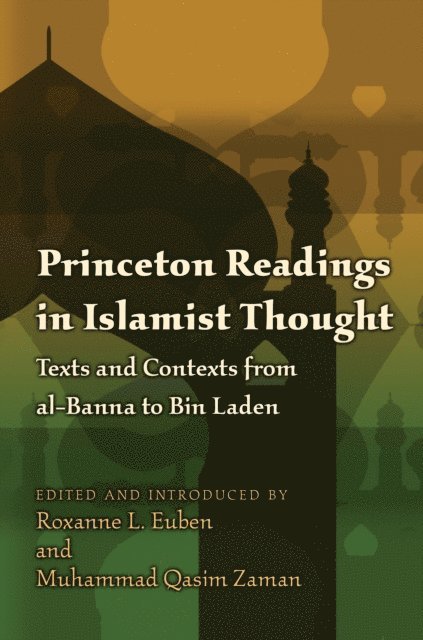
Princeton Readings in Islamist Thought
Texts and Contexts from al-Banna to Bin Laden
Häftad, Engelska, 2009
423 kr
Skickas inom 7-10 vardagar
This anthology of key primary texts provides an unmatched introduction to Islamist political thought from the early twentieth century to the present, and serves as an invaluable guide through the storm of polemic, fear, and confusion that swirls around Islamism today. Roxanne Euben and Muhammad Qasim Zaman gather a broad selection of texts from influential Islamist thinkers and place these figures and their writings in their multifaceted political and historical contexts. The selections presented here in English translation include writings of Ayatollah Khomeini, Usama bin Laden, Muslim Brotherhood founder Hasan al-Banna, and Moroccan Islamist leader Nadia Yassine, as well as the Hamas charter, an interview with a Taliban commander, and the final testament of 9/11 hijacker Muhammad Ata. Illuminating the content and political appeal of Islamist thought, this anthology brings into sharp relief the commonalities in Islamist arguments about gender, democracy, and violence, but it also reveals significant political and theological disagreements among thinkers too often grouped together and dismissed as extremists or terrorists.No other anthology better illustrates the diversity of Islamist thought, the complexity of its intellectual and political contexts, or the variety of ways in which it relates to other intellectual and religious trends in the contemporary Muslim world.
502 kr
Skickas inom 7-10 vardagar
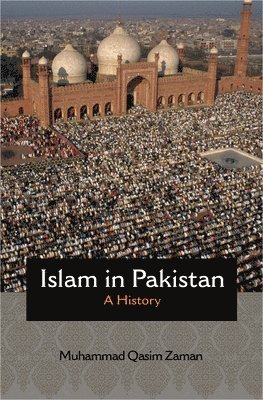
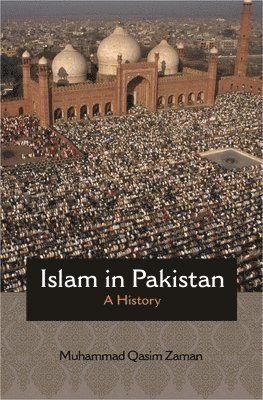
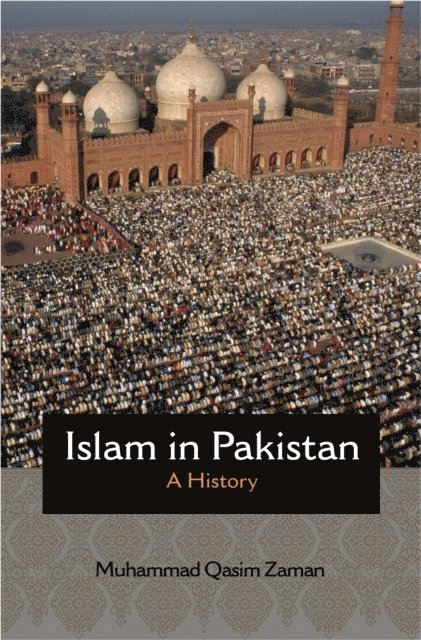
The first book to explore the modern history of Islam in South AsiaThe first modern state to be founded in the name of Islam, Pakistan was the largest Muslim country in the world at the time of its establishment in 1947. Today it is the second-most populous, after Indonesia. Islam in Pakistan is the first comprehensive book to explore Islam's evolution in this region over the past century and a half, from the British colonial era to the present day. Muhammad Qasim Zaman presents a rich historical account of this major Muslim nation, insights into the rise and gradual decline of Islamic modernist thought in the South Asian region, and an understanding of how Islam has fared in the contemporary world. Much attention has been given to Pakistan's role in sustaining the Afghan struggle against the Soviet occupation in the 1980s, in the growth of the Taliban in the 1990s, and in the War on Terror after 9/11. But as Zaman shows, the nation's significance in matters relating to Islam has much deeper roots. Since the late nineteenth century, South Asia has witnessed important initiatives toward rethinking core Islamic texts and traditions in the interest of their compatibility with the imperatives of modern life. Traditionalist scholars and their institutions, too, have had a prominent presence in the region, as have Islamism and Sufism. Pakistan did not merely inherit these and other aspects of Islam. Rather, it has been and remains a site of intense contestation over Islam's public place, meaning, and interpretation. Examining how facets of Islam have been pivotal in Pakistani history, Islam in Pakistan offers sweeping perspectives on what constitutes an Islamic state.
282 kr
Skickas inom 7-10 vardagar
The first book to explore the modern history of Islam in South AsiaThe first modern state to be founded in the name of Islam, Pakistan was the largest Muslim country in the world at the time of its establishment in 1947. Today it is the second-most populous, after Indonesia. Islam in Pakistan is the first comprehensive book to explore Islam's evolution in this region over the past century and a half, from the British colonial era to the present day. Muhammad Qasim Zaman presents a rich historical account of this major Muslim nation, insights into the rise and gradual decline of Islamic modernist thought in the South Asian region, and an understanding of how Islam has fared in the contemporary world. Much attention has been given to Pakistan's role in sustaining the Afghan struggle against the Soviet occupation in the 1980s, in the growth of the Taliban in the 1990s, and in the War on Terror after 9/11. But as Zaman shows, the nation's significance in matters relating to Islam has much deeper roots. Since the late nineteenth century, South Asia has witnessed important initiatives toward rethinking core Islamic texts and traditions in the interest of their compatibility with the imperatives of modern life. Traditionalist scholars and their institutions, too, have had a prominent presence in the region, as have Islamism and Sufism. Pakistan did not merely inherit these and other aspects of Islam. Rather, it has been and remains a site of intense contestation over Islam's public place, meaning, and interpretation. Examining how facets of Islam have been pivotal in Pakistani history, Islam in Pakistan offers sweeping perspectives on what constitutes an Islamic state.
Modern Islamic Thought in a Radical Age
Religious Authority and Internal Criticism
Inbunden, Engelska, 2012
1 166 kr
Skickas inom 7-10 vardagar
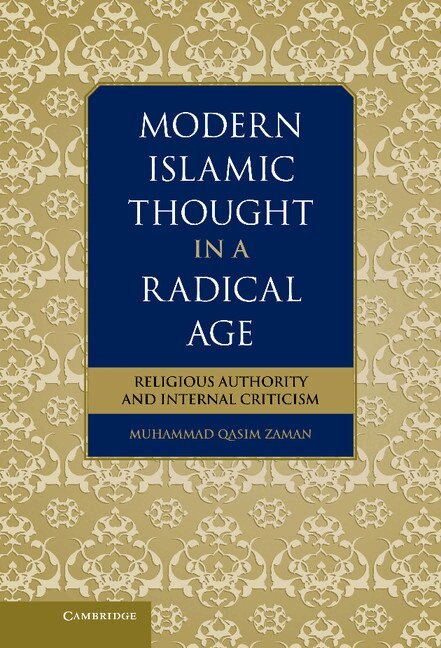
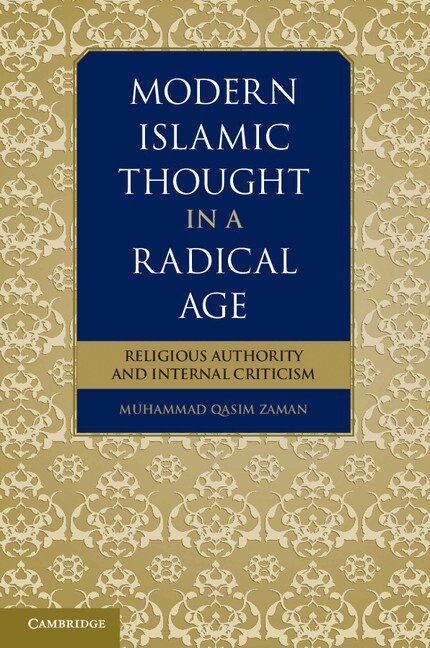
Among traditionally educated scholars in the Islamic world there is much disagreement on the crises that afflict modern Muslim societies and how best to deal with them, and the debates have grown more urgent since 9/11. Through an analysis of the work of Muhammad Rashid Rida and Yusuf al-Qaradawi in the Arab Middle East and a number of scholars belonging to the Deobandi orientation in colonial and contemporary South Asia, this book examines some of the most important issues facing the Muslim world since the late nineteenth century. These include the challenges to the binding claims of a long-established scholarly consensus, evolving conceptions of the common good, and discourses on religious education, the legal rights of women, social and economic justice and violence and terrorism. This wide-ranging study by a leading scholar provides the depth and the comparative perspective necessary for an understanding of the ferment that characterizes contemporary Islam.
Modern Islamic Thought in a Radical Age
Religious Authority and Internal Criticism
Häftad, Engelska, 2012
410 kr
Skickas inom 7-10 vardagar
Among traditionally educated scholars in the Islamic world there is much disagreement on the crises that afflict modern Muslim societies and how best to deal with them, and the debates have grown more urgent since 9/11. Through an analysis of the work of Muhammad Rashid Rida and Yusuf al-Qaradawi in the Arab Middle East and a number of scholars belonging to the Deobandi orientation in colonial and contemporary South Asia, this book examines some of the most important issues facing the Muslim world since the late nineteenth century. These include the challenges to the binding claims of a long-established scholarly consensus, evolving conceptions of the common good, and discourses on religious education, the legal rights of women, social and economic justice and violence and terrorism. This wide-ranging study by a leading scholar provides the depth and the comparative perspective necessary for an understanding of the ferment that characterizes contemporary Islam.
501 kr
Skickas inom 7-10 vardagar
Ashraf `Ali Thanawi (1863-1943) was one of the most prominent religious scholars in Islamic history. Author of over a thousand books on different aspects of Islam, his work sought to defend the Islamic scholarly tradition and to articulate its authority in an age of momentous religious and political change. In this authoritative biography, Muhammad Qasim Zaman offers a comprehensive and highly accessible account of Thanawi’s multifaceted career and thought, whilst also providing a valuable introduction to Islam in modern South Asia.