Rubrick Biegon - Böcker
Visar alla böcker från författaren Rubrick Biegon. Handla med fri frakt och snabb leverans.
4 produkter
4 produkter
643 kr
Skickas inom 10-15 vardagar
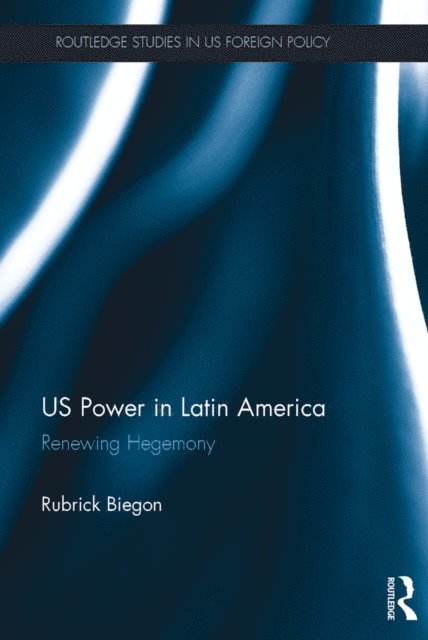
An original account of contemporary US-Latin American relations, this book utilises neo-Gramscian and historical materialist approaches to build a novel conceptual framework for analysing US hegemony, extending critical theory in new and exciting directions. It disaggregates US power into distinct forms (structural, coercive, institutional and ideological) to convincingly argue that the United States is remaking its hegemony in the Western hemisphere. The first decade of the new century saw the ascendancy of leftist and centre-left forces in Latin America. The emergence and consolidation of the ‘New Latin Left’ signalled a profound challenge to the long-standing hegemony of the United States in the region. This book details the ways in which US foreign policy responded: defining hegemony as a dialectical relationship patterned by multiple and overlapping forms of power, it situates US policy in the context of the Post-Washington Consensus. Making considerable use of confidential diplomatic cables published by Wikileaks, it examines the interplay of different facets of US hegemony, which are inextricably bound up in the neoliberalisation of the region’s political economy.This book brings clarity to what remains an open and contested process of hegemonic reconstitution, and promises to be of interest to scholars working in a number of overlapping subject areas, including International Relations (IR), US foreign policy and Latin American studies.
2 100 kr
Skickas inom 10-15 vardagar
An original account of contemporary US-Latin American relations, this book utilises neo-Gramscian and historical materialist approaches to build a novel conceptual framework for analysing US hegemony, extending critical theory in new and exciting directions. It disaggregates US power into distinct forms (structural, coercive, institutional and ideological) to convincingly argue that the United States is remaking its hegemony in the Western hemisphere. The first decade of the new century saw the ascendancy of leftist and centre-left forces in Latin America. The emergence and consolidation of the ‘New Latin Left’ signalled a profound challenge to the long-standing hegemony of the United States in the region. This book details the ways in which US foreign policy responded: defining hegemony as a dialectical relationship patterned by multiple and overlapping forms of power, it situates US policy in the context of the Post-Washington Consensus. Making considerable use of confidential diplomatic cables published by Wikileaks, it examines the interplay of different facets of US hegemony, which are inextricably bound up in the neoliberalisation of the region’s political economy.This book brings clarity to what remains an open and contested process of hegemonic reconstitution, and promises to be of interest to scholars working in a number of overlapping subject areas, including International Relations (IR), US foreign policy and Latin American studies.
1 479 kr
Skickas inom 5-8 vardagar
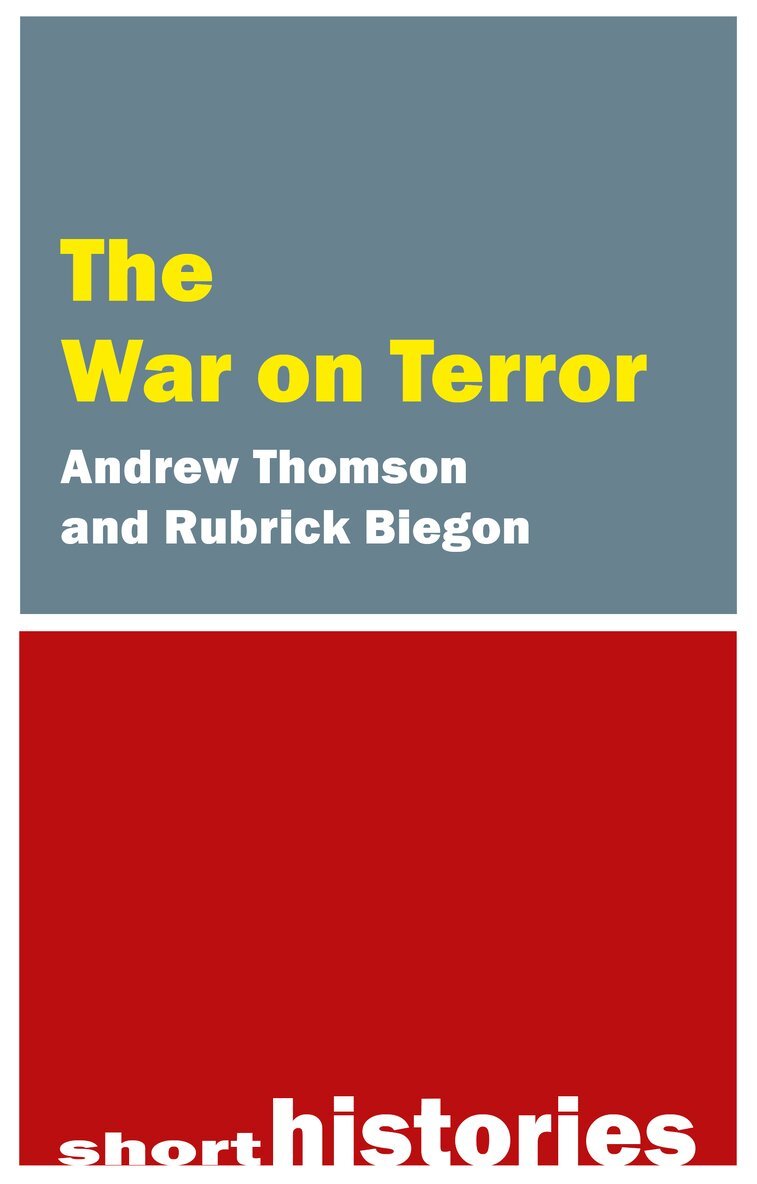
The War on Terror has remained an enduring feature of American foreign policy for over two decades. This short history positions the War on Terror within the broader context of Cold War interventionism and the rise of various transnational threats to American (and global) security during the late twentieth century. It introduces readers to the main concepts, debates and theories which have been used to understand and make sense of the War on Terror. These include approaches that frame it as a disparate set of policies aimed at reducing the risk of terrorist attacks against American citizens at both home and aboard; as part of a project aimed at helping maintain the United States’ dominant position within international politics; and as an idea intimately bound up with perceptions of American national identity and America’s place in the world. In this way, the book aims to show how the War on Terror has changed global politics, as well as why it has been fought and proven so difficult to end despite multiple failed attempts at course correction. The book is ideally suited for courses on international security, American foreign policy and contemporary world politics.
359 kr
Skickas inom 5-8 vardagar
The War on Terror has remained an enduring feature of American foreign policy for over two decades. This short history positions the War on Terror within the broader context of Cold War interventionism and the rise of various transnational threats to American (and global) security during the late twentieth century. It introduces readers to the main concepts, debates and theories which have been used to understand and make sense of the War on Terror. These include approaches that frame it as a disparate set of policies aimed at reducing the risk of terrorist attacks against American citizens at both home and aboard; as part of a project aimed at helping maintain the United States’ dominant position within international politics; and as an idea intimately bound up with perceptions of American national identity and America’s place in the world. In this way, the book aims to show how the War on Terror has changed global politics, as well as why it has been fought and proven so difficult to end despite multiple failed attempts at course correction. The book is ideally suited for courses on international security, American foreign policy and contemporary world politics.