Ruby Blondell - Böcker
Visar alla böcker från författaren Ruby Blondell. Handla med fri frakt och snabb leverans.
11 produkter
11 produkter
259 kr
Skickas inom 7-10 vardagar
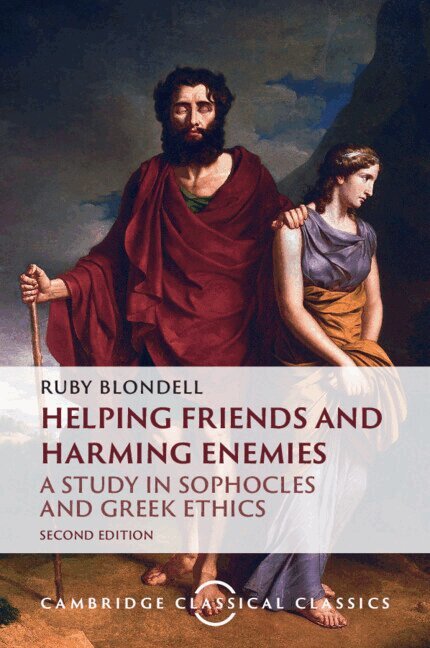
Sophocles is often considered the least philosophical of the three great Greek tragedians. However, Ruby Blondell offers a vital examination of the ethical content of the plays by focusing on the pervasive Greek popular moral code of 'helping friends and harming enemies'. Five of the extant plays are discussed in detail from both a dramatic and an ethical standpoint, and the author concludes that ethical themes are not only integral to each drama, but are subjected to an implicit critique through the tragic consequences to which they give rise. Greek scholars and students of Greek drama and Greek thought will welcome this book, which is presented in such a way as to be accessible to specialists and non-specialists alike. No knowledge of Greek is required. This revised edition includes a contextualising new Foreword which engages with critical and scholarly developments in Greek drama since the original publication.
478 kr
Skickas inom 5-8 vardagar
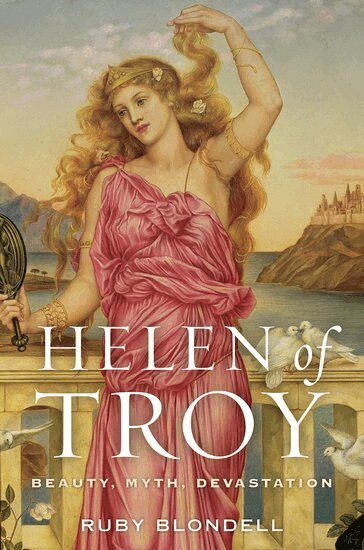
Ancient Greek culture is pervaded by a profound ambivalence regarding female beauty. It is an awe-inspiring, supremely desirable gift from the gods, essential to the perpetuation of a man's name through reproduction; yet it also grants women terrifying power over men, posing a threat inseparable from its allure. The myth of Helen is the central site in which the ancient Greeks expressed and reworked their culture's anxieties about erotic desire. Despite the passage of three millennia, contemporary culture remains almost obsessively preoccupied with all the power and danger of female beauty and sexuality that Helen still represents. Yet Helen, the embodiment of these concerns for our purported cultural ancestors, has been little studied from this perspective. Such issues are also central to contemporary feminist thought. Helen of Troy engages with the ancient origins of the persistent anxiety about female beauty, focusing on this key figure from ancient Greek culture in a way that both extends our understanding of that culture and provides a useful perspective for reconsidering aspects of our own. Moving from Homer and Hesiod to Sappho, Aeschylus, and Euripides, Ruby Blondell offers a fresh examination of the paradoxes and ambiguities that Helen embodies. In addition to literary sources, Blondell considers the archaeological record, which contains evidence of Helen's role as a cult figure, worshipped by maidens and newlyweds. The result is a compelling new interpretation of this alluring figure.
631 kr
Skickas inom 5-8 vardagar
Ancient Greek culture is pervaded by a profound ambivalence regarding female beauty. It is an awe-inspiring, supremely desirable gift from the gods, essential to the perpetuation of a man's name through reproduction; yet it also grants women terrifying power over men, posing a threat inseparable from its allure. The myth of Helen is the central site in which the ancient Greeks expressed and reworked their culture's anxieties about erotic desire. Despite the passage of three millennia, contemporary culture remains almost obsessively preoccupied with all the power and danger of female beauty and sexuality that Helen still represents. Yet Helen, the embodiment of these concerns for our purported cultural ancestors, has been little studied from this perspective. Such issues are also central to contemporary feminist thought. Helen of Troy engages with the ancient origins of the persistent anxiety about female beauty, focusing on this key figure from ancient Greek culture in a way that both extends our understanding of that culture and provides a useful perspective for reconsidering aspects of our own. Moving from Homer and Hesiod to Sappho, Aeschylus, and Euripides, Ruby Blondell offers a fresh examination of the paradoxes and ambiguities that Helen embodies. In addition to literary sources, Blondell considers the archaeological record, which contains evidence of Helen's role as a cult figure, worshipped by maidens and newlyweds. The result is a compelling new interpretation of this alluring figure.
2 412 kr
Skickas inom 10-15 vardagar
Women on the Edge, a collection of Alcestis, Medea, Helen, and Iphegenia at Aulis, provides a broad sample of Euripides' plays focusing on women, and spans the chronology of his surviving works, from the earliest, to his last, incomplete, and posthumously produced masterpiece. Each play shows women in various roles--slave, unmarried girl, devoted wife, alienated wife, mother, daughter--providing a range of evidence about the kinds of meaning and effects the category woman conveyed in ancient Athens. The female protagonists in these plays test the boundaries--literal and conceptual--of their lives.Although women are often represented in tragedy as powerful and free in their thoughts, speech and actions, real Athenian women were apparently expected to live unseen and silent, under control of fathers and husbands, with little political or economic power. Women in tragedy often disrupt "normal" life by their words and actions: they speak out boldly, tell lies, cause public unrest, violate custom, defy orders, even kill. Female characters in tragedy take actions, and raise issues central to the plays in which they appear, sometimes in strong opposition to male characters. The four plays in this collection offer examples of women who support the status quo and women who oppose and disrupt it; sometimes these are the same characters.
775 kr
Skickas inom 10-15 vardagar
Women on the Edge, a collection of Alcestis, Medea, Helen, and Iphegenia at Aulis, provides a broad sample of Euripides' plays focusing on women, and spans the chronology of his surviving works, from the earliest, to his last, incomplete, and posthumously produced masterpiece. Each play shows women in various roles--slave, unmarried girl, devoted wife, alienated wife, mother, daughter--providing a range of evidence about the kinds of meaning and effects the category woman conveyed in ancient Athens. The female protagonists in these plays test the boundaries--literal and conceptual--of their lives.Although women are often represented in tragedy as powerful and free in their thoughts, speech and actions, real Athenian women were apparently expected to live unseen and silent, under control of fathers and husbands, with little political or economic power. Women in tragedy often disrupt "normal" life by their words and actions: they speak out boldly, tell lies, cause public unrest, violate custom, defy orders, even kill. Female characters in tragedy take actions, and raise issues central to the plays in which they appear, sometimes in strong opposition to male characters. The four plays in this collection offer examples of women who support the status quo and women who oppose and disrupt it; sometimes these are the same characters.
811 kr
Skickas inom 7-10 vardagar
This book attempts to bridge the gulf that still exists between 'literary' and 'philosophical' interpreters of Plato by looking at his use of characterization. Characterization is intrinsic to dramatic form and a concern with human character in an ethical sense pervades the dialogues on the discursive level. Form and content are further reciprocally related through Plato's discursive preoccupation with literary characterization. Two opening chapters examine the methodological issues involved in reading Plato 'as drama' and a set of questions surrounding Greek 'character' words (especially ethos), including ancient Greek views about the influence of dramatic character on an audience. The figure of Sokrates qua Platonic 'hero' also receives preliminary discussion. The remaining chapters offer close readings of select dialogues, chosen to show the wide range of ways in which Plato uses his characters, with special emphasis on the kaleidoscopic figure of Sokrates and on Plato's own relationship to his 'dramatic' hero.
1 901 kr
Skickas inom 7-10 vardagar
This book attempts to bridge the gulf that still exists between 'literary' and 'philosophical' interpreters of Plato by looking at his use of characterization. Characterization is intrinsic to dramatic form and a concern with human character in an ethical sense pervades the dialogues on the discursive level. Form and content are further reciprocally related through Plato's discursive preoccupation with literary characterization. Two opening chapters examine the methodological issues involved in reading Plato 'as drama' and a set of questions surrounding Greek 'character' words (especially ethos), including ancient Greek views about the influence of dramatic character on an audience. The figure of Sokrates qua Platonic 'hero' also receives preliminary discussion. The remaining chapters offer close readings of select dialogues, chosen to show the wide range of ways in which Plato uses his characters, with special emphasis on the kaleidoscopic figure of Sokrates and on Plato's own relationship to his 'dramatic' hero.
323 kr
Skickas inom 7-10 vardagar
How a legendary woman from classical antiquity has come to embody the threat of transcendent beauty in movies and TVHelen of Troy in Hollywood examines the figure of the mythic Helen in film and television, showing how storytellers from different Hollywood eras have used Helen to grapple with the problems and dynamics of gender and idealized femininity. Paying careful attention to how the image of Helen is embodied by the actors who have portrayed her, Ruby Blondell provides close readings of such works as Wolfgang Petersen’s Troy and the Star Trek episode “Elaan of Troyius,” going beyond contextualization to lead the reader through a fundamental rethinking of how we understand and interpret the classic tradition.A luminous work of scholarship by one of today’s leading classicists, Helen of Troy in Hollywood highlights the importance of ancient myths not as timeless stories frozen in the past but as lenses through which to view our own artistic, cultural, and political moment in a new light. This incisive book demonstrates how, whether as the hero of these screen adaptations or as a peripheral character in male-dominated adventures, the mythic Helen has become symbolic of the perceived dangers of superhuman beauty and transgressive erotic agency.
312 kr
Kommande
How a legendary woman from classical antiquity has come to embody the threat of transcendent beauty in movies and TVHelen of Troy in Hollywood examines the figure of the mythic Helen in film and television, showing how storytellers from different Hollywood eras have used Helen to grapple with the problems and dynamics of gender and idealized femininity. Paying careful attention to how the image of Helen is embodied by the actors who have portrayed her, Ruby Blondell provides close readings of such works as Wolfgang Petersen’s Troy and the Star Trek episode “Elaan of Troyius,” going beyond contextualization to lead the reader through a fundamental rethinking of how we understand and interpret the classic tradition.A luminous work of scholarship by one of today’s leading classicists, Helen of Troy in Hollywood highlights the importance of ancient myths not as timeless stories frozen in the past but as lenses through which to view our own artistic, cultural, and political moment in a new light. This incisive book demonstrates how, whether as the hero of these screen adaptations or as a peripheral character in male-dominated adventures, the mythic Helen has become symbolic of the perceived dangers of superhuman beauty and transgressive erotic agency.
657 kr
Skickas inom 5-8 vardagar
1 126 kr
Skickas inom 7-10 vardagar
Sophocles is often considered the least philosophical of the three great Greek tragedians. However, Ruby Blondell offers a vital examination of the ethical content of the plays by focusing on the pervasive Greek popular moral code of 'helping friends and harming enemies'. Five of the extant plays are discussed in detail from both a dramatic and an ethical standpoint, and the author concludes that ethical themes are not only integral to each drama, but are subjected to an implicit critique through the tragic consequences to which they give rise. Greek scholars and students of Greek drama and Greek thought will welcome this book, which is presented in such a way as to be accessible to specialists and non-specialists alike. No knowledge of Greek is required. This revised edition includes a contextualising new Foreword which engages with critical and scholarly developments in Greek drama since the original publication.