Rumi Yasutake - Böcker
Visar alla böcker från författaren Rumi Yasutake. Handla med fri frakt och snabb leverans.
3 produkter
3 produkter
1 147 kr
Skickas inom 7-10 vardagar
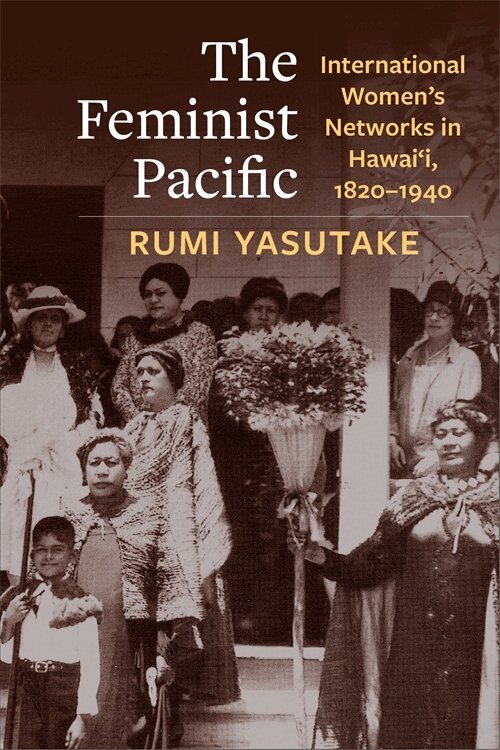
As competing American, European, and later Japanese imperial and colonial ambitions spread across the ocean in the nineteenth century, Honolulu emerged as a transnational hub for the exchange of ideas. Rumi Yasutake reveals the pivotal role of women’s organizing in this era of rapid globalization, tracing how diverse movements intersected and converged in Hawai‘i—with worldwide consequences.The Feminist Pacific examines transnational networks in Hawai‘i beginning in 1820, with the arrival of American missionary wives, and through the rise of women’s internationalism in the interwar years. It follows an array of suffragists, missionaries, maternalists, and antiwar activists in their international campaigns for peace and social justice that culminated in the formation of the Pan-Pacific Women’s Association (PPWA) and subsequent conferences. Yasutake explores how these movements radiated from Honolulu and branched out to the United States, Japan, and China. She illuminates their contradictions, showing how women’s striving for collective power went at once in the face of and hand in hand with globalization, settler colonialism, and imperialism. Yasutake underscores how the PPWA and the movements that formed it wrestled with the dichotomies of their world: home and public, domestic and foreign, native and settler, white and nonwhite, feminist and antifeminist. Bridging nineteenth-century Protestant churchwomen’s evangelism with twentieth-century feminist internationalism, this book recasts women’s global organizing from the perspective of the Pacific.
292 kr
Skickas inom 7-10 vardagar
As competing American, European, and later Japanese imperial and colonial ambitions spread across the ocean in the nineteenth century, Honolulu emerged as a transnational hub for the exchange of ideas. Rumi Yasutake reveals the pivotal role of women’s organizing in this era of rapid globalization, tracing how diverse movements intersected and converged in Hawai‘i—with worldwide consequences.The Feminist Pacific examines transnational networks in Hawai‘i beginning in 1820, with the arrival of American missionary wives, and through the rise of women’s internationalism in the interwar years. It follows an array of suffragists, missionaries, maternalists, and antiwar activists in their international campaigns for peace and social justice that culminated in the formation of the Pan-Pacific Women’s Association (PPWA) and subsequent conferences. Yasutake explores how these movements radiated from Honolulu and branched out to the United States, Japan, and China. She illuminates their contradictions, showing how women’s striving for collective power went at once in the face of and hand in hand with globalization, settler colonialism, and imperialism. Yasutake underscores how the PPWA and the movements that formed it wrestled with the dichotomies of their world: home and public, domestic and foreign, native and settler, white and nonwhite, feminist and antifeminist. Bridging nineteenth-century Protestant churchwomen’s evangelism with twentieth-century feminist internationalism, this book recasts women’s global organizing from the perspective of the Pacific.
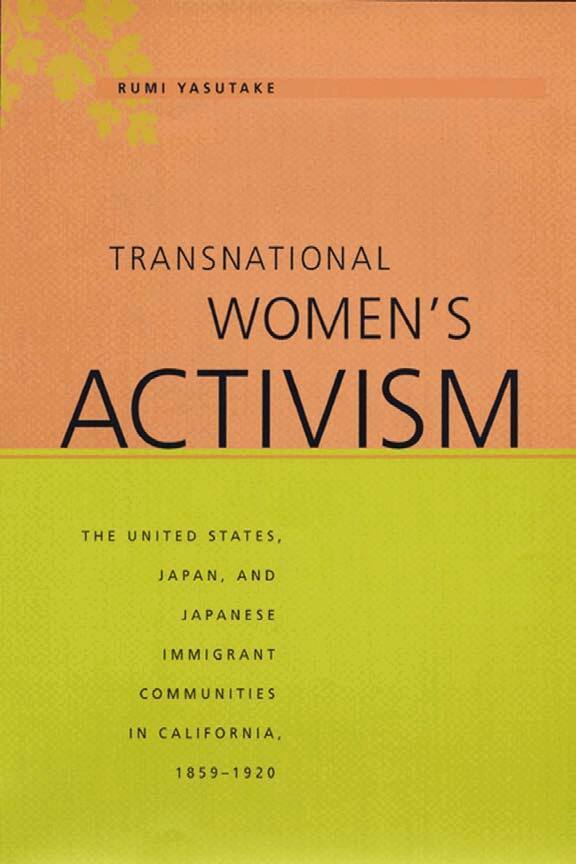
Transnational Women's Activism
The United States, Japan, and Japanese Immigrant Communities in California, 1859-1920
Inbunden, Engelska, 2004
849 kr
Skickas inom 10-15 vardagar
Following landmark trade agreements between Japan and the United States in the 1850s, Tokyo began importing a unique American commodity: Western social activism. As Japan sought to secure its future as a commercial power and American women pursued avenues of political expression, Protestant church-women and, later, members of the Women's Christian Temperance Union (WCTU) traveled to the Asian coast to promote Christian teachings and women's social activism.Rumi Yasutake reveals in Transnational Women's Activism that the resulting American, Japanese, and first generation Japanese-American women's movements came to affect more than alcohol or even religion. While the WCTU employed the language of evangelism and Victorian family values, its members were tactfully expedient in accommodating their traditional causes to suffrage and other feminist goals, in addition to the various political currents flowing through Japan and the United States at the turn of the nineteenth century.Exploring such issues as gender struggles in the American Protestant church and bourgeois Japanese women's attitudes towards the "pleasure class" of geishas and prostitutes, Yasutake illuminates the motivations and experiences of American missionaries, U.S. WCTU workers, and their Japanese protégés. The diverse machinations of WCTU activism offer a compelling lesson in the complexities of cultural imperialism.