Ruqayya Yasmine Khan - Böcker
Visar alla böcker från författaren Ruqayya Yasmine Khan. Handla med fri frakt och snabb leverans.
4 produkter
4 produkter
2 100 kr
Skickas inom 10-15 vardagar
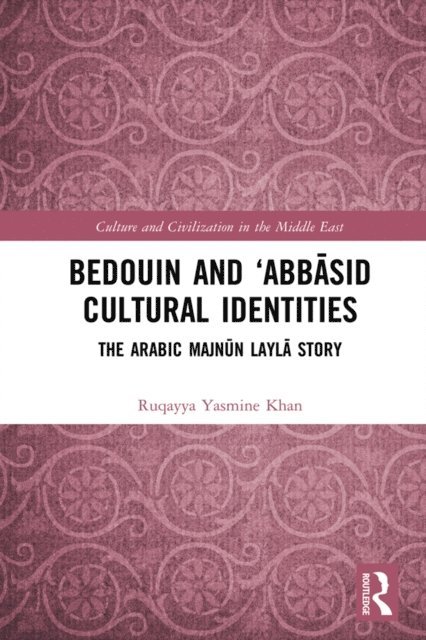
This literary-historical book draws out and sheds light upon the mechanisms of "the ideological work" that the Arabic Majnūn Laylā story performed for ‘Abbāsid urbanite, imperial audiences in the wake of the disappearance of the "Bedouin cosmos." The study focuses upon the processes of primitivizing Majnūn in the romance of Majnūn Laylā as part of the paradigm shift that occurred in the ‘Abbāsid empire after the Greco-Arabian intellectual revolution. Moreover, this book demonstrates how gender and sexuality are employed in the processes of primitivizing Majnūn. As markers of "strangeness" and "foreignness" in the ‘Abbāsid interrogations of the multiple categories of ethnicity, culture, identity, religion and language present in their cosmopolitan milieus. Such "cultural work" is performed through the ideological uses of alterity given its mechanisms of distancing (e.g., temporal and spatial) and nearness (e.g., affective). Lastly, the Majnūn Laylā love story demonstrates, in its text and reception, that a Greco-Arabian and Greco-Persian subculture thrived in the centers of ‘Abbāsid Baghdad that molded and shaped the ways in which this love story was compiled, received and performed.Offering a corrective to the prevailing views expressed in Western scholarly writings on the Greco-Arabian encounter, this book is a major contribution to scholars and students interested in Islamic studies, Arabic and comparative literature, Middle East and gender studies.
614 kr
Skickas inom 10-15 vardagar
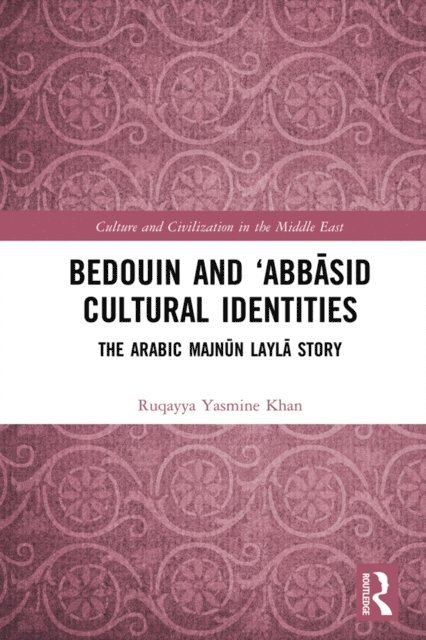
This literary-historical book draws out and sheds light upon the mechanisms of "the ideological work" that the Arabic Majnūn Laylā story performed for ‘Abbāsid urbanite, imperial audiences in the wake of the disappearance of the "Bedouin cosmos." The study focuses upon the processes of primitivizing Majnūn in the romance of Majnūn Laylā as part of the paradigm shift that occurred in the ‘Abbāsid empire after the Greco-Arabian intellectual revolution. Moreover, this book demonstrates how gender and sexuality are employed in the processes of primitivizing Majnūn. As markers of "strangeness" and "foreignness" in the ‘Abbāsid interrogations of the multiple categories of ethnicity, culture, identity, religion and language present in their cosmopolitan milieus. Such "cultural work" is performed through the ideological uses of alterity given its mechanisms of distancing (e.g., temporal and spatial) and nearness (e.g., affective). Lastly, the Majnūn Laylā love story demonstrates, in its text and reception, that a Greco-Arabian and Greco-Persian subculture thrived in the centers of ‘Abbāsid Baghdad that molded and shaped the ways in which this love story was compiled, received and performed.Offering a corrective to the prevailing views expressed in Western scholarly writings on the Greco-Arabian encounter, this book is a major contribution to scholars and students interested in Islamic studies, Arabic and comparative literature, Middle East and gender studies.
273 kr
Skickas inom 10-15 vardagar
The early twenty-first century has experienced an unrivaled dissemination of information and misinformation about Islam, its prophet Muhammad, and its followers, largely facilitated by the fact that the tragedy of 9/11 roughly coincided with the advent of the digital age. In the first collection of its kind, Ruqayya Khan has compiled essays that treat Muhammad and the core elements of Islam as focal points in an exploration of how the digital era-including social media and other expressions-have both had an effect on and been affected by Islam.Scholars from a variety of fields deal with topics such as the 2005 cartoon controversy in Denmark and the infamous 2012 movie trailer “Innocence of Muslims” that some believe sparked the attacks on the US consulate in Benghazi, as well as how the digitization of ancient texts have allowed the origins of Islam to be studied in new ways. Other essays examine how Muhammad’s wives have been represented in various online sources, including a web comic; the contrasting depictions of Muhammad as both a warrior and peacemaker; and how the widespread distribution of “the look” of Islamic terrorists has led to attacks on Sikhs, whose only point of resemblance to them may be a full beard. These findings illuminate the role of the Internet in forms of representation, advocacy, and engagement concerning Islam and Muslims in our world today.
479 kr
Skickas inom 7-10 vardagar
This book presents an original inquiry into the meanings of concealment and revelation in early Arabo-Islamic texts. In this comparative analysis of the significance of keeping and revealing secrets in early Islamic culture, Ruqayya Yasmine Khan draws from a broad range of Arabo-Islamic texts to map interconnections between concepts of secrecy and identity. In early Islamic discourse, Khan maintains, individual identity is integrally linked to a psychology of secrecy and revelation - a connection of even greater importance than what is being concealed or displayed. Khan further maintains that secrecy and identity demarcate boundaries for interpersonal relations when governed by the cultural norms of discretion espoused in these texts.As evidence for her study, Khan explores religious and literary representations of secrecy in classical texts as diverse as the Qur'an, the ""Book of Concealing the Secret and Holding the Tongue"" by al-Jahiz, and courtly love poems, including the story of Majnun and Layla. These works represent divergent approaches to spiritual, ethical, and romantic life in early Islam; yet Khan extrapolates from each a shared construction of secrecy and revelation.In advancing our understanding of the dynamic tensions between secrecy and revelation as depicted in these early Arabo-Islamic discourses, Khan illustrates that the creation of individual identity and subjectivity was inherently tied to these same tensions. The resulting analysis opens new vistas for understanding the meanings of secrecy in Islamic studies, Qur'anic studies, Islamic philosophy and mysticism, and Arabic literary studies as well as European intellectual history.