Ruth A. Miller – författare
Visar alla böcker från författaren Ruth A. Miller. Handla med fri frakt och snabb leverans.
18 produkter
The Biopolitics of Embryos and Alphabets
A Reproductive History of the Nonhuman
Inbunden, 2017
2215 kr
Lägg i varukorg
In recent decades there has been an explosion in work in the social and physical sciences describing the similarities between human and nonhuman as well as human and non-animal thinking. This work has explicitly decentered the brain as the sole, self-contained space of thought, and it has found …
The Biopolitics of Embryos and Alphabets
A Reproductive History of the Nonhuman
Häftad, 2017
516 kr
Lägg i varukorg
Biopolitics and posthumanism have been passé theories in the academy for a while now, standing on the unfashionable side of the fault line between biology and liberal thought. These days, if people invoke them, they do so a bit apologetically. But, as Ruth Miller argues, we should not be so quick …
Biopolitics of Embryos and Alphabets
A Reproductive History of the Nonhuman
E-bok, 2017
391 kr
Lägg i varukorg
Biopolitics and posthumanism have been passé theories in the academy for a while now, standing on the unfashionable side of the fault line between biology and liberal thought. These days, if people invoke them, they do so a bit apologetically. But, as Ruth Miller argues, we should not be so quick …
Biopolitics of Embryos and Alphabets
A Reproductive History of the Nonhuman
E-bok, 2017
391 kr
Lägg i varukorg
Biopolitics and posthumanism have been passé theories in the academy for a while now, standing on the unfashionable side of the fault line between biology and liberal thought. These days, if people invoke them, they do so a bit apologetically. But, as Ruth Miller argues, we should not be so quick …
Legislating Authority
Sin and Crime in the Ottoman Empire and Turkey
Häftad, 2013
817 kr
Lägg i varukorg
Legislation Authority addresses issues of law, state violence, and state authority within the Ottoman and Turkish context.
Seven Stories of Threatening Speech
Women''s Suffrage Meets Machine Code
E-bok, 2011
606 kr
Lägg i varukorg
Ruth A. Miller demonstrates the potential of taking nonhuman linguistic activity—such as the running of machine code—as an analytical model. Via a lively discussion of 19th-century pro- and antisuffragists, Miller tells a new computational story in which language becomes a thing that executes …
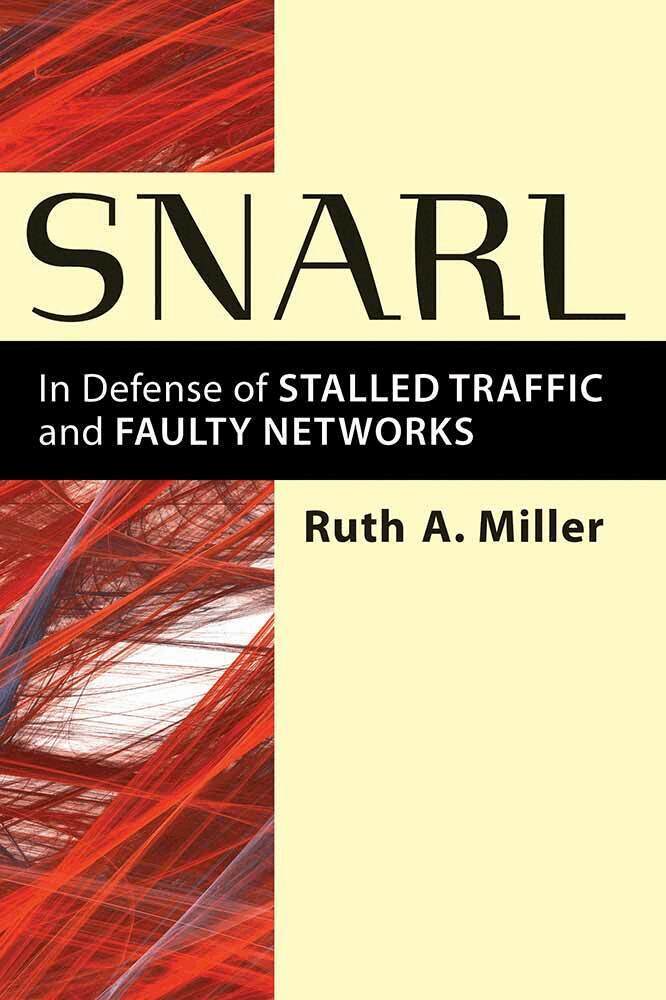
Snarl
In Defense of Stalled Traffic and Faulty Networks
E-bok, 2013
587 kr
Lägg i varukorg
Ruth A. Miller excavates a centuries-old history of nonhuman and nonbiological constitutional engagement and outlines a robust mechanical democracy that challenges existing theories of liberal and human political participation. Drawing on an eclectic set of legal, political, and automotive texts …
Seven Stories of Threatening Speech
Women's Suffrage Meets Machine Code
Häftad, 2012
398 kr
Lägg i varukorg
Ruth A. Miller demonstrates the potential of taking nonhuman linguistic activity—such as the running of machine code—as an analytical model. Via a lively discussion of 19th-century pro- and antisuffragists, Miller tells a new computational story in which language becomes a thing that executes …
Snarl
In Defense of Stalled Traffic and Faulty Networks
Häftad, 2014
383 kr
Lägg i varukorg
Ruth A. Miller excavates a centuries-old history of nonhuman and nonbiological constitutional engagement and outlines a robust mechanical democracy that challenges existing theories of liberal and human political participation. Drawing on an eclectic set of legal, political, and automotive texts …
Flourishing Thought
Democracy in an Age of Data Hoards
Inbunden, 2016
712 kr
Lägg i varukorg
Challenging the posthumanist canon that celebrates the preeminence of matter, Ruth Miller, in Flourishing Thought contends that what nonhuman systems contribute to democracy is thought. Drawing on recent feminist theories of nonhuman life and politics, Miller shows that reproduction and flourishing …
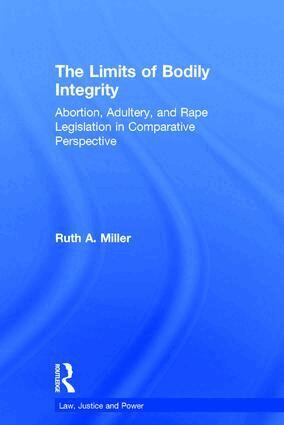
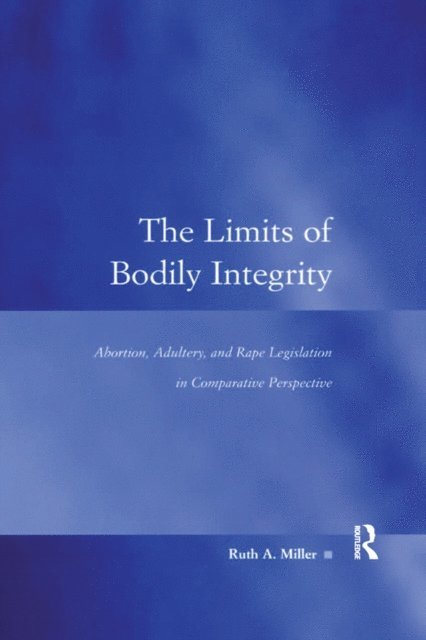
Limits of Bodily Integrity
Abortion, Adultery, and Rape Legislation in Comparative Perspective
Inbunden, 2007
2311 kr
Lägg i varukorg
This volume argues that legislation on abortion, adultery, and rape has been central to the formation of the modern citizen. The author draws on rights literature, bio-political scholarship, and a gender-studies perspective as a foundation for rethinking the sovereign relationship. In approaching …
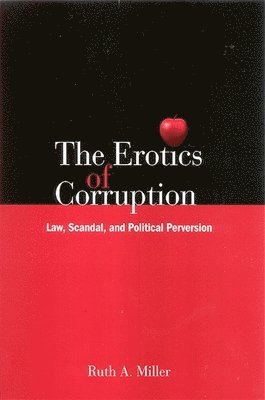
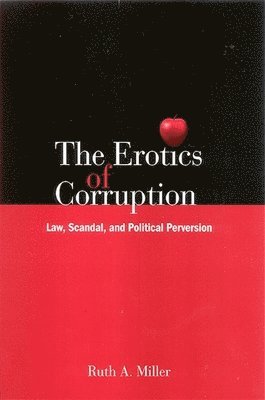
Erotics of Corruption
Law, Scandal, and Political Perversion
Häftad, 2009
477 kr
Lägg i varukorg
A provocative retelling of the story of political corruption in the modern period.In this provocative retelling of the story of political corruption in the modern period, Ruth A. Miller argues that narratives of political corruption rely upon an explicitly pornographic rhetoric and have been …
Law in Crisis
The Ecstatic Subject of Natural Disaster
Inbunden, 2009
786 kr
Lägg i varukorg
Taking natural disaster as the political and legal norm is uncommon. Taking a person who has become unstable and irrational during a disaster as the starting point for legal analysis is equally uncommon. Nonetheless, in Law in Crisis Ruth Miller makes the unsettling case that the law demands an …
Law in Crisis
The Ecstatic Subject of Natural Disaster
E-bok, 2009
873 kr
Lägg i varukorg
Taking natural disaster as the political and legal norm is uncommon. Taking a person who has become unstable and irrational during a disaster as the starting point for legal analysis is equally uncommon. Nonetheless, in Law in Crisis Ruth Miller makes the unsettling case that the law demands an …
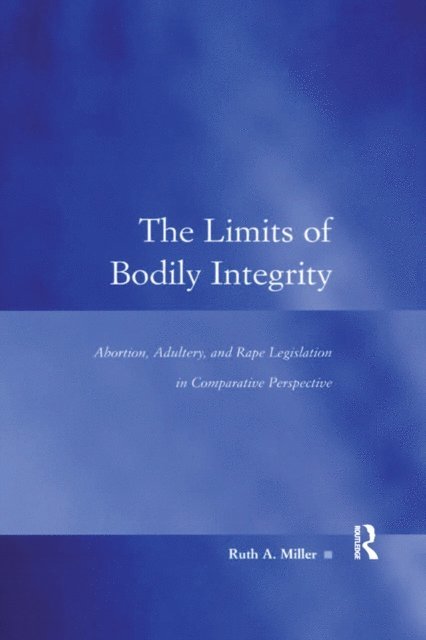
Limits of Bodily Integrity
Abortion, Adultery, and Rape Legislation in Comparative Perspective
Häftad, 2017
837 kr
Lägg i varukorg
This volume argues that legislation on abortion, adultery, and rape has been central to the formation of the modern citizen. The author draws on rights literature, bio-political scholarship, and a gender-studies perspective as a foundation for rethinking the sovereign relationship. In approaching …
Limits of Bodily Integrity
Abortion, Adultery, and Rape Legislation in Comparative Perspective
E-bok, 2016
988 kr
Lägg i varukorg
This volume argues that legislation on abortion, adultery, and rape has been central to the formation of the modern citizen. The author draws on rights literature, bio-political scholarship, and a gender-studies perspective as a foundation for rethinking the sovereign relationship. In approaching …
Limits of Bodily Integrity
Abortion, Adultery, and Rape Legislation in Comparative Perspective
E-bok, 2016
988 kr
Lägg i varukorg
This volume argues that legislation on abortion, adultery, and rape has been central to the formation of the modern citizen. The author draws on rights literature, bio-political scholarship, and a gender-studies perspective as a foundation for rethinking the sovereign relationship. In approaching …
Erotics of Corruption
Law, Scandal, and Political Perversion
Inbunden, 2008
1120 kr
Tillfälligt slut
A provocative retelling of the story of political corruption in the modern period.In this provocative retelling of the story of political corruption in the modern period, Ruth A. Miller argues that narratives of political corruption rely upon an explicitly pornographic rhetoric and have been …