Ruth Bubb - Böcker
Visar alla böcker från författaren Ruth Bubb. Handla med fri frakt och snabb leverans.
2 produkter
2 produkter
350 kr
Skickas inom 7-10 vardagar
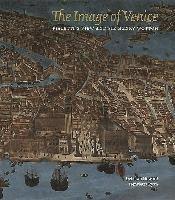
The city of Venice holds a special place in the global imagination. This book explores the creation of one of its largest surviving depictions, which has remained almost unknown to the wider public since its creation exactly four centuries ago. Singed and dated 1611, the painting is the work of the notable early seventeenth-century Bolognese artist Odoardo Fialetti. His huge birds-eye view of the watery townscape is enlivened by tiny vignettes of Venetian life. Eight square meters in size, this remarkable painting is a tour-de-force among depictions of cities. In 1636 the painting was given to Eton College by the former British ambassador to Venice, Sir Henry Wotton. Over the centuries it was known only to pupils and masters at the school, its surface obscured by layers of grime. Restored in 2010-11, Fialetti's view has emerged as a striking work of real artistic merit. Its prominent position in the British Museum's Shakespeare exhibition in the summer of 2012 brought it to the attention of the general public for the very first time. This book takes a closer look at the remarkable picture and the context in which it was created. What kind of artist was Odoardo Fialetti, a Bolognese immigrant hoping to fill the shoes of the recently deceased great masters of the Venetian Renaissance? What image does it present of Venice? What sort of a figure was Henry Wotton, and informed connoisseur and a passionate playing the European politics, though not as diplomatic as perhaps he should have been? This is a relatively neglected period of both in Venetian art history and in British culture, the Jacobean prelude to the enthusiasm for Venetian art of Charles I's court. This beautiful commemorative volume is interdisciplinary in scope, involving history of art, political history, cartography, architectural history and English literature and bibliophilia, as well as a story of restoration and its techniques, drawn together by one of the most distinctive views ever inspired by the townscape of Venice.
207 kr
Skickas inom 7-10 vardagar
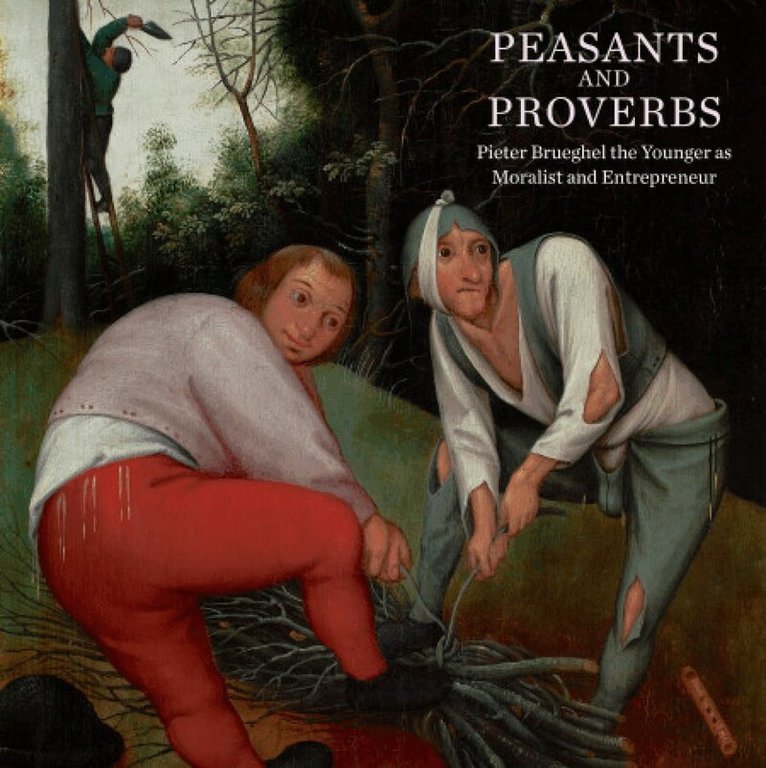
This catalogue accompanies an exhibition at the Barber Institute of Fine Arts that will shine a spotlight on Pieter Brueghel the Younger (1564 – 1637/38), an artist who was hugely successful in his lifetime but whose later reputation has been overshadowed by that of his famous father, Pieter Bruegel the Elder (c.1525 – 1569). Peasants and Proverbs: Pieter Brueghel the Younger as Moralist and Entrepreneur shares recent research into the Barber’s comical yet enigmatic little painting, Two Peasants Binding Firewood, setting out fresh insights and offering a new appreciation of a figure whose prodigious output and business skills firmly established and popularised the distinctive ‘Brueghelian’ look of Netherlandish peasant life. Born in Brussels, Pieter Brueghel the Younger was just five years old when his renowned father died prematurely. Clearly talented, by the time he was around 20 years old, Brueghel the Younger was already registered as a master in Antwerp’s Guild of Saint Luke. Between 1588, the year of his marriage, and 1626, he took on nine apprentices, demonstrating that he had established a successful studio. His workshop produced an abundance of paintings, ranging from exact copies of famous compositions by his father, to pastiches and more inventive compositions that further promoted the distinctive Bruegelian ‘family style’, usually focused on scenes of peasant life. He was, as a consequence, later deemed a second-rate painter, capable of only producing derivative works. This exhibition and book highlight how a more sophisticated understanding is now emerging of a creative and capable artist, and a savvy entrepreneur, who exploited favourable market conditions from his base in cosmopolitan Antwerp. From this deeper understanding of his practice, his favoured subjects and the market for them, we gain a more profound and compelling insight into the society in which he operated and its preoccupations and passions. A dozen other versions of Two Peasants Binding Firewood exist and, by examining some of them alongside the Barber painting, and using the insights gleaned from recent conservation work and technical analysis, the exhibition and book will explore how Brueghel the Younger operated his studio to produce and reproduce paintings, and the extent to which the entire enterprise was motivated by trends in the contemporary art market.