Ruth Fredman Cernea - Böcker
Visar alla böcker från författaren Ruth Fredman Cernea. Handla med fri frakt och snabb leverans.
5 produkter
5 produkter
592 kr
Skickas inom 3-6 vardagar
Creation versus evolution. Nature versus nurture. Free will versus determinism. Every November at the University of Chicago, the best minds in the world consider the question that ranks with these as one of the most enduring of human history: latke or hamantash? This great latke-hamantash debate, occurring every year for the past six decades, brings Nobel laureates, university presidents, and notable scholars together to debate whether the potato pancake or the triangular Purim pastry is in fact the worthier food. What began as an informal gathering is now an institution that has been replicated on campuses nationwide. Highly absurd yet deeply serious, the annual debate is an opportunity for both ethnic celebration and academic farce. In poetry, essays, jokes, and revisionist histories, members of elite American academies attack the latke-versus-hamantash question with intellectual panache and an unerring sense of humor, if not chutzpah."The Great Latke-Hamantash Debate" is the first collection of the best of these performances, from Martha Nussbaum's paean to both foods - in the style of Hecuba's Lament - to Nobel laureate Leon Lederman's proclamation on the union of the celebrated dyad. The latke and the hamantash are here revealed as playing a critical role in everything from Chinese history to the Renaissance, the works of Jane Austen to constitutional law. Eminent philosopher and humorist Ted Cohen supplies a wry foreword, and anthropologist Ruth Fredman Cernea provides a larger context with her overview of the Jewish holidays, recipes, and a glossary of Yiddish and Hebrew terms, making the book accessible even to the uninitiated. The University of Chicago may have split the atom in 1942, but it's still working on the equally significant issue of the latke versus the hamantash.
133 kr
Skickas inom 7-10 vardagar
Creation versus evolution. Nature versus nurture. Free will versus determinism. Every November at the University of Chicago, the best minds in the world consider the question that ranks with these as one of the most enduring of human history: latke or hamantash? This great latke-hamantash debate, occurring every year for the past six decades, brings Nobel laureates, university presidents, and notable scholars together to debate whether the potato pancake or the triangular Purim pastry is in fact the worthier food. What began as an informal gathering is now an institution that has been replicated on campuses nationwide. Highly absurd yet deeply serious, the annual debate is anopportunity for both ethnic celebration and academic farce. In poetry, essays, jokes, and revisionist histories, members of elite American academies attack the latke-versus-hamantash question with intellectual panache and an unerring sense of humor, if not chutzpah. The Great Latke-Hamantash Debate is the first collection of the best of these performances, from Martha Nussbaum's paean to both foods—in the style of Hecuba's Lament—to Nobel laureate Leon Lederman's proclamation on the union of the celebrated dyad. The latke and the hamantash are here revealed as playing a critical role in everything from Chinese history to the Renaissance, the works of Jane Austen to constitutional law. Philosopher and humorist Ted Cohen supplies a wry foreword, while anthropologist Ruth Fredman Cernea provides historical and social context as well as an overview of the Jewish holidays, latke and hamantash recipes, and a glossary of Yiddish and Hebrew terms, making the book accessible even to the uninitiated. The University of Chicago may have split the atom in 1942, but it's still working on the equally significant issue of the latke versus the hamantash. “As if we didn’t have enough on our plates, here’s something new to argue about. . . . To have to pick between sweet and savory, round and triangular, latke and hamantash. How to choose? . . . Thank goodness one of our great universities—Chicago, no less—is on the case. For more than 60 years, it has staged an annual latke-hamantash debate. . . . So, is this book funny? Of course it’s funny, even laugh-out-loud funny. It’s Mickey Katz in academic drag, Borscht Belt with a PhD.”—David Kaufmann, Forward
1 212 kr
Skickas inom 5-8 vardagar
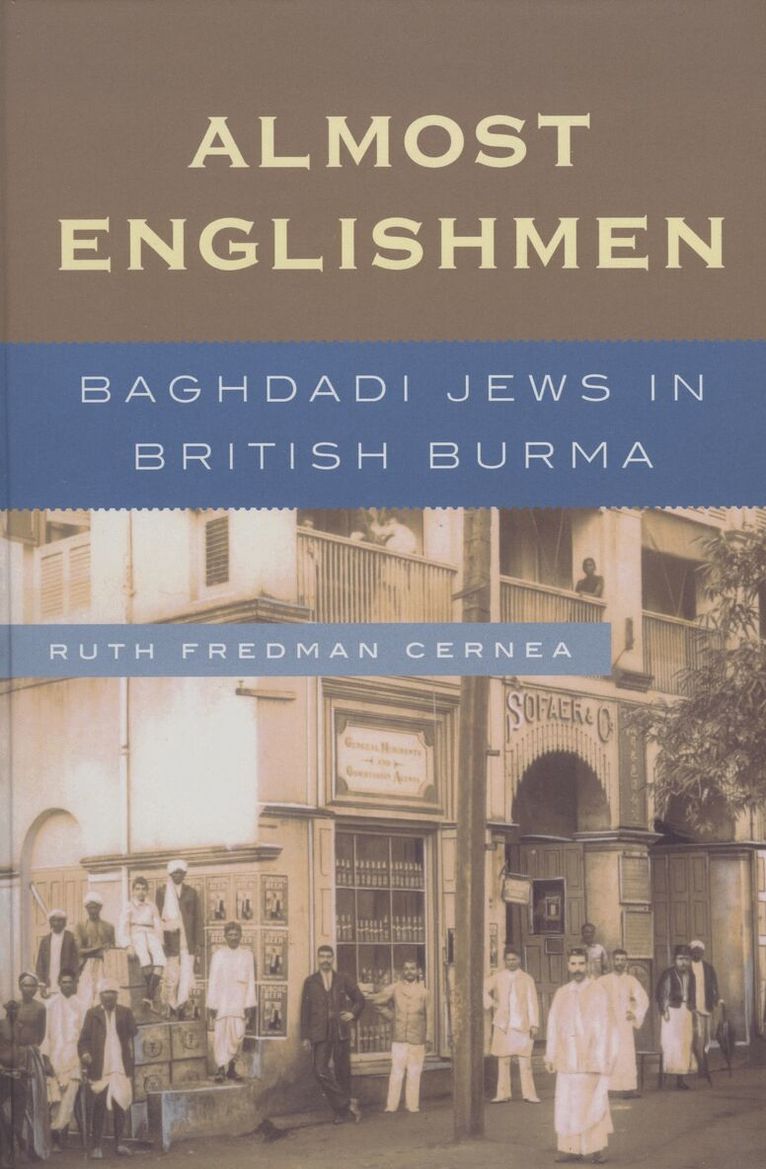
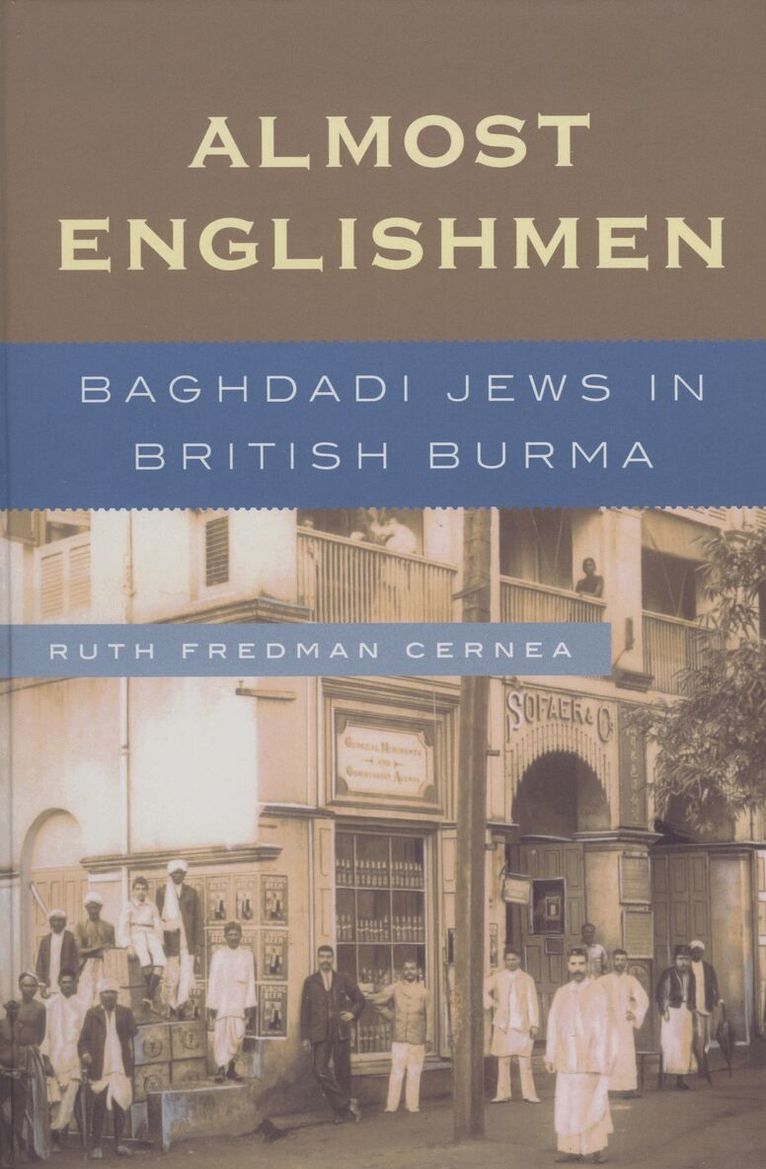
Before the Second World War, two golden "promised lands" beckoned the thousands of Baghdadi Jews who lived in Southeast Asia: the British Empire, on which "the sun never set," and the promised land of their religious tradition, Jerusalem. Almost Englishmen studies the less well-known of these destinations. The book combines history and cultural studies to look into a significant yet relatively unknown period, analyzing to full effect the way Anglo culture transformed the immigrant Bagdhadi Jews. England's influence was pervasive and persuasive: like other minorities in the complex society that was British India, the Baghdadis gradually refashioned their ideology and aspirations on the British model. The Jewish experience in the lush land of Burma, with its lifestyles, its educational system, and its internal tensions, is emblematic of the experience of the extended Baghdadi community, whether in Bombay, Calcutta, Shanghai, Singapore, or other ports and towns throughout Southeast Asia. It also suggests the experience of the Anglo-Indian and similar "European" populations that shared their streets as well as the classrooms of the missionary societies' schools. This contented life amidst golden pagodas ended abruptly with the Japanese invasion of Burma and a horrific trek to safety in India and could not be restored after the war. Employing first-person testimonies and recovered documents, this study illuminates this little known period in imperial and Jewish histories.
701 kr
Skickas inom 5-8 vardagar
Before the Second World War, two golden "promised lands" beckoned the thousands of Baghdadi Jews who lived in Southeast Asia: the British Empire, on which "the sun never set," and the promised land of their religious tradition, Jerusalem. Almost Englishmen studies the less well-known of these destinations. The book combines history and cultural studies to look into a significant yet relatively unknown period, analyzing to full effect the way Anglo culture transformed the immigrant Bagdhadi Jews. England's influence was pervasive and persuasive: like other minorities in the complex society that was British India, the Baghdadis gradually refashioned their ideology and aspirations on the British model. The Jewish experience in the lush land of Burma, with its lifestyles, its educational system, and its internal tensions, is emblematic of the experience of the extended Baghdadi community, whether in Bombay, Calcutta, Shanghai, Singapore, or other ports and towns throughout Southeast Asia. It also suggests the experience of the Anglo-Indian and similar "European" populations that shared their streets as well as the classrooms of the missionary societies' schools. This contented life amidst golden pagodas ended abruptly with the Japanese invasion of Burma and a horrific trek to safety in India and could not be restored after the war. Employing first-person testimonies and recovered documents, this study illuminates this little known period in imperial and Jewish histories.
808 kr
Skickas inom 10-15 vardagar
Each spring Jewish people throughout the world celebrate Passover with the ritual of the Seder. Through a detailed anthropological and symbolic analysis, Cernea shows why the Seder continues to be a fundamental part of the process by which Jewich society creates and defines itself. In an age in which ritual observance among Jews is on the decline, this ancient ritual is still vital. In this cohesive volume, Cernea uses anthropological theories, history, folklore, religious writings, and personal observation to explain how the Seder permits participants to see their current experience through the prism of society's history. The Seder plate, with its ordinary foods presented in an extraordinary manner, gives voice to other concepts vital to Jewish culture long after the Seder is over. Originally published in 1981 by the University of Pennsylvania Press.