Ruth Leys - Böcker
Visar alla böcker från författaren Ruth Leys. Handla med fri frakt och snabb leverans.
8 produkter
8 produkter
824 kr
Skickas inom 7-10 vardagar
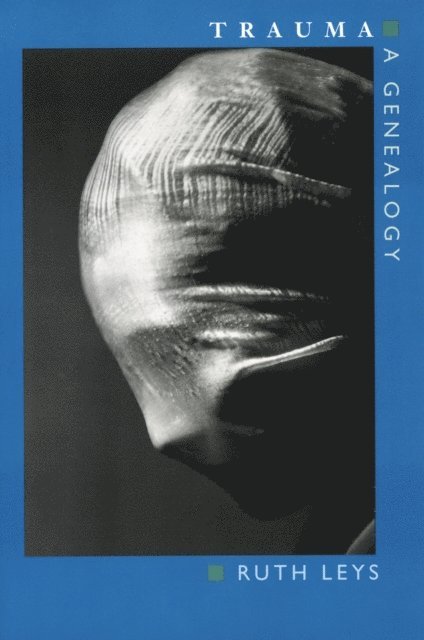
Psychic trauma is one of the most frequently invoked ideas in the behavioural sciences and the humanities today. Yet bitter disputes have marked the discussion of trauma ever since it first became an issue in the 1870s, growing even more heated in recent years following official recognition of post-traumatic stress disorder (PTSD). In a book that is bound to ignite controversy, Ruth Leys investigates the history of the concept of trauma. She explores the emergence of multiple personality disorder, Freud's approaches to trauma, medical responses to shell-shock and combat fatigue, Sandor Ferenczi's revisions of psychoanalysis, and the mutually reinforcing, often problematic work of certain contemporary neurobiological and postmodernist theorists. Leys argues that the concept of trauma has always been fundamentally unstable, oscillating uncontrollably between two competing models, each of which tends at its limit to collapse into the other. A powerfully argued work of intellectual history, "Trauma" will rewrite the terms of future discussion of its subject.
282 kr
Skickas inom 7-10 vardagar
Psychic trauma is one of the most frequently invoked ideas in the behavioural sciences and the humanities today. Yet bitter disputes have marked the discussion of trauma ever since it first became an issue in the 1870s, growing even more heated in recent years following official recognition of post-traumatic stress disorder (PTSD). In a book that is bound to ignite controversy, Ruth Leys investigates the history of the concept of trauma. She explores the emergence of multiple personality disorder, Freud's approaches to trauma, medical responses to shell-shock and combat fatigue, Sandor Ferenczi's revisions of psychoanalysis, and the mutually reinforcing, often problematic work of certain contemporary neurobiological and postmodernist theorists. Leys argues that the concept of trauma has always been fundamentally unstable, oscillating uncontrollably between two competing models, each of which tends at its limit to collapse into the other. A powerfully argued work of intellectual history, "Trauma" will rewrite the terms of future discussion of its subject.
958 kr
Tillfälligt slut
In recent years, the emotions have become a major, vibrant topic of research not merely in the biological and psychological sciences but throughout a wide swath of the humanities and social sciences as well. Yet, surprisingly, there is still no consensus on their basic nature or workings. Ruth Leys's brilliant, much anticipated history, therefore, is a story of controversy and disagreement. The Ascent of Affect focuses on the post-World War II period, when interest in the emotions as an object of study began to revive. Leys analyzes the ongoing debate over how to understand the emotions, paying particular attention to the continual conflict between camps that argue for the intentionality or meaning of emotions but have trouble explaining their presence in non-human animals and those that argue for the universality of emotions but struggle when the question turns to meaning.Addressing the work of key figures from across the spectrum, considering the potentially misleading appeal of neuroscience for those working in the humanities, and bringing her story fully up to date by taking in the latest debates, Leys presents here the most thorough analysis available of how we have tried to think about how we feel.
306 kr
Skickas inom 7-10 vardagar
In recent years, the emotions have become a major, vibrant topic of research not merely in the biological and psychological sciences but throughout a wide swath of the humanities and social sciences as well. Yet, surprisingly, there is still no consensus on their basic nature or workings. Ruth Leys's brilliant, much anticipated history, therefore, is a story of controversy and disagreement. The Ascent of Affect focuses on the post-World War II period, when interest in the emotions as an object of study began to revive. Leys analyzes the ongoing debate over how to understand the emotions, paying particular attention to the continual conflict between camps that argue for the intentionality or meaning of emotions but have trouble explaining their presence in non-human animals and those that argue for the universality of emotions but struggle when the question turns to meaning.Addressing the work of key figures from across the spectrum, considering the potentially misleading appeal of neuroscience for those working in the humanities, and bringing her story fully up to date by taking in the latest debates, Leys presents here the most thorough analysis available of how we have tried to think about how we feel.
885 kr
Skickas inom 7-10 vardagar
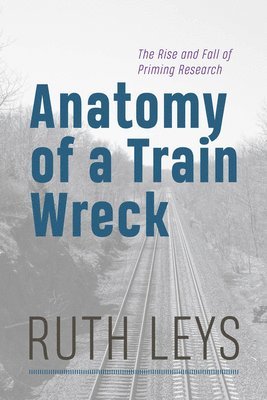
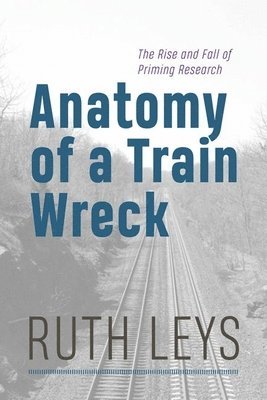
A history of “priming” research that analyzes the field’s underlying assumptions and experimental protocols to shed new light on a contemporary crisis in social psychology. In 2012, a team of Belgian scientists reported that they had been unable to replicate a canonical experiment in the field of psychology known as “priming.” The original experiment, performed by John Bargh in the nineties, had purported to show that words connoting old age unconsciously influenced—or primed—research subjects, causing them to walk more slowly. When subsequent researchers could not replicate these results, Nobel-winning psychologist Daniel Kahneman warned of a “train wreck looming” if Bargh and his colleagues could not address doubts about their work. Since then, the inability to replicate other well-known priming experiments has helped precipitate an ongoing debate over what has gone wrong in psychology, raising fundamental questions about the soundness of research practices in the field. Anatomy of a Train Wreck offers the first detailed history of priming research from its origins in the early 1980s to its recent collapse. Ruth Leys places priming experiments in the context of contemporaneous debates over not only the nature of automaticity but also the very foundations of social psychology. While these latest discussions about priming have largely focused on methodology—including sloppy experimental practices, inadequate statistical methods, and publication bias—Leys offers a genealogy of the theoretical expectations and scientific paradigms that have guided and motivated priming research itself. Examining scientists’ intellectual strategies, their responses to criticism, and their assumptions about the nature of subjectivity, Anatomy of a Train Wreck raises crucial questions about the evidence surrounding unconscious influence and probes the larger stakes of the replication crisis: psychology’s status as a science.
274 kr
Skickas inom 7-10 vardagar
A history of “priming” research that analyzes the field’s underlying assumptions and experimental protocols to shed new light on a contemporary crisis in social psychology. In 2012, a team of Belgian scientists reported that they had been unable to replicate a canonical experiment in the field of psychology known as “priming.” The original experiment, performed by John Bargh in the nineties, had purported to show that words connoting old age unconsciously influenced—or primed—research subjects, causing them to walk more slowly. When subsequent researchers could not replicate these results, Nobel-winning psychologist Daniel Kahneman warned of a “train wreck looming” if Bargh and his colleagues could not address doubts about their work. Since then, the inability to replicate other well-known priming experiments has helped precipitate an ongoing debate over what has gone wrong in psychology, raising fundamental questions about the soundness of research practices in the field. Anatomy of a Train Wreck offers the first detailed history of priming research from its origins in the early 1980s to its recent collapse. Ruth Leys places priming experiments in the context of contemporaneous debates over not only the nature of automaticity but also the very foundations of social psychology. While these latest discussions about priming have largely focused on methodology—including sloppy experimental practices, inadequate statistical methods, and publication bias—Leys offers a genealogy of the theoretical expectations and scientific paradigms that have guided and motivated priming research itself. Examining scientists’ intellectual strategies, their responses to criticism, and their assumptions about the nature of subjectivity, Anatomy of a Train Wreck raises crucial questions about the evidence surrounding unconscious influence and probes the larger stakes of the replication crisis: psychology’s status as a science.
339 kr
Skickas inom 7-10 vardagar
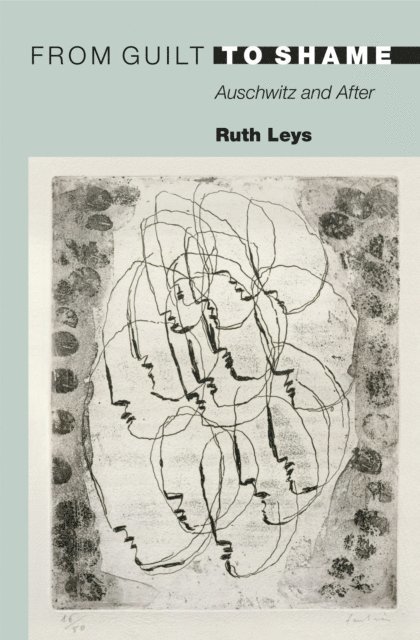
Why has shame recently displaced guilt as a dominant emotional reference in the West? After the Holocaust, survivors often reported feeling guilty for living when so many others had died, and in the 1960s psychoanalysts and psychiatrists in the United States helped make survivor guilt a defining feature of the "survivor syndrome." Yet the idea of survivor guilt has always caused trouble, largely because it appears to imply that, by unconsciously identifying with the perpetrator, victims psychically collude with power. In From Guilt to Shame, Ruth Leys has written the first genealogical-critical study of the vicissitudes of the concept of survivor guilt and the momentous but largely unrecognized significance of guilt's replacement by shame. Ultimately, Leys challenges the theoretical and empirical validity of the shame theory proposed by figures such as Silvan Tomkins, Eve Kosofsky Sedgwick, and Giorgio Agamben, demonstrating that while the notion of survivor guilt has depended on an intentionalist framework, shame theorists share a problematic commitment to interpreting the emotions, including shame, in antiintentionalist and materialist terms.
234 kr
Skickas inom 7-10 vardagar
Newborn imitation has recently become the focus of a major controversy in the human sciences. New studies have reexamined the evidence and found it wanting. Imitation has been regarded as a crucial capability of neonates ever since 1977, when two American psychologists first published experiments appearing to demonstrate that babies at birth are able to copy a variety of facial movements. The findings overturned decades of assumptions about the competence of newborns. But what if claims for newborn imitation are not true? Influential theories about the mechanisms underlying imitation, the role of mirror neurons, the nature of the self and of infant mental states, will all have to be modified or abandoned if it turns out that babies cannot imitate at birth. This Element offers a critical assessment of those theories and the stakes involved.