Ruth MacKay - Böcker
Visar alla böcker från författaren Ruth MacKay. Handla med fri frakt och snabb leverans.
7 produkter
7 produkter
320 kr
Skickas inom 7-10 vardagar
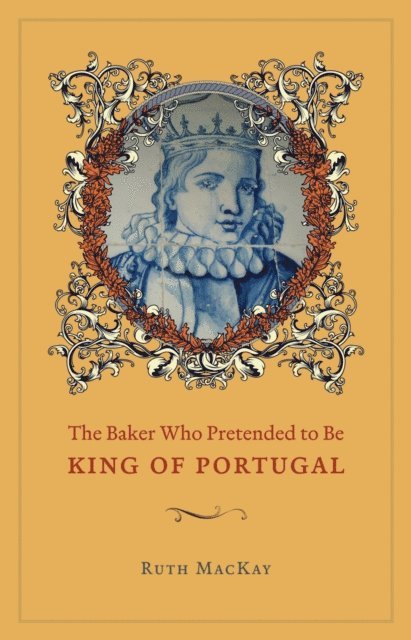
On August 4, 1578, in an ill-conceived attempt to wrest Morocco back from the hands of the infidel Moors, King Sebastian of Portugal led his troops to slaughter and was himself slain. Sixteen years later, King Sebastian rose again. In one of the most famous of European impostures, Gabriel de Espinosa, an ex-soldier and baker by trade - and most likely under the guidance of a distinguished Portuguese friar - appeared in a Spanish convent town passing himself off as the lost monarch. The principals, along with a large cast of nuns, monks, and servants, were confined and questioned for nearly a year as a crew of judges tried to unravel the story, but the culprits went to their deaths with many questions left unanswered. Ruth MacKay recalls this conspiracy, marked both by scheming and absurdity, and the legal inquest that followed, to show how stories of this kind are conceived, told, circulated, and believed. The story of Sebastian - supposedly in hiding and planning to return to claim his crown - was lodged among other familiar stories: prophecies of returned leaders, nuns kept against their will, kidnappings by Moors, miraculous escapes, and monarchs who die for their country.As MacKay demonstrates, the conspiracy could not have succeeded without the circulation of news, the retellings of the fatal battle in well-read chronicles, and the networks of rumors and correspondents, all sharing the hope or belief that Sebastian had survived and would one day return. With its royal intrigues, ambitious artisans, dissatisfied religious women, and corrupt clergy, "The Baker Who Pretended to Be King of Portugal" will undoubtedly captivate readers as it sheds new light on the intricate political and cultural relations between Spain and Portugal in the early modern period and the often elusive nature of historical truth.
The Limits of Royal Authority
Resistance and Obedience in Seventeenth-Century Castile
Häftad, Engelska, 2007
604 kr
Skickas inom 7-10 vardagar
In what is sometimes called the age of absolutism, Castilian nobles and commoners, tribunes and towns, were to a considerable degree able to resist and shape royal commands. Whereas there was little open conflict, there was sometimes a surprising degree of autonomy, rights and reciprocity on the part of the king's vassals. This is a study of one such form of resistance: the opposition to military levies. This opposition took place during a period of crisis, during the 1630s and 1640s, when the Crown's need to raise an army came into conflict with a notion of kingship that was far from absolute. From the king's advisory councils to parliament, from city councils and seigneurial estates, to the most humble villages, Castilians had recourse to a wide range of political and juridictional means with which to dispute the king's claims and avoid conscription.
The Limits of Royal Authority
Resistance and Obedience in Seventeenth-Century Castile
Inbunden, Engelska, 1999
1 417 kr
Skickas inom 7-10 vardagar
In what is sometimes called the age of absolutism, Castilian nobles and commoners, tribunes and towns, were to a considerable degree able to resist and shape royal commands. Whereas there was little open conflict, there was sometimes a surprising degree of autonomy, rights and reciprocity on the part of the king's vassals. This is a study of one such form of resistance: the opposition to military levies. This opposition took place during a period of crisis, during the 1630s and 1640s, when the Crown's need to raise an army came into conflict with a notion of kingship that was far from absolute. From the king's advisory councils to parliament, from city councils and seigneurial estates, to the most humble villages, Castilians had recourse to a wide range of political and juridictional means with which to dispute the king's claims and avoid conscription.
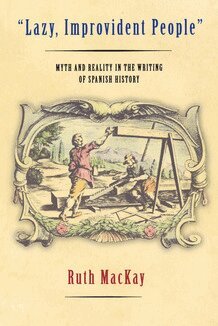
"Lazy, Improvident People"
Myth and Reality in the Writing of Spanish History
Inbunden, Engelska, 2006
1 574 kr
Skickas inom 10-15 vardagar
Since the early modern era, historians and observers of Spain, both within the country and beyond it, have identified a peculiarly Spanish disdain for work, especially manual labor, and have seen it as a primary explanation for that nation's alleged failure to develop like the rest of Europe. In "Lazy, Improvident People," the historian Ruth MacKay examines the origins of this deeply ingrained historical prejudice and cultural stereotype. MacKay finds these origins in the ilustrados, the Enlightenment intellectuals and reformers who rose to prominence in the late eighteenth century. To advance their own, patriotic project of rationalization and progress, they disparaged what had gone before. Relying in part on late medieval and early modern political treatises about "vile and mechanical" labor, they claimed that previous generations of Spaniards had been indolent and backward. Through a close reading of the archival record, MacKay shows that such treatises and dramatic literature in no way reflected the actual lives of early modern artisans, who were neither particularly slothful nor untalented. On the contrary, they behaved as citizens, and their work was seen as dignified and essential to the common good. MacKay contends that the ilustrados' profound misreading of their own past created a propagandistic myth that has been internalized by subsequent intellectuals. MacKay's is thus a book about the notion of Spanish exceptionalism, the ways in which this notion developed, and the burden and skewed vision it has imposed on Spaniards and outsiders. "Lazy, Improvident People" will fascinate not only historians of early modern and modern Spain but all readers who are concerned with the process by which historical narratives are formed, reproduced, and given authority.
491 kr
Skickas inom 10-15 vardagar
Since the early modern era, historians and observers of Spain, both within the country and beyond it, have identified a peculiarly Spanish disdain for work, especially manual labor, and have seen it as a primary explanation for that nation's alleged failure to develop like the rest of Europe. In "Lazy, Improvident People," the historian Ruth MacKay examines the origins of this deeply ingrained historical prejudice and cultural stereotype. MacKay finds these origins in the ilustrados, the Enlightenment intellectuals and reformers who rose to prominence in the late eighteenth century. To advance their own, patriotic project of rationalization and progress, they disparaged what had gone before. Relying in part on late medieval and early modern political treatises about "vile and mechanical" labor, they claimed that previous generations of Spaniards had been indolent and backward. Through a close reading of the archival record, MacKay shows that such treatises and dramatic literature in no way reflected the actual lives of early modern artisans, who were neither particularly slothful nor untalented. On the contrary, they behaved as citizens, and their work was seen as dignified and essential to the common good. MacKay contends that the ilustrados' profound misreading of their own past created a propagandistic myth that has been internalized by subsequent intellectuals. MacKay's is thus a book about the notion of Spanish exceptionalism, the ways in which this notion developed, and the burden and skewed vision it has imposed on Spaniards and outsiders. "Lazy, Improvident People" will fascinate not only historians of early modern and modern Spain but all readers who are concerned with the process by which historical narratives are formed, reproduced, and given authority.
657 kr
Skickas inom 5-8 vardagar
474 kr
Skickas inom 7-10 vardagar
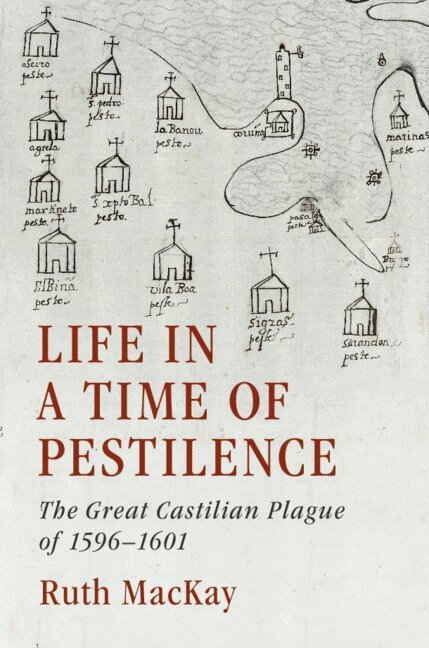
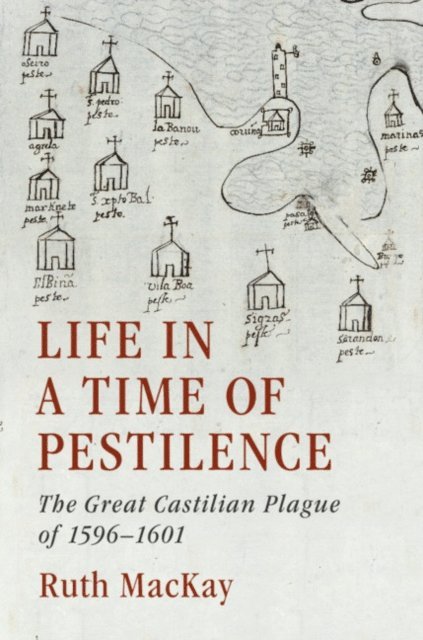
From the Middle Ages onwards, deadly epidemics swept through portions of Spain repeatedly, but the Castilian Plague at the end of the sixteenth century was especially terrible. In late 1596, a ship carrying the plague docked in Santander, and over the next five years the disease killed some 500,000 people in Castile, around 10 percent of the population. Plague is traditionally understood to have triggered chaos and madness. By contrast, Ruth Mackay focuses on the sites of everyday life, exploring how beliefs, practices, laws, and relationships endured even under the onslaught of disease. She takes an original and holistic approach to understanding the impact of plague, and explores how the epidemic was understood and managed by everyday people. Offering a fresh perspective on the social, political, and economic history of Spain, this original and engaging book demonstrates how, even in the midst of chaos, life carried on.