Ruth Stone – författare
Visar alla böcker från författaren Ruth Stone. Handla med fri frakt och snabb leverans.
11 produkter
11 produkter
258 kr
Skickas inom 3-6 vardagar
2 176 kr
Skickas inom 10-15 vardagar
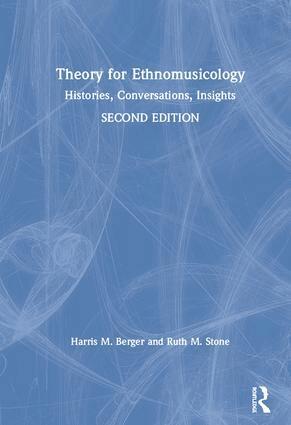
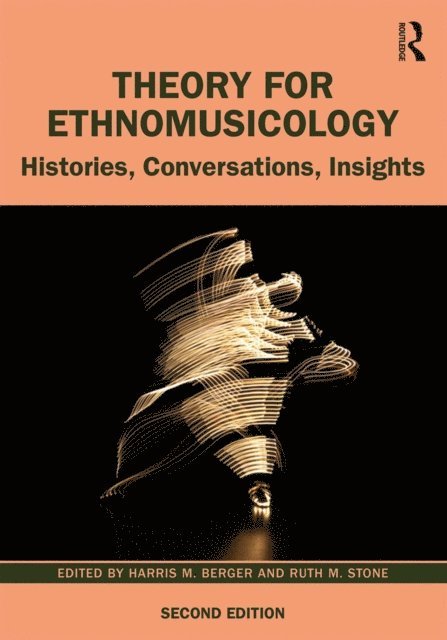
Theory for Ethnomusicology: Histories, Conversations, Insights, Second Edition, is a foundational work for courses in ethnomusicological theory. The book examines key intellectual movements and topic areas in social and cultural theory, and explores the way they have been taken up in ethnomusicological research. New co-author Harris M. Berger and Ruth M. Stone investigate the discipline’s past, present, and future, reflecting on contemporary concerns while cataloging significant developments since the publication of the first edition in 2008.A dozen contributors approach a broad range of theoretical topics alive in ethnomusicology. Each chapter examines ethnographic and historical works from within ethnomusicology, showcasing the unique contributions scholars in the field have made to wider, transdisciplinary dialogs, while illuminating the field’s relevance and pointing the way toward new horizons of research.New to this edition: Every chapter in the book is completely new, with richer and more comprehensive discussions.New chapters have been added on gender and sexuality, sound and voice studies, performance and critical improvisation studies, and theories of participation.New text boxes and notes make connections among the chapters, emphasizing points of contact and conflict among intellectual movements.
749 kr
Skickas inom 10-15 vardagar
Theory for Ethnomusicology: Histories, Conversations, Insights, Second Edition, is a foundational work for courses in ethnomusicological theory. The book examines key intellectual movements and topic areas in social and cultural theory, and explores the way they have been taken up in ethnomusicological research. New co-author Harris M. Berger and Ruth M. Stone investigate the discipline’s past, present, and future, reflecting on contemporary concerns while cataloging significant developments since the publication of the first edition in 2008.A dozen contributors approach a broad range of theoretical topics alive in ethnomusicology. Each chapter examines ethnographic and historical works from within ethnomusicology, showcasing the unique contributions scholars in the field have made to wider, transdisciplinary dialogs, while illuminating the field’s relevance and pointing the way toward new horizons of research.New to this edition: Every chapter in the book is completely new, with richer and more comprehensive discussions.New chapters have been added on gender and sexuality, sound and voice studies, performance and critical improvisation studies, and theories of participation.New text boxes and notes make connections among the chapters, emphasizing points of contact and conflict among intellectual movements.
237 kr
Tillfälligt slut
182 kr
Skickas inom 5-8 vardagar
213 kr
Tillfälligt slut
182 kr
Skickas inom 5-8 vardagar
336 kr
Skickas inom 3-6 vardagar
182 kr
Skickas inom 5-8 vardagar
223 kr
Skickas inom 5-8 vardagar
197 kr
Tillfälligt slut
Ruth Stone once said, ‘I decided very early on not to write like other people.’ What Love Comes To shows the fruits of this resolve in the lifetime’s work of a true American original. The winner of the National Book Award at the age of 87, Ruth Stone was still writing extraordinary poetry well into her 90s. This comprehensive selection includes early formal lyrics, fierce feminist and political poems, and meditations on her husband’s suicide, on love, loss, blindness and ageing. What Love Comes To opens up her own particular world of serious laughter; of uncertainty and insight; of mystery and acceptance. It is a Poetry Book Society Recommendation.The book has a foreword by Sharon Olds, who ‘had the joy of meeting Ruth Stone’ as a teenager, a later encounter giving her ‘a vision of a genius at work’:‘Ruth Stone’s poems are mysterious, hilarious, powerful. They are understandable, often with a very clear surface, but not simple – their intelligence is crackling and complex… She is a poet of great humor – mockery even – and a bold eye, not obedient. There is also disrespect in her poems, a taken freedom, that feels to me like a strength of the disenfranchised. Ruth’s poems are direct and lissome, her plainness is elegant and shapely, her music is basic, classical: it feels as real as the movement of matter. When we hear a Stone first line, it is as if we have been hearing this voice in our head all day, and just now the words become audible. She is a seer, easily speaking clear truths somehow unmentioned until now… She has a tragic deadpan humor: love and destruction are right next to each other…’