Ruti Teitel - Böcker
Visar alla böcker från författaren Ruti Teitel. Handla med fri frakt och snabb leverans.
2 produkter
2 produkter
548 kr
Skickas inom 5-8 vardagar
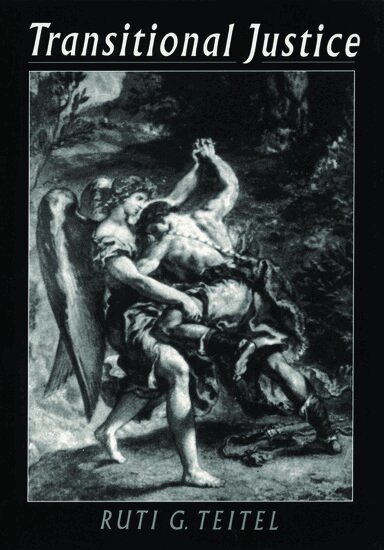
At the century's end, societies all over the world are moving from authoritarian rule to democracy. At any such time of radical change, the question arises: should a society punish its ancien regime or let bygones by bygones? Transitional Justice takes the debate to a new level with an interdisciplinary approach that challenges the very terms of the contemporary debate. Teitel explores the recurring question of how regimes should respond to evil rule, arguing against the prevailing view favoring punishment, and contending through historical and comparative illustrations that the law nevertheless plays a profound role in periods of radical change. She proposes a new normative conception of justice--one that is highly politicized--offering glimmerings of the rule of law that, in her view, have become symbols of liberal transition.
438 kr
Skickas inom 5-8 vardagar
In Humanity's Law, renowned legal scholar Ruti Teitel offers a powerful account of one of the central transformations of the post-Cold War era: the profound normative shift in the international legal order from prioritizing state security to protecting human security. As she demonstrates, courts, tribunals, and other international bodies now rely on a humanity-based framework to assess the rights and wrongs of conflict; to determine whether and how to intervene; and to impose accountability and responsibility. Cumulatively, the norms represent a new law of humanity that spans the law of war, international human rights, and international criminal justice. Teitel explains how this framework is reshaping the discourse of international politics with a new approach to the management of violent conflict. Teitel maintains that this framework is most evidently at work in the jurisprudence of the tribunals-international, regional, and domestic-that are charged with deciding disputes that often span issues of internal and international conflict and security. The book demonstrates how the humanity law framework connects the mandates and rulings of diverse tribunals and institutions, addressing the fragmentation of global legal order. Comprehensive in approach, Humanity's Law considers legal and political developments related to violent conflict in Europe, North America, South America, and Africa. This interdisciplinary work is essential reading for anyone attempting to grasp the momentous changes occurring in global affairs as the management of conflict is increasingly driven by the claims and interests of persons and peoples, and state sovereignty itself is transformed.