Ruzena Bajcsy – författare
Visar alla böcker från författaren Ruzena Bajcsy. Handla med fri frakt och snabb leverans.
5 produkter
5 produkter
Inbunden, Engelska, 2000
561 kr
Skickas inom 10-15 vardagar
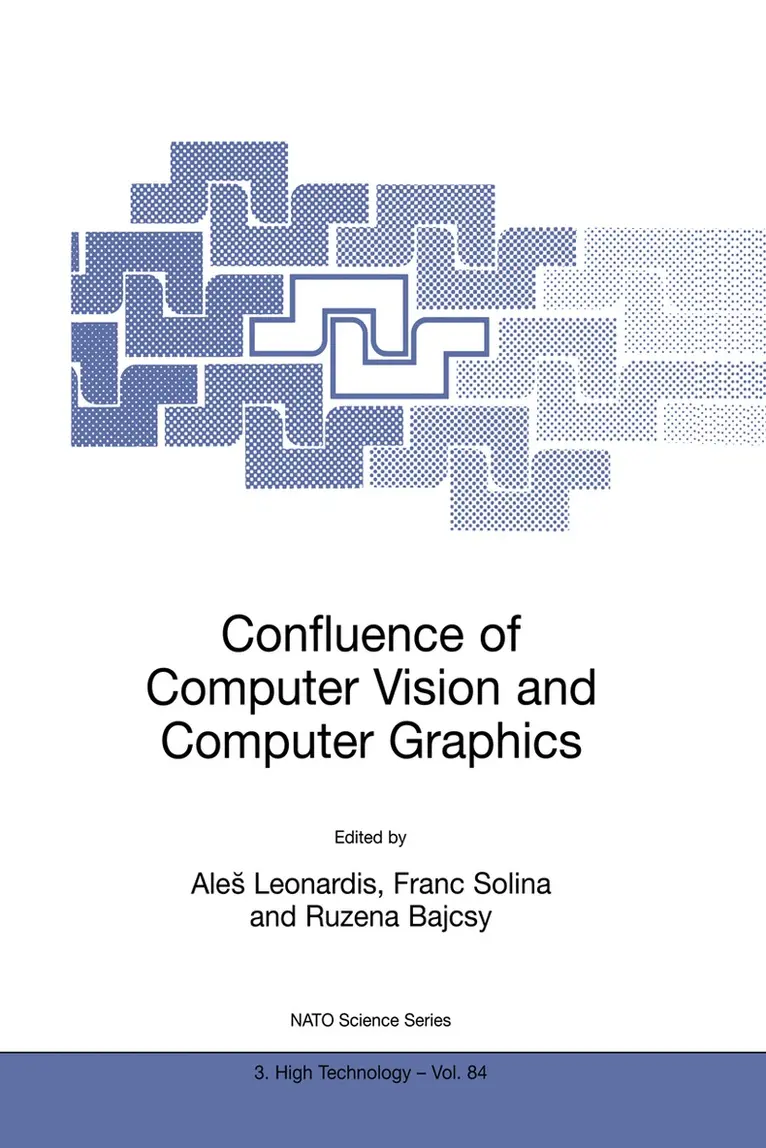
A collection of original contributions by researchers who work at the forefront of a new field at the intersection of computer vision and computer graphics. Several original approaches are presented to the integration of computer vision and graphics techniques to aid in the realistic modelling of objects and scenes, interactive computer graphics, augmented reality, and virtual studios. Numerous applications are also discussed, including urban and archaeological site modelling, modelling dressed humans, medical visualization, figure and facial animation, real-time 3D teleimmersion telecollaboration, augmented reality as a new user interface concept, and augmented reality in the understanding of underwater scenes.
Del 84 - NATO Science Partnership Subseries: 3
Confluence of Computer Vision and Computer Graphics
Häftad, Engelska, 2000
561 kr
Skickas inom 10-15 vardagar
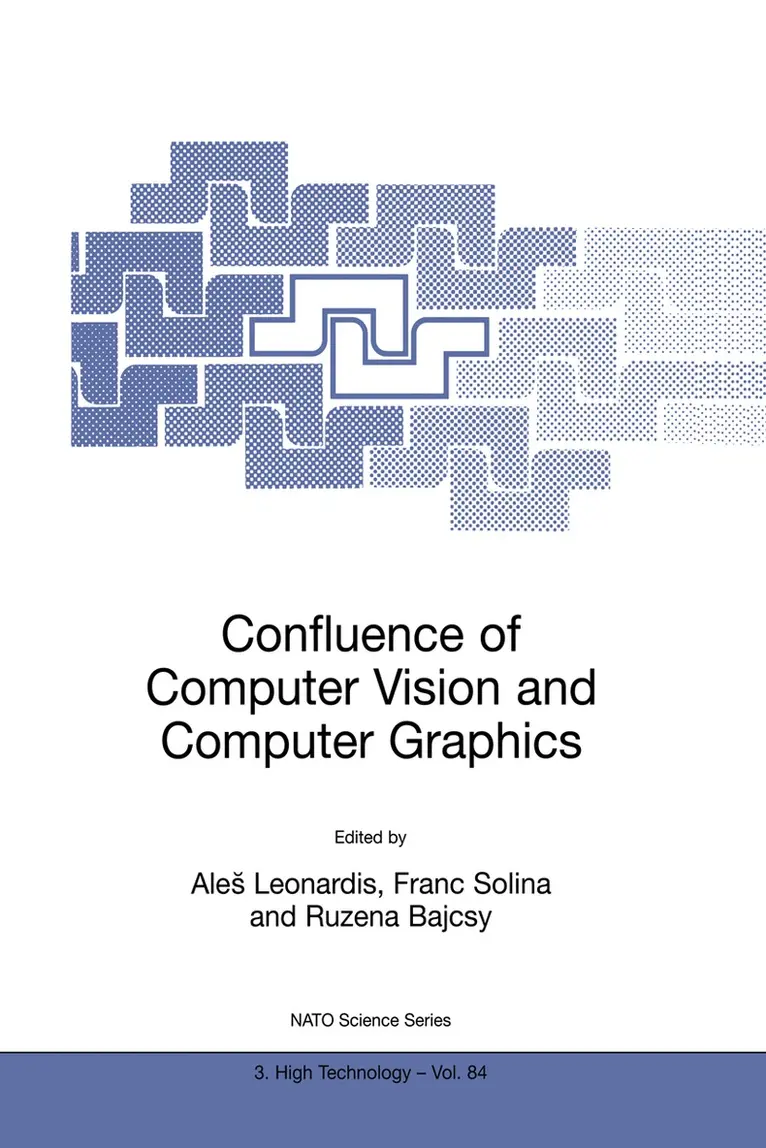
A collection of contributions by researchers who work at the forefront of the field, lying at the intersection of computer vision and computer graphics. Several original approaches are presented to the integration of computer vision and graphics techniques to aid in the realistic modelling of objects and scenes, interactive computer graphics, augmented reality, and virtual studios. Numerous applications are also discussed, including urban and archaeological site modelling, modelling dressed humans, medical visualization, figure and facial animation, real-time 3D teleimmersion telecollaboration, augmented reality as a new user interface concept, and augmented reality in the understanding of underwater scenes.
Häftad, Engelska, 1997
561 kr
Skickas inom 10-15 vardagar
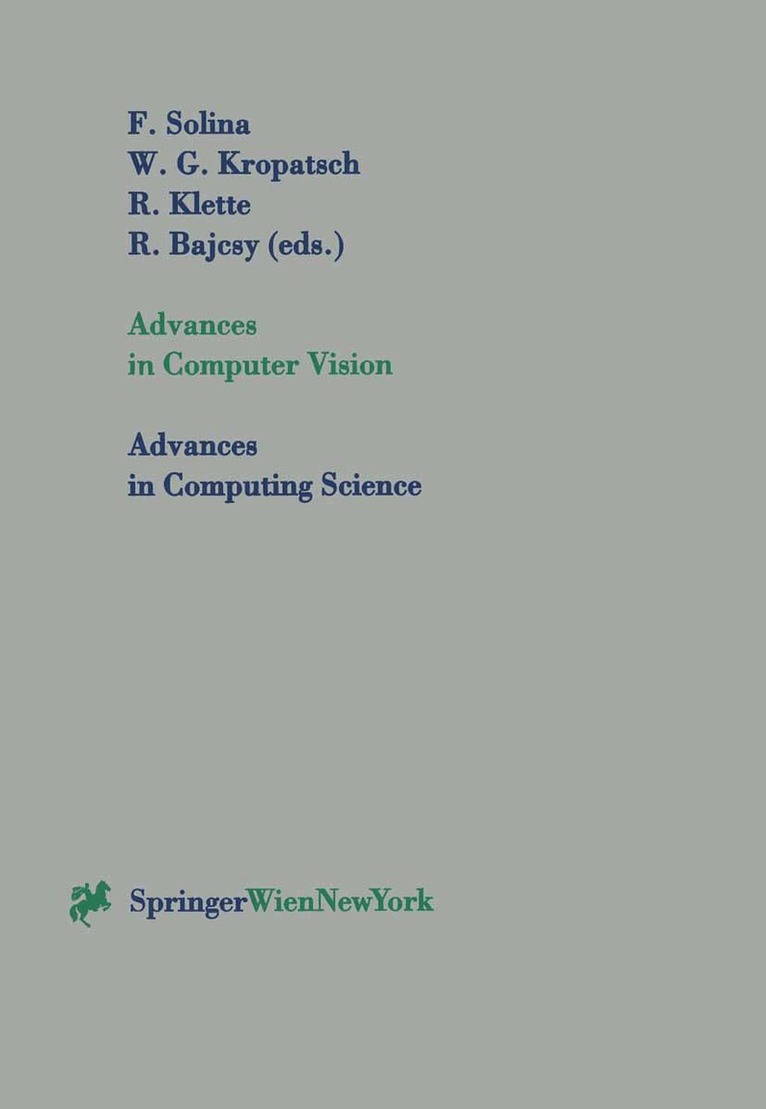
Computer vision solutions used to be very specific and difficult to adapt to different or even unforeseen situations. The current development is calling for simple to use yet robust applications that could be employed in various situations. This trend requires the reassessment of some theoretical issues in computer vision. A better general understanding of vision processes, new insights and better theories are needed. The papers selected from the conference staged in Dagstuhl in 1996 to gather scientists from the West and the former eastern-block countries address these goals and cover such fields as 2D images (scale space, morphology, segmentation, neural networks, Hough transform, texture, pyramids), recovery of 3-D structure (shape from shading, optical flow, 3-D object recognition) and how vision is integrated into a larger task-driven framework (hand-eye calibration, navigation, perception-action cycle).
E-bok
PDF, Engelska, 2012708 kr
Läs direkt efter köp
Computer vision solutions used to be very specific and difficult to adapt to different or even unforeseen situations. The current development is calling for simple to use yet robust applications that could be employed in various situations. This trend requires the reassessment of some theoretical issues in computer vision. A better general understanding of vision processes, new insights and better theories are needed. The papers selected from the conference staged in Dagstuhl in 1996 to gather scientists from the West and the former eastern-block countries address these goals and cover such fields as 2D images (scale space, morphology, segmentation, neural networks, Hough transform, texture, pyramids), recovery of 3-D structure (shape from shading, optical flow, 3-D object recognition) and how vision is integrated into a larger task-driven framework (hand-eye calibration, navigation, perception-action cycle).
E-bok
PDF, Engelska, 2012708 kr
Läs direkt efter köp
A collection of original contributions by researchers who work at the forefront of a new field, lying at the intersection of computer vision and computer graphics. Several original approaches are presented to the integration of computer vision and graphics techniques to aid in the realistic modelling of objects and scenes, interactive computer graphics, augmented reality, and virtual studios. Numerous applications are also discussed, including urban and archaeological site modelling, modelling dressed humans, medical visualisation, figure and facial animation, real-time 3D teleimmersion telecollaboration, augmented reality as a new user interface concept, and augmented reality in the understanding of underwater scenes.