Franc Solina – författare
Visar alla böcker från författaren Franc Solina. Handla med fri frakt och snabb leverans.
6 produkter
6 produkter
Del 11 - Computing Supplementa
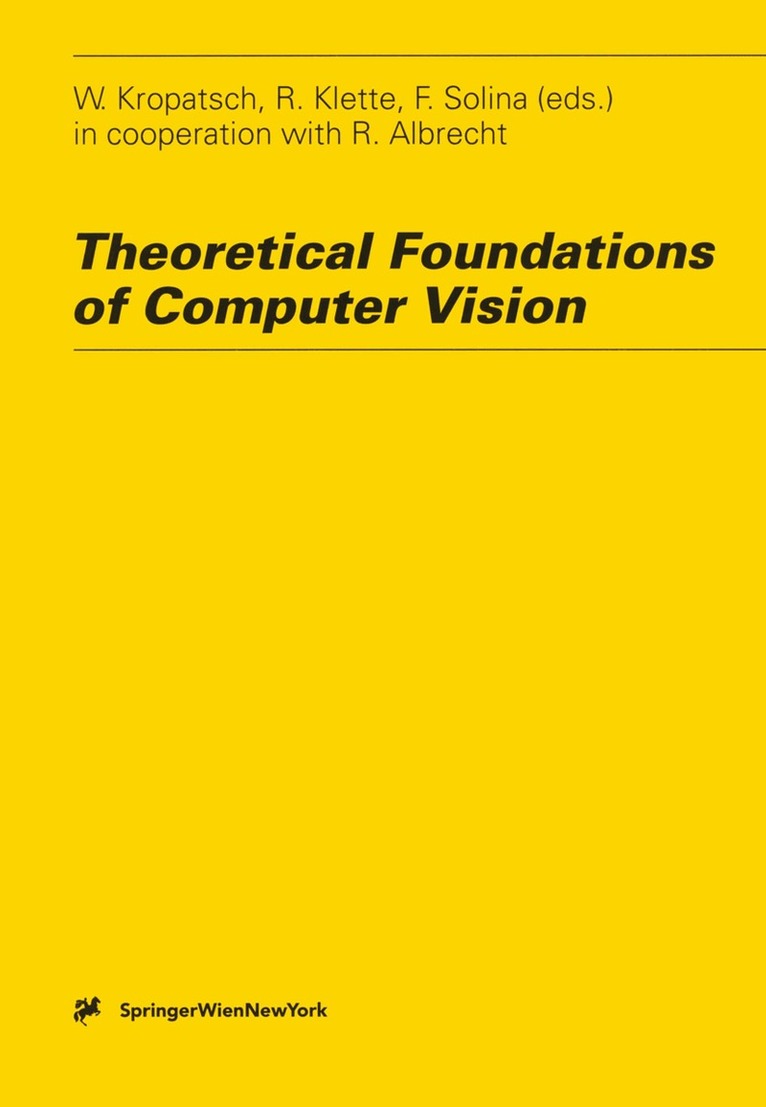
Theoretical Foundations of Computer Vision
Häftad, Engelska, 1995
559 kr
Skickas inom 10-15 vardagar
Computer Vision is a rapidly growing field of research investigating computational and algorithmic issues associated with image acquisition, processing, and understanding. It serves tasks like manipulation, recognition, mobility, and communication in diverse application areas such as manufacturing, robotics, medicine, security and virtual reality. This volume contains a selection of papers devoted to theoretical foundations of computer vision covering a broad range of fields, e.g. motion analysis, discrete geometry, computational aspects of vision processes, models, morphology, invariance, image compression, 3D reconstruction of shape. Several issues have been identified to be of essential interest to the community: non-linear operators; the transition between continuous to discrete representations; a new calculus of non-orthogonal partially dependent systems.
Häftad, Engelska, 1997
559 kr
Skickas inom 10-15 vardagar
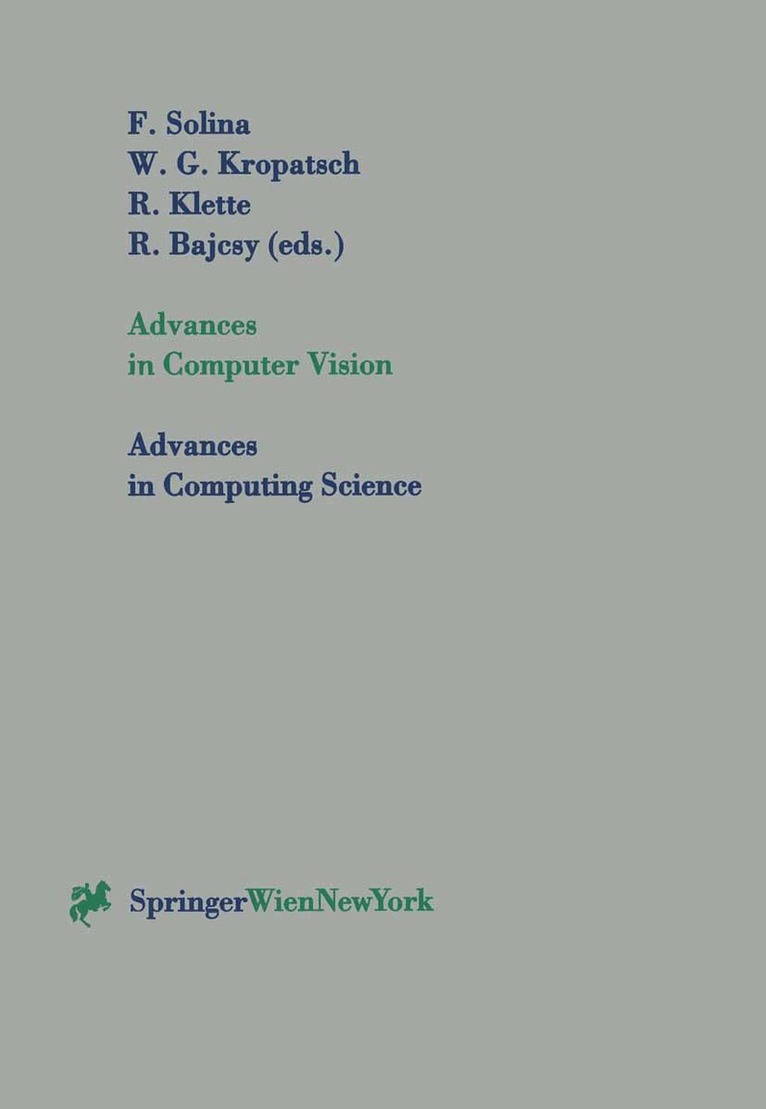
Computer vision solutions used to be very specific and difficult to adapt to different or even unforeseen situations. The current development is calling for simple to use yet robust applications that could be employed in various situations. This trend requires the reassessment of some theoretical issues in computer vision. A better general understanding of vision processes, new insights and better theories are needed. The papers selected from the conference staged in Dagstuhl in 1996 to gather scientists from the West and the former eastern-block countries address these goals and cover such fields as 2D images (scale space, morphology, segmentation, neural networks, Hough transform, texture, pyramids), recovery of 3-D structure (shape from shading, optical flow, 3-D object recognition) and how vision is integrated into a larger task-driven framework (hand-eye calibration, navigation, perception-action cycle).
E-bok
PDF, Engelska, 20031 416 kr
Läs direkt efter köp
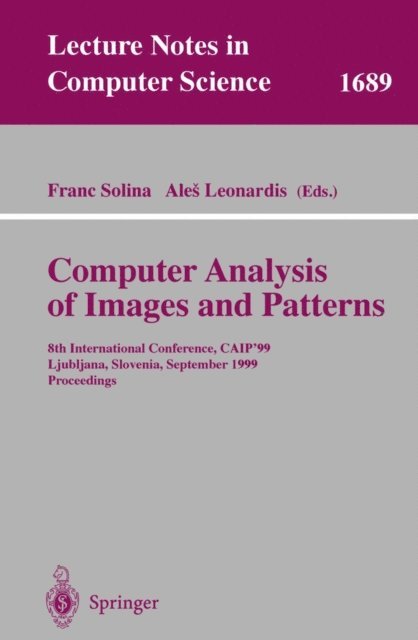
This volume presents the articles accepted for the 8th International Conference on Computer Analysis of Images and Patterns (CAIP’99), held in Ljubljana, Slovenia, 1{3 September 1999. The CAIP series of conferences started 14 years ago in Berlin. The series served initially as a forum for meetings between sci- tists from Western and Eastern-bloc countries. Political circumstances have changed dramatically since the inception of the conference and such contacts are fortunately no longer subject to abstrade. While CAIP conferences are still rooted in Central Europe, they now attract participants from all over the world. We received 120 submissions, which went through a thorough double blind review process by the program committee members who, had the option of - signing additional reviewers. The nal program consists of 47 oral and 27 poster presentations, with authors from 25 di erent countries. The proceedings also include 2 of the 5 invited lectures given at the conference. In the name of the steering committee we would like to thank the program committee members and the additional reviewers for their time and e orts. Our thanks also go to the authors for their cooperation and meeting of all deadlines.
Häftad, Engelska, 1999
1 112 kr
Skickas inom 10-15 vardagar
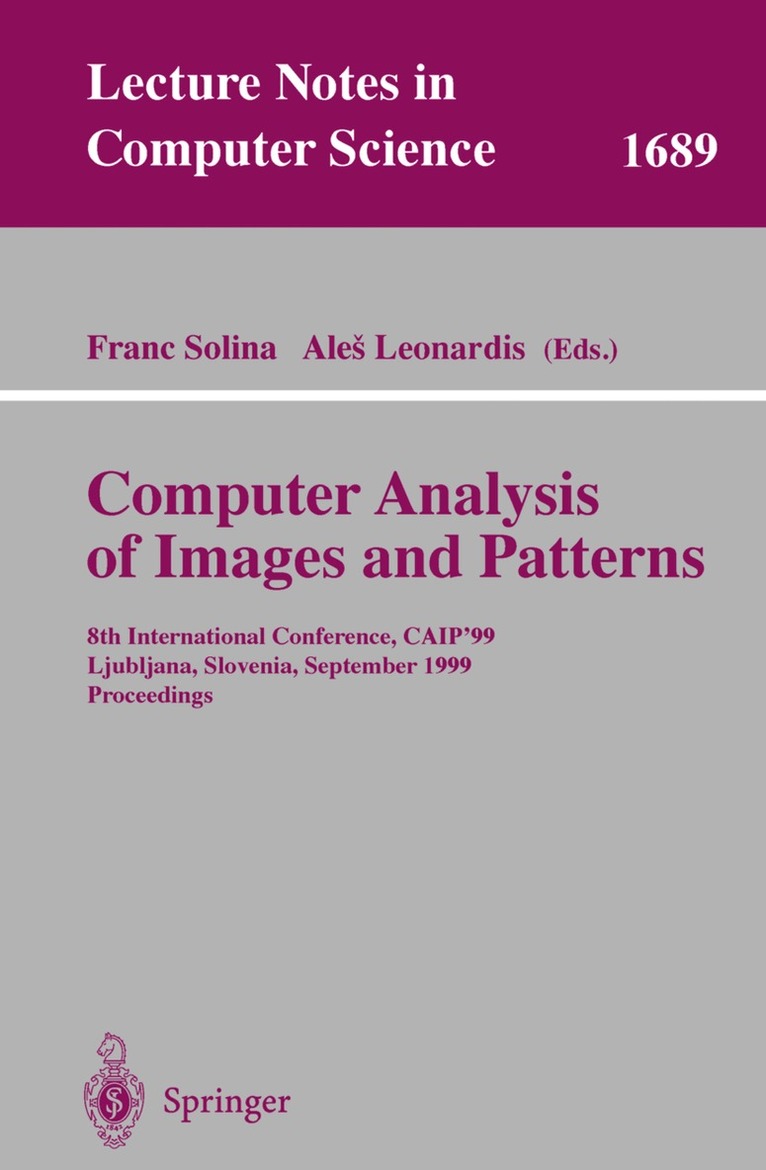
This volume presents the articles accepted for the 8th International Conference on Computer Analysis of Images and Patterns (CAIP’99), held in Ljubljana, Slovenia, 1{3 September 1999. The CAIP series of conferences started 14 years ago in Berlin. The series served initially as a forum for meetings between sci- tists from Western and Eastern-bloc countries. Political circumstances have changed dramatically since the inception of the conference and such contacts are fortunately no longer subject to abstrade. While CAIP conferences are still rooted in Central Europe, they now attract participants from all over the world. We received 120 submissions, which went through a thorough double blind review process by the program committee members who, had the option of - signing additional reviewers. The nal program consists of 47 oral and 27 poster presentations, with authors from 25 di erent countries. The proceedings also include 2 of the 5 invited lectures given at the conference. In the name of the steering committee we would like to thank the program committee members and the additional reviewers for their time and e orts. Our thanks also go to the authors for their cooperation and meeting of all deadlines.
E-bok
PDF, Engelska, 2012712 kr
Läs direkt efter köp
Computer Vision is a rapidly growing field of research investigating computational and algorithmic issues associated with image acquisition, processing, and understanding. It serves tasks like manipulation, recognition, mobility, and communication in diverse application areas such as manufacturing, robotics, medicine, security and virtual reality. This volume contains a selection of papers devoted to theoretical foundations of computer vision covering a broad range of fields, e.g. motion analysis, discrete geometry, computational aspects of vision processes, models, morphology, invariance, image compression, 3D reconstruction of shape. Several issues have been identified to be of essential interest to the community: non-linear operators; the transition between continuous to discrete representations; a new calculus of non-orthogonal partially dependent systems.
E-bok
PDF, Engelska, 2012734 kr
Läs direkt efter köp
Computer vision solutions used to be very specific and difficult to adapt to different or even unforeseen situations. The current development is calling for simple to use yet robust applications that could be employed in various situations. This trend requires the reassessment of some theoretical issues in computer vision. A better general understanding of vision processes, new insights and better theories are needed. The papers selected from the conference staged in Dagstuhl in 1996 to gather scientists from the West and the former eastern-block countries address these goals and cover such fields as 2D images (scale space, morphology, segmentation, neural networks, Hough transform, texture, pyramids), recovery of 3-D structure (shape from shading, optical flow, 3-D object recognition) and how vision is integrated into a larger task-driven framework (hand-eye calibration, navigation, perception-action cycle).