Ryan J. Barilleaux - Böcker
Visar alla böcker från författaren Ryan J. Barilleaux. Handla med fri frakt och snabb leverans.
3 produkter
3 produkter
1 009 kr
Skickas inom 10-15 vardagar
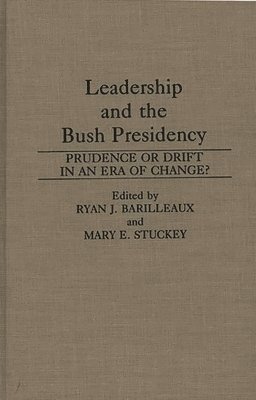
George Bush's critics charge the president with paying undue attention to opinion polls, focusing on symbol rather than substance, and allowing the nation to drift at a time that loudly demands leadership. In response, Mr. Bush's defenders applaud him for his prudence in the face of international instability, his resolution in the face of Iraqi aggression, and his realistic approach to national problems. Each chapter of Leadership and the Bush Presidency addresses these issues with specific regard to the upcoming presidential election, the potential for governance in a second term, and the legacy of the Bush presidency for future presidents.Leadership and the Bush Presidency offers the most comprehensive coverage of the Bush presidency to date. It includes chapters by the nation's foremost political scientists on leadership, executive branch relations, Congress, federalism, public opinion, the Republican Party, conservatives, domestic and foreign policy, and civil rights. This important book should appeal to the general reader seeking information about Bush's approach to the presidency and the conduct of his first term in office; to scholars interested in leadership and the contemporary presidency; to students seeking better understanding of the chief executive office in our times; and to libraries with collections in American politics and history.
1 009 kr
Skickas inom 10-15 vardagar
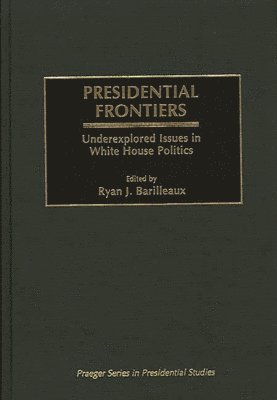
The American presidency is the single most important political office in the United States, but it is also a complex institution that scholars and the general public still do not fully understand. The scholarly literature on the presidency is extensive, but many aspects of the office have received little—if any—attention and yet are relevant to White House politics. This edited collection takes readers into territory that has been heretofore unexplored or underexplored.Is the president a representative of the public, and what does this mean? What are the powers of the president to make peace? How do presidents use their office to influence cultural issues? What signficance does the First Lady have as a political/cultural symbol? The established scholars and promising young researchers who contributed to this volume explore these and other important issues. All chapters are linked by a common effort to address issues that need more attention and to discuss how those interested in the future of the American presidency—citizens as well as scholars—can enlarge their understanding of the office, its operations, and its place in American political life.
398 kr
Skickas inom 7-10 vardagar
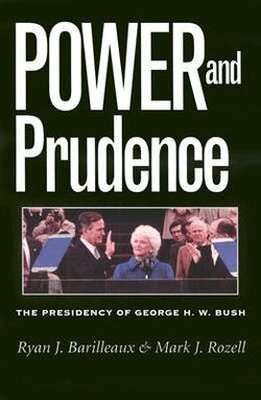
When George H. W. Bush took office in January 1989, he brought to the presidency an impressive resume. A former member of Congress, national party leader, CIA director, ambassador to China, and two-term vice president, he had the credentials and experience for a uniquely successful presidency. Less than four years later, the American electorate resoundingly proclaimed his administration a failure. Many pundits and scholars have echoed the voters' judgment. In a considered and balanced reassessment, Ryan J. Barilleaux and Mark J. Rozell ask whether the public and the pundits have applied the wrong criteria of presidential evaluation. Looking at the context in which Bush came into office, Barilleaux and Rozell argue that his strategy of incrementalism may indeed have been right for the times and any failure may have lain only in Bush's inability to convince the public of that. Moreover, the authors disagree with the common assessment that Bush pursued incrementalism only in domestic policy, arguing that it characterized his foreign policy as well. Power and Prudence is a study in presidential evaluation. It represents a challenge to the conventional wisdom that has developed on the first Bush administration and presents an important reinterpretation of the leadership of a poorly understood president. This thought-provoking analysis suggests that the circumstances of his presidency may have limited Bush's opportunities to articulate or achieve far-reaching policy objectives. These circumstances included the lack of an electoral mandate, Bush's succession to a very popular and ideological leader, his inheritance of a daunting budget deficit, and the situation of divided government. The authors' interpretation of the Bush administration is supported by interviews with members of Bush's White House staff and the limited archival record thus far opened to scholars. A detailed read into the workings of a contemporary presidency, Power and Prudence will appeal to presidential scholars as well as the politically minded reader.