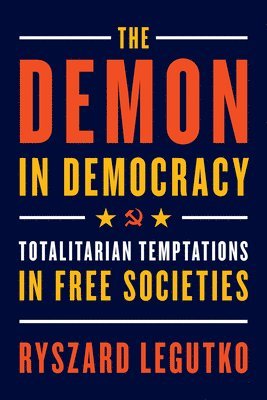
Ryszard Legutko - Böcker
Visar alla böcker från författaren Ryszard Legutko. Handla med fri frakt och snabb leverans.
7 produkter
7 produkter
186 kr
Skickas inom 5-8 vardagar
1 142 kr
Skickas inom 10-15 vardagar
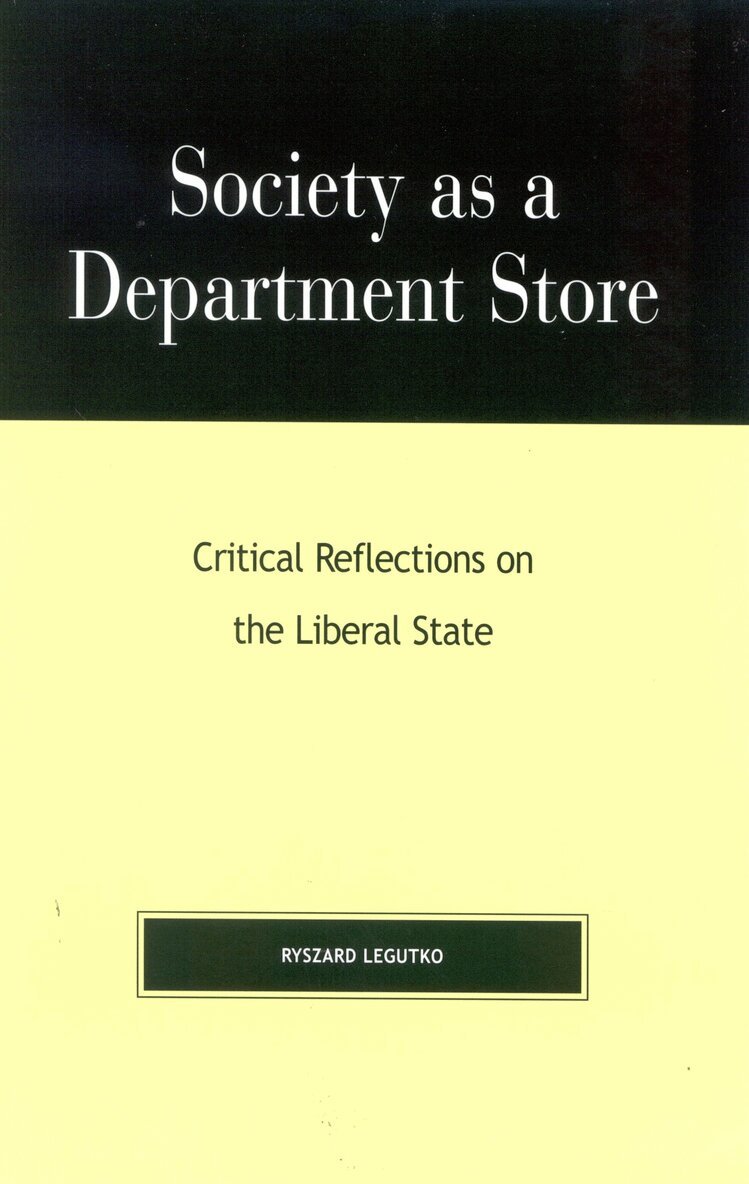
In Society as a Department Store Ryszard Legutko wrestles with the emancipatory ideology promulgated by postmodernists, libertarians, and liberal thinkers. Legutko argues that modern Western liberals have embraced a revolutionary ethic; they have turned their backs on their own cultural heritage, and used its political and ideological apparatus to destroy classical metaphysics and epistemology. The book considers the paradoxical implications of this state of affairs for Eastern European intellectuals arguing that, with the triumph of liberalism over communism, these intellectuals feel compelled to digest an ideology that shares many elements with the oppressive system from which they just liberated themselves. Based on hubris rather than genuine humane concerns, Legutko mourns not simply the loss of faith in classical Western culture, but the way in which that loss is becoming a central point of identity.
196 kr
Skickas inom 7-10 vardagar
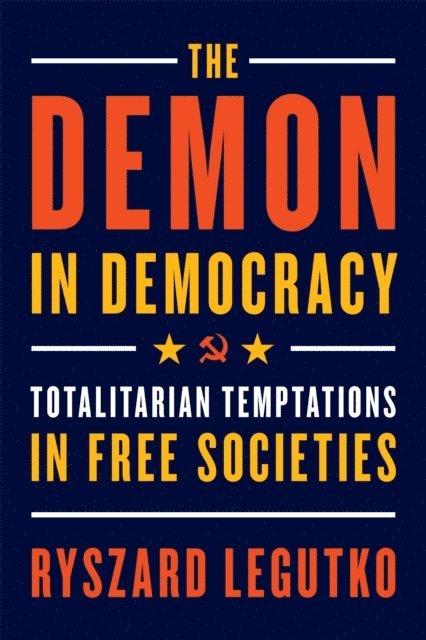
What is the man who cannot be known apart from his socio-political environment? As Zbigniew Janowski asserts, one does not ask who this man is, for he does not even know himself. This man is suppressed and separated, and not by Fascism or Communism. In present-day America this has been accomplished by democracy.“Only someone shortsighted, or someone who values equality more than freedom, would deny that today’s citizens enjoy little or no freedom, particularly freedom of speech, and even less the ability to express openly or publicly the opinions that are not in conformity with what the majority considers acceptable at a given moment. It may sound paradoxical to contemporary ears, but a fight against totalitarianism must also mean a fight against the expansion of democracy.”Janowski all at once brazen and out of bounds states what he calls the obvious and unthinkable truth: In the United States, we are already living in a totalitarian reality. The American citizen, the Homo Americanus, is an ideological being who is no longer good or bad, reasonable or irrational, proper or improper except when measured against the objectives of the dominating egalitarian mentality that American democracy has successfully incubated. American democracy has done what other despotic regimes have likewise achieved––namely, taken hold of the individual and forced him to renounce (or forget) his greatness, pursuit of virtue and his orientation toward history and Tradition. Homo Americanus, Janowski argues, has no mind or soul and he cannot tolerate diversity and indeed he now censors himself. Democracy is not benign, and we should fear its principles come by and applied ad hoc. It is deeply troublesome that in the way democracy moves today it gives critics no real insight into any trajectory of reason behind its motion, which is erratic and unmappable. The Homo Americanus is an ideological entity whose thought and even morality are forbidden from universal abstraction. Janowski mounts the offensive against what the American holds most sacred, and he does so in order to save him. After exposing the danger and the damage done, Janowski makes another startling proposal. It is a “diseased collective mind” that is the source of this ideology, the liberal anti-perspective that presses man into the image of the Homo Americanus, and its grip can only be broken through the recovery of instinct. Homo Americanus cannot be free again until he is himself again. That is, until the shadow that belongs only to him is restored, and he is thereby no longer alienated from others. Despite the condemnation Janowski seems to be levying on the citizen of the United States, he betrays a great hope and confidence that the means to shake ourselves awake from the bad dream are nevertheless in hand.Janowski’s work is the next title in St. Augustine’s Press Dissident American Thought Today Series. It occupies a controversial overlapping terrain between the philosophical descriptions of liberalism as a tradition, psychology and the fundamentally influential critiques of democracy offered by Thucydides, Jefferson, Franklin, Tocqueville, Mill, Burke and more. More anecdotal than analytical, Janowski offers the contemporary proof that the reader is right to be scandalized by democracy and his or her own likeness of the Homo Americanus. Once upon a time it was the despicable Homo Sovieticus fruit of tyranny, but now we fear democratic society too might fall and all its citizens never be found again.
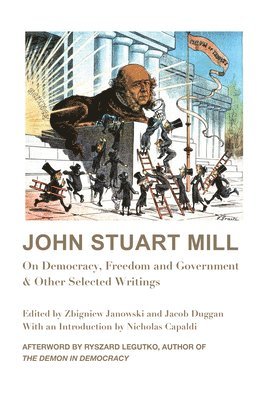
John Stuart Mill – On Democracy, Freedom and Government & Other Selected Writings
Häftad, Engelska, 2019
259 kr
Skickas inom 7-10 vardagar
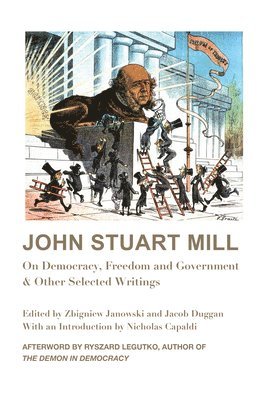
In addition to “On Liberty” and “On Representative Government,” this new selection of Mill’s writings includes, among others, a number of less known of his writings, such as: “Civilization,” “Perfectibility,” “The Negro Question,” “On Education,” “On Aristocracy,” “On Marriage,” “On Free Press,” “Socialism,” Mill’s review of Tocqueville’s “Democracy in America,” his letters to Tocqueville, and several other writings.If one can use a somewhat exaggerated language, Mill’s writings are to liberal-democracy what Marx and Engels’ writings were to Communism. Both systems gave expression to 19th century man’s longing for equality and justice, both promised to liberate him from the shackles of oppression, authority and tradition. Instead of liberating man, Communism created the most brutal system in human history, and its spectacular fall in 1989 is one of history’s greatest events. Western world today shows that liberal-democracy is no longer a benign doctrine, which advocates free market, minimum state and individual liberties, but, like Communism, is an all-encompassing ideology which forces an individual to abdicate his freedom and soul in favor of a Communist-like collective.As many critics of real Socialism could see the seeds of totalitarianism in the writings of Marx and Engels, so one can see the seeds of liberal totalitarianism in Mill’s writings. This new edition is intended to help readers to understand why democratic-liberalism came so close to its 19th century ideological rival.
212 kr
Skickas inom 7-10 vardagar
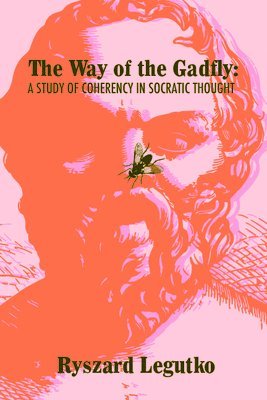
This new series of scholarly reflections on the interpretation of Socratic philosophy is an inviting combination of intuition and meticulous analysis. Ryszard Legutko provides the reader a monumental service in his confrontation of the most important and influential literature written on the subject to date. He likewise opens the conversation to European contributions and renders Socrates truly a figurehead of future philosophy far beyond being a pillar in ancient thought. Legutko argues that Socrates was systematic, and his moral views were ultimately grounded in his theory of knowledge that was composed of logically connected propositions (logoi). Reading Plato, Legutko's intuition that Socrates was quite the opposite of the quirky, ironic, and enigmatic character is supported by his demonstration of Socrates' consistency, unity, and hierarchy of thought. He extends Socrates' coherency to a criticism of the democratic mind, framing him even less as a random spit-fire and more the grounded observer. Socrates, argues Letgutko, is well aware of the importance of general concepts and he intended to free these concepts from democratic distortions and give them firm and independent foundations. In short, 'the way of the gadfly' is a beautiful and precise exploration of order that seeks to be changed by the awareness of this order, and how to wield concepts apart from the motives of arrogance and chaos––neither of which represent nature, and therefore are foreign to the way of the gadfly.
210 kr
Skickas
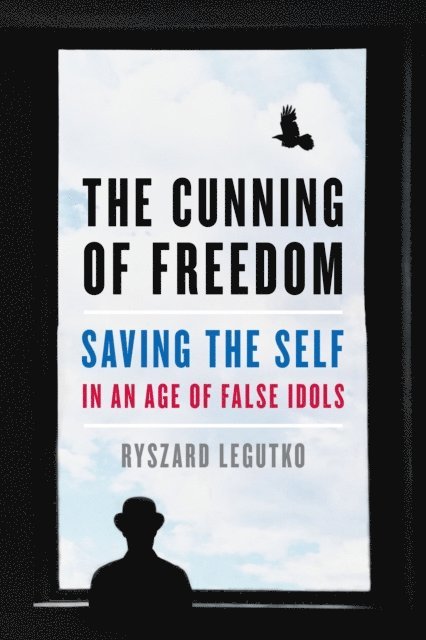
This book has two currents. The first is an analysis of the three concepts of freedom that are called, respectively, negative, positive, and inner. Negative freedom is defined as an absence of coercion, positive freedom as an ability to rule oneself and others, inner freedom as being oneself; that is, being the author of one’s decisions. Each concept is analyzed both in terms of its development in the history of ideas and in terms of its internal logic. The major problem of negative freedom is to find widely accepted rules according to which this freedom can be distributed. Positive freedom’s major difficulty is to define what constitutes a free person. The greatest dilemma with inner freedom is how to correlate it with the proper interpretation of the human self. The book advances the thesis, and this constitutes the other current of its narrative—that we have been witnessing the advent of a new form of despotism, much of it being the effect of liberalism’s dominant position. Precisely because it took a reductionist position, liberalism has impoverished our view of freedom and, consequently, our notion of human nature with its political, moral, and metaphysical dimensions.
242 kr
Skickas inom 3-6 vardagar