Ryūichi Abé - Böcker
Visar alla böcker från författaren Ryūichi Abé. Handla med fri frakt och snabb leverans.
2 produkter
2 produkter
567 kr
Skickas inom 7-10 vardagar
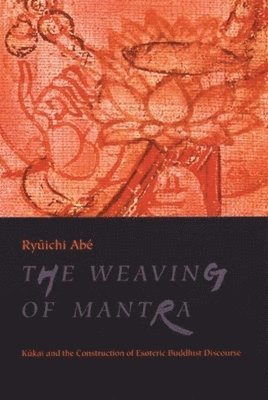
The great Buddhist priest Kukai (774-835) is credited with the introduction and establishment of tantric -or esoteric -Buddhism in early ninth-century Japan. In Ryuichi Abe examines this important religious figure -neglected in modern academic literature -and his profound influence on Japanese culture. Offering a radically new approach to the study of early religious history -combining historical research, discourse analysis, literary criticism, and semiology -Abe contends that the importance of Kukai's transmission of esoteric Buddhism to Japan lay not in the foundation of a new sect but in his creation of a general theory of language grounded in the ritual speech of mantra. embeds Kukai within the fabric of political and social life in ninth-century Japan and explains how esoteric Buddhism played a crucial role in many societal changes in Japan -from the growth of monasteries into major feudal powers to the formation of the native phonetic alphabet, kana. As Abe illustrates, Kukai's writings and the new type of discourse they spawned also marked Japan's transition from the ancient order to the medieval world, replacing Confucianism as the ideology of the state.Abe begins by placing Kukai's life in the historical context of medieval Japan and the Ritsuryo state, then explores his interaction with the Nara Buddhist intelligentsia, which was seminal to the introduction of esoteric Buddhism. The author discusses Kukai's magnum opus, () and introduces a number of Japanese and Chinese primary-source texts previously unknown by Western-language scholars. Instead of tracing Kukai's thought through literal readings, explores the rhetorical strategies Kukai employed in his works, shedding valuable light on what his texts meant to his readers and what his goals were in creating a discourse that ultimately transformed Japanese culture. The great Buddhist priest Kukai (774-835) is credited with the introduction and establishment of tantric-or esoteric-Buddhism in early ninth-century Japan. In The Weaving of Mantra, Ryuichi Abe examines this important religious figure-neglected in modern academic literature-and his profound influence on Japanese culture.Offering a radically new approach to the study of early religious history-combining historical research, discourse analysis, literary criticism, and semiology-Abe contends that the importance of Kukai's transmission of esoteric Buddhism to Japan lay not in the foundation of a new sect but in his creation of a general theory of language grounded in the ritual speech of mantra. The Weaving of Mantra embeds Kukai within the fabric of political and social life in ninth-century Japan and explains how esoteric Buddhism played a crucial role in many societal changes in Japan-from the growth of monasteries into major feudal powers to the formation of the native phonetic alphabet, kana. As Abe illustrates, Kukai's writings and the new type of discourse they spawned also marked Japan's transition from the ancient order to the medieval world, replacing Confucianism as the ideology of the state. Abe begins by placing Kukai's life in the historical context of medieval Japan and the Ritsuryo state, then explores his interaction with the Nara Buddhist intelligentsia, which was seminal to the introduction of esoteric Buddhism.The author discusses Kukai's magnum opus, Ten Abiding Stages on the Secret Mandalas (Himitsu mandara jujushinron) and introduces a number of Japanese and Chinese primary-source texts previously unknown by Western-language scholars. Instead of tracing Kukai's thought through literal readings, The Weaving of Mantra explores the rhetorical strategies Kukai employed in his works, shedding valuable light on what his texts meant to his readers and what his goals were in creating a discourse that ultimately transformed Japanese culture.
775 kr
Skickas inom 7-10 vardagar
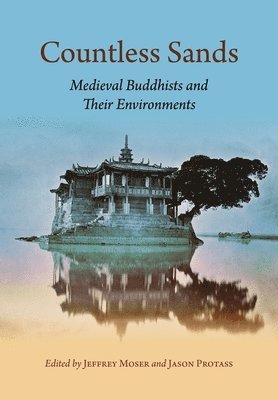
Countless Sands presents engaging analyses of the diverse relationships between Buddhism and the environment that existed in medieval Asia. Recent years have witnessed a surge in publications across the humanities that advance powerful ethical and political arguments to account for the human failure to respond effectively to global climate change. While the contributors to this volume are attuned to this challenge, rather than present explicit political arguments, they pursue a subtler effort to historicize the environment as a site and subject of Buddhist practice while providing research grounded in rigorous analysis of complex and fragmentary sources. The volume thereby mitigates against the Orientalist, East-West binaries that have long informed the invocation of Buddhism in Euro-American environmental discourses. As the chapters collectively demonstrate, there was no singular, consistently "Buddhist" understanding of the natural world, but innumerable, varied engagements preserved in discrete texts, images, and artifacts. We title the volume Countless Sands to echo the Buddhist metaphor of "sands of the Ganges" that implies an uncountable number. Through specific case studies, the authors consider such questions as: How did premodern Buddhists understand what we today call "the environment"? How did they think about their earth? How, when, and where did the various processes of the earth actually impinge on the practices of historical Buddhists? What kinds of "environmental imaginations" informed specific Buddhist practices? In so doing, the authors explore the connections between the ways in which historical Buddhist communities interacted with their environments and how they understood those environments. In the broader field of Buddhist studies, Countless Sands contributes to ongoing efforts to expand the locus of inquiry from textually based investigations of Buddhist doctrine to a broader examination of the complex and varied place of Buddhism in the lives of historical communities. The book furthers this broader process by casting it in environmental terms and will engage readers looking for models of thought-provoking historical analysis on environmental themes.