• Fri frakt över 249 kr
  • •
  • Snabba leveranser
  • •
  • Billiga böcker
Kundservice

Du är på sajten för privatpersoner.

Företag, bibliotek eller offentlig verksamhet?

Du handlar på classic.bokus.com, där alla dina funktioner finns intakta.
Till classic.bokus.com
Bokus logotyp. Gå till startsidan.
  • Erbjudanden
  • Nyheter
  • Student
  • Topplistor
  • Barn & ungdom
  • Bokus Play
  • E-böcker
  • Pocketböcker
  • Spel & pussel

10% rabatt på allt med kod: NYSTART10 →

Sidfot

Mina sidor

    Hjälp

    • Kundservice
    • Vanliga frågor och svar
    • Frakt och leverans
    • Retur vid ångerrätt
    • Reklamera vara
    • Betalning
    • Köpvillkor
    • Allmänna villkor
    • Information om webbplatsens tillgänglighet

    Om Bokus

    • Om oss
    • Pressrum
    • För studenter
    • För företag
    • För bibliotek och offentlig verksamhet
    • För leverantörer
    • Hållbarhet

    Populärt

    • Aktuella erbjudanden
    • Presentkort
    • Studentlitteratur
    • Nya böcker
    • Topplistor
    • Signerade böcker
    • Engelska böcker

    Inspiration

    • Boktips
    • BookTok
    • Populära bokserier
    • Barnbokskaraktärer
    • Populära författare
    Logotyp för Bokus
    Följ oss på Facebook (extern länk)Följ oss på Instagram (extern länk)Följ oss på YouTube (extern länk)Följ oss på TikTok (extern länk)
    bokus @ CookiesAnpassa cookiesIntegritetspolicyKöpvillkor
    Till Citymail hemsida (extern länk)Till Budbee hemsida (extern länk)Till Postnord hemsida (extern länk)Till Schenker hemsida (extern länk)Till Early Bird hemsida (extern länk)Till Walleys hemsida (extern länk)
    1. Filosofi och religion
    2. Religion och tro
    3. Religion: allmänt

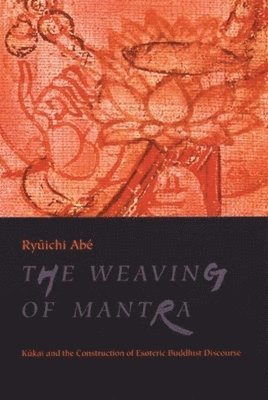
    Weaving of Mantra

    Kukai and the Construction of Esoteric Buddhist Discourse

    AvRyūichi Abé

    Häftad, Engelska, 2000

    578 kr

    Beställningsvara. Skickas inom 5-8 vardagar. Fri frakt över 249 kr.

    Beskrivning

    The great Buddhist priest Kukai (774-835) is credited with the introduction and establishment of tantric -or esoteric -Buddhism in early ninth-century Japan. In Ryuichi Abe examines this important religious figure -neglected in modern academic literature -and his profound influence on Japanese culture. Offering a radically new approach to the study of early religious history -combining historical research, discourse analysis, literary criticism, and semiology -Abe contends that the importance of Kukai's transmission of esoteric Buddhism to Japan lay not in the foundation of a new sect but in his creation of a general theory of language grounded in the ritual speech of mantra. embeds Kukai within the fabric of political and social life in ninth-century Japan and explains how esoteric Buddhism played a crucial role in many societal changes in Japan -from the growth of monasteries into major feudal powers to the formation of the native phonetic alphabet, kana. As Abe illustrates, Kukai's writings and the new type of discourse they spawned also marked Japan's transition from the ancient order to the medieval world, replacing Confucianism as the ideology of the state.Abe begins by placing Kukai's life in the historical context of medieval Japan and the Ritsuryo state, then explores his interaction with the Nara Buddhist intelligentsia, which was seminal to the introduction of esoteric Buddhism. The author discusses Kukai's magnum opus, () and introduces a number of Japanese and Chinese primary-source texts previously unknown by Western-language scholars. Instead of tracing Kukai's thought through literal readings, explores the rhetorical strategies Kukai employed in his works, shedding valuable light on what his texts meant to his readers and what his goals were in creating a discourse that ultimately transformed Japanese culture. The great Buddhist priest Kukai (774-835) is credited with the introduction and establishment of tantric-or esoteric-Buddhism in early ninth-century Japan. In The Weaving of Mantra, Ryuichi Abe examines this important religious figure-neglected in modern academic literature-and his profound influence on Japanese culture.Offering a radically new approach to the study of early religious history-combining historical research, discourse analysis, literary criticism, and semiology-Abe contends that the importance of Kukai's transmission of esoteric Buddhism to Japan lay not in the foundation of a new sect but in his creation of a general theory of language grounded in the ritual speech of mantra. The Weaving of Mantra embeds Kukai within the fabric of political and social life in ninth-century Japan and explains how esoteric Buddhism played a crucial role in many societal changes in Japan-from the growth of monasteries into major feudal powers to the formation of the native phonetic alphabet, kana. As Abe illustrates, Kukai's writings and the new type of discourse they spawned also marked Japan's transition from the ancient order to the medieval world, replacing Confucianism as the ideology of the state. Abe begins by placing Kukai's life in the historical context of medieval Japan and the Ritsuryo state, then explores his interaction with the Nara Buddhist intelligentsia, which was seminal to the introduction of esoteric Buddhism.The author discusses Kukai's magnum opus, Ten Abiding Stages on the Secret Mandalas (Himitsu mandara jujushinron) and introduces a number of Japanese and Chinese primary-source texts previously unknown by Western-language scholars. Instead of tracing Kukai's thought through literal readings, The Weaving of Mantra explores the rhetorical strategies Kukai employed in his works, shedding valuable light on what his texts meant to his readers and what his goals were in creating a discourse that ultimately transformed Japanese culture.

    Produktinformation

    • Utgivningsdatum:2000-10-25
    • Mått:159 x 254 x 32 mm
    • Vikt:834 g
    • Format:Häftad
    • Språk:Engelska
    • Antal sidor:620
    • Förlag:Columbia University Press
    • ISBN:9780231112871

    Utforska kategorier

    • Religion: allmänt inom Filosofi och religion
    • Buddhism inom Filosofi och religion

    Mer om författaren

    Ryuichi Abe is Kao Associate Professor of Japanese Religious Studies in the Departments of Religion and East Asian Languages and Cultures at Columbia University. He is the coauthor of Great Fool: Zen Master Ryokan-Poems, Letters, and Other Writings, and has been a recipient of the Philip and Ruth Hettleman Award for distinguished teaching.

    Recensioner i media

    This is a remarkable book about one of the most remarkable figures in the history of Japanese Buddhism...Abe's book will certainly emerge and remain the primary examination of Kukai's life and thought for many years to come. It is thus a crucial read for anyone interested in early Japanese religion and intellectual history...The Weaving of Mantra provides a very lengthy, detailed, and substantial intellectual historical analysis of Kukai...[T]his book is a monumental achievement that will fascinate students of Japanese religion and stimulate much discussion among historians. -- Steven Heine Journal of Asian Studies Abe has made a major contribution to our understanding of the figure of Kukai, of Esoteric Buddhism, of the political, intellectual and religious situation of the Nara and early Heian periods, and of our view of medieval Japanese Buddhism as a whole. He has command of an impressive range of sources, both classical and modern, and he has a sophisticated grasp of recent theoretical discussions... Both in the new readings of early and medieval Japanese Buddhism that it advances and in the discussions that it will stimulate, this volume stands as a major addition to the field. -- Paul B. Watt Journal of Asian History

    Innehållsförteckning

    • Acknowledgments Interaction of Kukai with the Nara Clergy Illustrations Introduction 1. Kukai and (Very) Early Heian Society: A Prolegomenon Part I. Origins, Traces, Nonorigin 2. Kukai's Dissent: Of Mendicancy and Fiction 3. Journey to China: Outside Ritsuryo Discourse 4. (No) Traces of Esoteric Buddhism: Dharani and the Nara Buddhist Literature Part II. Cartography 5. Category and History: Constructing the Esoteric 6. The Discourse of Complementarity: Constructing the Esoteric II Part III. Writing and Polity 7. Semiology of the Dharma; or the Somaticity of the Text 8. Of Mantra and Palace: Textualizing the Emperor, Calamity and the Cosmos 9. Genealogy of Mantra and Kukai's Legacy Post-Script Problems of the Category of Heian Buddhism Kukai and the Limitation of Kuroda's Kenmitsu Theory Glossary Abbreviations Notes Selected Bibliography Index