S. Alexander Reed - Böcker
Visar alla böcker från författaren S. Alexander Reed. Handla med fri frakt och snabb leverans.
5 produkter
5 produkter
1 236 kr
Skickas inom 7-10 vardagar
Shimmering in maximal minimalism, joyful bleakness, and bodiless intimacy, Laurie Anderson's Big Science diagnosed crises of meaning, scale, and identity in 1982. Decades later, the strange questions it poses loom even larger: How do we remain human when our identities are digitally distributed? Does technology bring us closer together or further apart? Can we experience the stillness of "now" when time is always moving? How does our experience become memory?Laurie Anderson pioneered new techniques and aesthetics in performance art, becoming its first and most enduring superstar. In this book, author S. Alexander Reed dives into the wonderfully strange making and meanings of this singular album and of its creator's long artistic career. Packed with scrupulous new research, reception history, careful description, and dizzying creativity, this book is an interdisciplinary love letter to a record whose sounds, politics, and expressions of gendered identity grow more relevant each day.
207 kr
Skickas inom 5-8 vardagar
Shimmering in maximal minimalism, joyful bleakness, and bodiless intimacy, Laurie Anderson's Big Science diagnosed crises of meaning, scale, and identity in 1982. Decades later, the strange questions it poses loom even larger: How do we remain human when our identities are digitally distributed? Does technology bring us closer together or further apart? Can we experience the stillness of "now" when time is always moving? How does our experience become memory?Laurie Anderson pioneered new techniques and aesthetics in performance art, becoming its first and most enduring superstar. In this book, author S. Alexander Reed dives into the wonderfully strange making and meanings of this singular album and of its creator's long artistic career. Packed with scrupulous new research, reception history, careful description, and dizzying creativity, this book is an interdisciplinary love letter to a record whose sounds, politics, and expressions of gendered identity grow more relevant each day.
1 989 kr
Skickas inom 5-8 vardagar
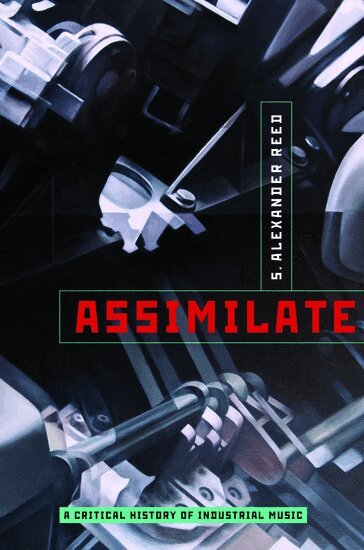
Noisy, confrontational, and controversial, industrial music first emerged in the mid-1970s around bands and performance groups who combined avant-garde electronic music with the provocative attitude and style of punk rock. In its early days, bands such as Throbbing Gristle and Cabaret Voltaire produced a genuinely radical form of music bent on recontextualizing the signs and methods of cultural authority in an attempt to liberate listeners from the trappings of modernity. But, as industrial music took on more and more elements of popular music over the course of the 1980s it slowly abandoned its mission. By the mid-1990s, it was seen as simply another style of pop music, and had ironically fallen into the trappings it sought by its very existence to destroy. In Assimilate, S. Alexander Reed provides the first ever critical history of this fascinating and enigmatic genre tracing industrial music's trajectory from Throbbing Gristle's founding of the record label Industrial Music in 1976, to its peak in popularity on the back of the band Nine Inch Nails in the mid-1990s, and through its decline to the present day. Through a series of revealing explorations of works spanning the entirety of industrial music's past, and drawing on extensive interviews with musicians, record label owners, DJs, and concert promoters, Reed paints a thorough historical picture that includes not only the bands, but the structures that supported them, and the scenes they created. In so doing, he reveals an engaging story of an ideological disintegration and its aftermath. The definitive text on the genre, Assimilate is essential reading for fans of industrial music, and scholars and students of popular music alike.
329 kr
Skickas inom 5-8 vardagar
Industrial is a descriptor that fans and critics have applied to a remarkable variety of music: the oildrum pounding of Einstürzende Neubauten, the processed electronic groans of Throbbing Gristle, the drumloop clatter of Skinny Puppy, and the synthpop songcraft of VNV Nation, to name just a few. But the stylistic breadth and subcultural longevity of industrial music suggests that the common ground here might not be any one particular sound, but instead a network of ideologies. This book traces industrial music's attitudes and practices from their earliest articulations -- a hundred years ago -- through the genre's mid-1970s formation and its development up to the present and beyond.Taking cues from radical intellectuals like Antonin Artaud, William S. Burroughs, and Guy Debord, industrial musicians sought to dismantle deep cultural assumptions so thoroughly normalized by media, government, and religion as to seem invisible. More extreme than punk, industrial music revolted against the very ideas of order and reason: it sought to strip away the brainwashing that was identity itself. It aspired to provoke, bewilder, and roar with independence. Of course, whether this revolution succeeded is another question...Assimilate is the first serious study published on industrial music. Through incisive discussions of musicians, audiences, marketers, cities, and songs, this book traces industrial values, methods, and goals across forty years of technological, political, and artistic change. A scholarly musicologist and a longtime industrial musician, S. Alexander Reed provides deep insight not only into the genre's history but also into its ambiguous relationship with symbols of totalitarianism and evil. Voicing frank criticism and affection alike, this book reveals the challenging and sometimes freeiring ways that industrial music both responds to and shapes the world. Assimilate is essential reading for anyone who has ever imagined limitless freedom, danced alone in the dark, or longed for more noise.
142 kr
Skickas inom 7-10 vardagar
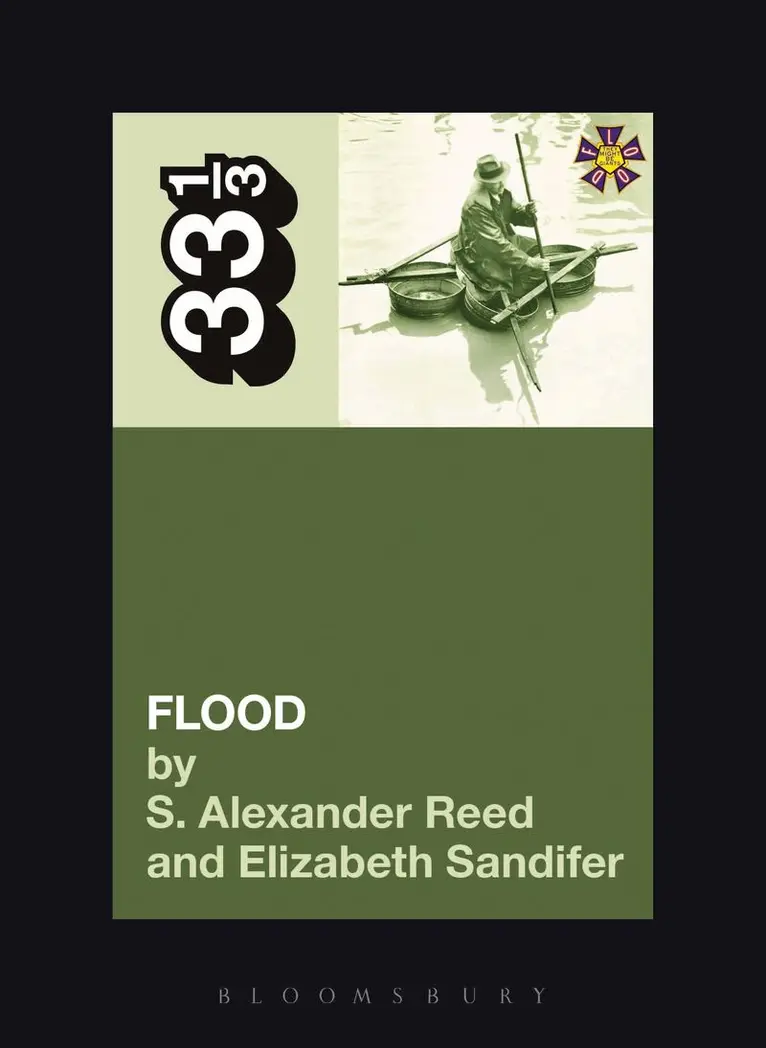
For a few decades now, They Might Be Giants’ album Flood has been a beacon (or at least a nightlight) for people who might rather read than rock out, who care more about science fiction than Slayer, who are more often called clever than cool. Neither the band’s hip origins in the Lower East Side scene nor Flood’s platinum certification can cover up the record's singular importance at the geek fringes of culture.Flood’s significance to this audience helps us understand a certain way of being: it shows that geek identity doesn’t depend on references to Hobbits or Spock ears, but can instead be a set of creative and interpretive practices marked by playful excess—a flood of ideas. The album also clarifies an historical moment. The brainy sort of kids who listened to They Might Be Giants saw their own cultural options grow explosively during the late 1980s and early 1990s amid the early tech boom and America’s advancing leftist social tides. Whether or not it was the band's intention, Flood’s jubilant proclamation of an identity unconcerned with coolness found an ideal audience at an ideal turning point. This book tells the story.