S. Arber - Böcker
Visar alla böcker från författaren S. Arber. Handla med fri frakt och snabb leverans.
2 produkter
2 produkter
506 kr
Skickas inom 10-15 vardagar
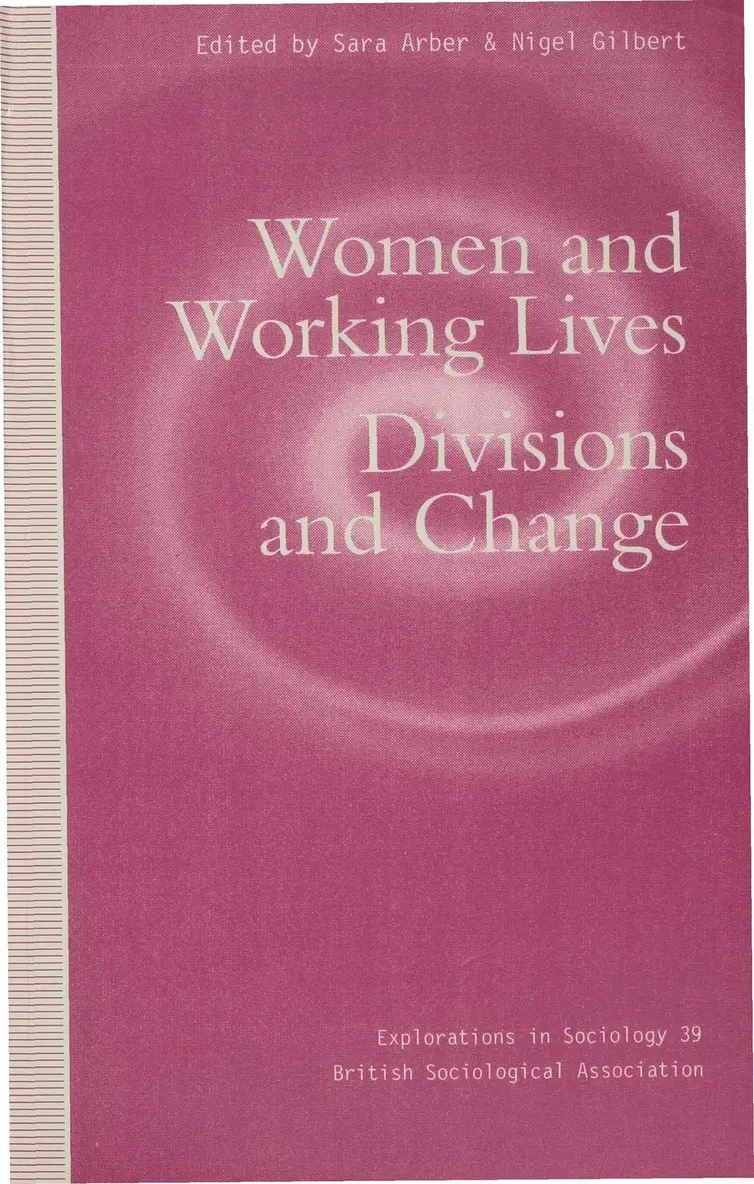
This book explores the interconnections between women's domestic lives and their paid employment in order to demonstrate how male definitions of work need to be reformulated. Women's continued disadvantage in the labour market is examined through contemporary, cross-national and historical research studies. The cross-national studies used in this book show how French mothers are advantaged by state and employer policies compared to their British counterparts. The contributors to this book question the adequacy of male definitions of work for women, showing that women use a range of strategies, intimately connected with their domestic lives, to produce results. Two themes orient this collection of papers from the 1990 British Sociological Association Conference: first, an examination of alternative explanations for gender inequality in the labour market, focusing on the ideologies of motherhood, the domestic division of labour and the impact of social policies. Second, a questioning of the meaning of work, suggesting that a simple dichotomy between waged and unpaid domestic labour is inadequate to describe the contemporary situation of women.Ranged between waged work and unpaid domestic labour are various forms of self-employment, petty enterprise and exchanges used by women to generate resources.
538 kr
Skickas inom 10-15 vardagar
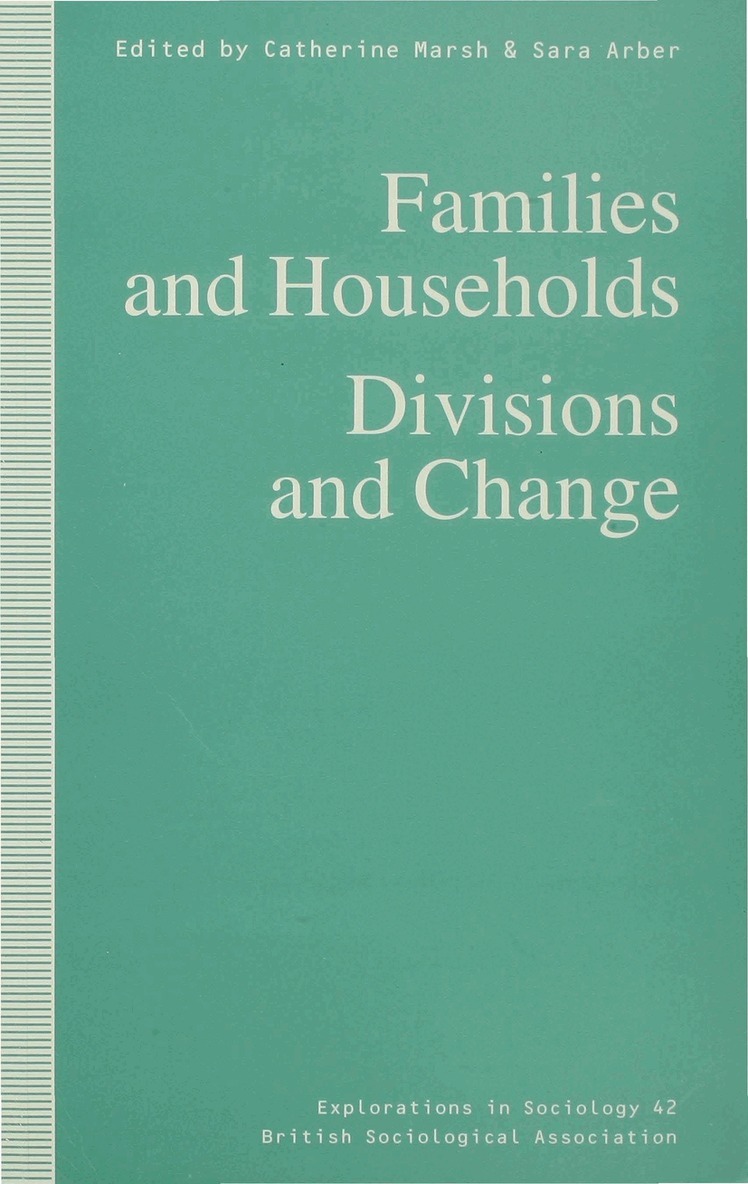
Is the family in terminal decline? Are new forms of living arrangement supplanting the nuclear family household in modern Britain? This book presents wide-ranging evidence, based on original research, about changes that have taken place in modern family and household forms, mainly in Great Britain but also with some reference to West Germany. There are specific chapters on different household types: on changes in the care for the elderly, on financial support to and from young adults living at home, on lone parents and on single householders. There are also contributions on the way in which households divide and arrange domestic labour and formal paid employment. Throughout the book, a contrast is drawn between the official assumptions made by policy makers and social institutions about the nature of the domestic group, and the actual living arrangements found by social researchers.