S. J. Connolly - Böcker
Visar alla böcker från författaren S. J. Connolly. Handla med fri frakt och snabb leverans.
3 produkter
3 produkter
673 kr
Skickas inom 7-10 vardagar
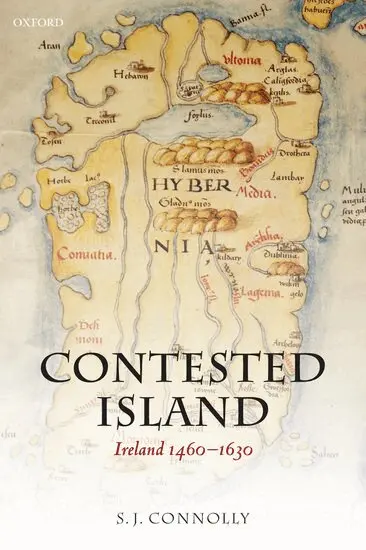
Between the 1460s and the 1630s Ireland was transformed from a medieval into a modern society. A poor society on the periphery of Europe, dominated by the conflicts of competing warlords- Irish and English- it later became a centralized political unit with a single government and code of laws, and a still primitive, but rapidly developing, market economy. These changes, however, had been achieved by brutal wars of conquest, while large scale colonization projects had created lasting tensions between old inhabitants and recent settlers. At the same time the great religious divide of the Reformation had introduced a further source of conflict to Ireland, dividing the population into two hostile camps, while at the same time giving it a new and dangerous role in the conflict between England and its continental enemies. Against this confused and constantly changing background, individuals and groups repeatedly had to adapt their customs and behaviour, their political allegiances and aspirations, and their sense of who they were. A long and complex story, with many false starts and numerous dead ends, it is the story of the people who became the modern Irish.
199 kr
Skickas
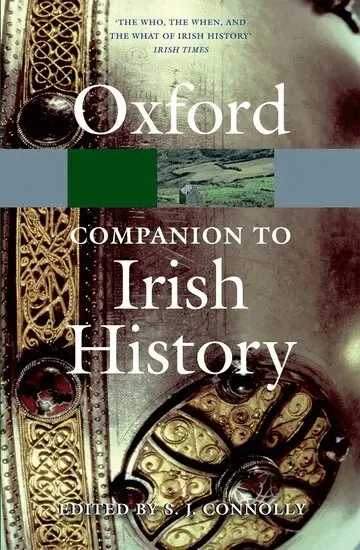
'A companion to be cherished', 'judicious and authoritative', 'informative and entertaining', an 'invaluable work of reference' - these are just some of the phrases used by reviewers to describe the Oxford Companion to Irish History. The history of Ireland has long been at the epicentre of political and academic debate. Interest in Irish culture, politics, and society, both ancient and modern, never seems to falter, not only in scholarly circles but also among the general public. With over 1,800 entries, this Companion - now available in the Oxford Paperback Reference series - offers a comprehensive and authoritative guide to all aspects of Ireland's past from earliest times to the present day. There is coverage not only of leading political figures, organizations, and events but also of subjects such as dress, music, sport, and diet. Traditional topics such as the rebellion of 1798 and the Irish Civil War sit alongside entries on newly developing areas such as women's history and popular culture. In addition to A-Z entries the Companion includes a section of maps showing the shape of modern Ireland, post-reformation ecclesiastical divisions in Ireland, political divisions circa 800, Ireland circa 1350, Ireland in the late 15th century, and the pattern of transport and communications in Ireland. There is also a subject index, which groups headwords into thematic batches to provide an alternative way to access the entries. The Oxford Companion to Irish History is invaluable to students as a work of general reference and to the general public with an interest in the history and culture of Ireland. It also appeals to academics both for the longer analytical entries and as a source of reference for topics outside their immediate area of expertise.
1 996 kr
Skickas inom 7-10 vardagar
Limited hardback edition in a clothbound slipcase with gold foil lettering and ribbon marker. One of only four hundred limited edition, beautifully bound, boxed copies of 'Belfast 400: People, Place and History'.Published to mark the four hundredth anniversary of the town’s foundation, 'Belfast 400' draws on a wide range of recent research to present a new history of one of the world’s most fascinating and most misunderstood cities. The misunderstanding, and the fascination, arise from the same contradictions. Belfast was a significant part of the story of Great Britain’s rise to industrial greatness. But it was a city located, not in Great Britain, but in Ireland. It was one of the main theatres in which the conflicts of identity that have created modern Ireland were fought out. Yet both its politics and its industrial character set it wholly apart from other Irish towns. A central part of the history of both societies, it has never fitted neatly into the accepted narrative of either. Against this background 'Belfast 400' seeks to recapture the true history of Ireland’s second city in all its complexity. In doing so it asks many questions. Why did such an apparently unfavourable spot, a waterlogged river mouth, persist for centuries – long before the appearance of the first town – as a site of human settlement. Why did what was intended to be a minor outpost of British settlement in the province of Ulster become its most important urban centre? How did the medium-sized commercial centre that thus emerged expand to become, by the beginning of the twentieth century, one of the world’s great centres of shipbuilding and linen manufacture? Finally, and most of all, what did the development of this great industrial centre mean for those who lived there? How did its inhabitants experience the birth pangs of an industrial society, the late nineteenth and early twentieth-century heyday of manufacturing, and the long decline that followed? How far, equally, can the city of Belfast now redefine its identity, and the still often fraught relationships that exist between different sections of its population, to face the challenges of the twenty-first century?