S. Jonathan Wiesen – författare
Visar alla böcker från författaren S. Jonathan Wiesen. Handla med fri frakt och snabb leverans.
13 produkter
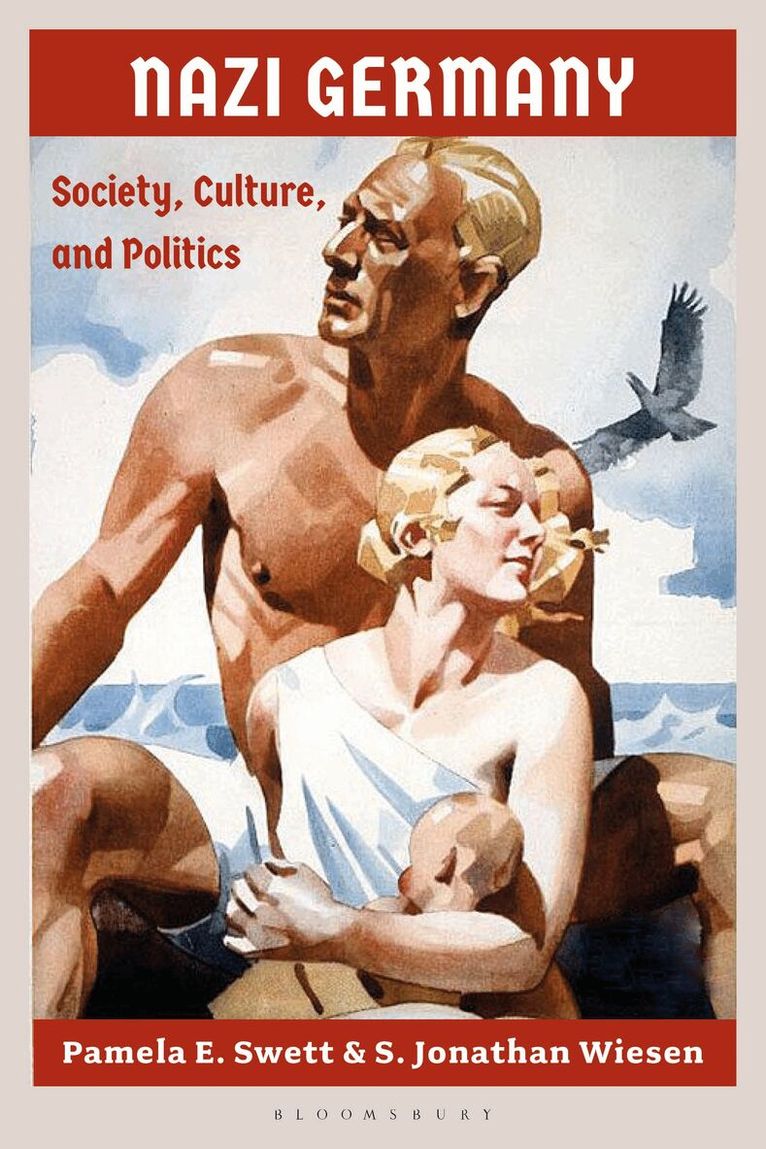
Nazi Germany
Society, Culture, and Politics
Av Pamela E. Swett, S. Jonathan Wiesen
Häftad, 2024
409 kr
Lägg i varukorg
Nazi Germany provides a comprehensive survey of the National Socialist dictatorship, artfully balancing social and cultural history with a political and military history of the regime.The book unravels the complexities of the daily lives of perpetrators, victims, and bystanders in the ‘Third …
Creating the Nazi Marketplace
Commerce and Consumption in the Third Reich
Häftad, 2010
502 kr
Lägg i varukorg
When the Nazis came to power in 1933, they promised to build a vibrant consumer society. But they faced a dilemma. They recognized that consolidating support for the regime required providing Germans with the products they desired. At the same time, the Nazis worried about the degrading cultural …
Creating the Nazi Marketplace
Commerce and Consumption in the Third Reich
Inbunden, 2010
1425 kr
Lägg i varukorg
When the Nazis came to power in 1933, they promised to build a vibrant consumer society. But they faced a dilemma. They recognized that consolidating support for the regime required providing Germans with the products they desired. At the same time, the Nazis worried about the degrading cultural …
West German Industry and the Challenge of the Nazi Past, 1945-1955
Häftad, 2004
528 kr
Lägg i varukorg
In this groundbreaking study, S. Jonathan Wiesen explores how West German business leaders remade and marketed their public image in the aftermath of World War II and the Holocaust. He challenges assumptions that West Germans - and industrialists in particular - were silent about the recent past …
West German Industry and the Challenge of the Nazi Past, 1945-1955
E-bok, 2003
535 kr
Lägg i varukorg
In the aftermath of World War II and the Holocaust, West German industrialists faced a major crisis in their public image. With mounting revelations about the use of forced and slave labor, the "Aryanization" of Jewish property, and corporate profiteering under National Socialism, industrialists …
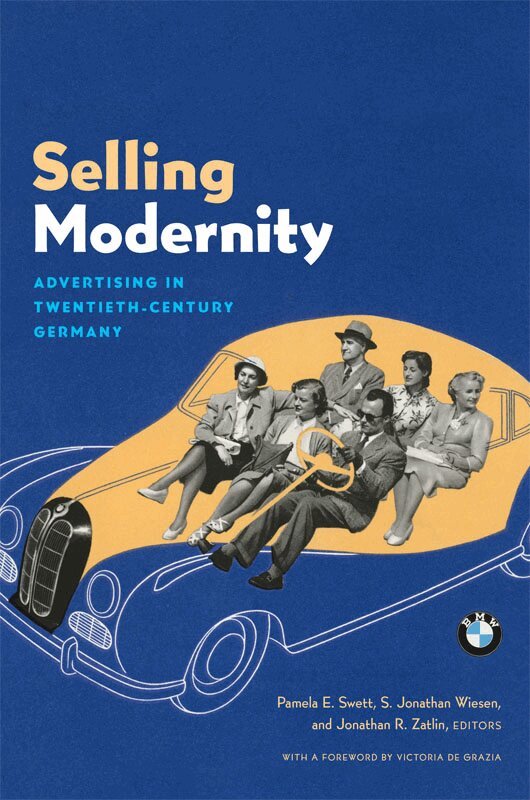
Selling Modernity
Advertising in Twentieth-Century Germany
Av Pamela Swett Leighninger, S. Jonathan Wiesen m. fl.
Inbunden, 2007
1846 kr
Lägg i varukorg
The sheer intensity and violence of Germany’s twentieth century-through the end of an empire, two world wars, two democracies, and two dictatorships-provide a unique opportunity to assess the power and endurance of commercial imagery in the most extreme circumstances. Selling Modernity places …
Selling Modernity
Advertising in Twentieth-Century Germany
Av Jonathan R. Zatlin, S. Jonathan Wiesen m. fl.
E-bok, 2007
656 kr
Lägg i varukorg
The sheer intensity and violence of Germany’s twentieth century—through the end of an empire, two world wars, two democracies, and two dictatorships—provide a unique opportunity to assess the power and endurance of commercial imagery in the most extreme circumstances. Selling Modernity places …
Routledge History of Global Nazism
Av S. Jonathan Wiesen, Julia S. Torrie m. fl.
Inbunden, 2026
3839 kr
Kommande
The Routledge History of Global Nazism approaches National Socialism as a fundamentally global phenomenon, bringing together cutting-edge scholarship that revises the idea of the Third Reich as constrained by its nationalist preoccupations and continental European geography.With themes ranging from …
Nazi Germany
Society, Culture, and Politics
Av Pamela E. Swett, S. Jonathan Wiesen
E-bok, 2024
450 kr
Lägg i varukorg
Nazi Germany provides a comprehensive survey of the National Socialist dictatorship, artfully balancing social and cultural history with a political and military history of the regime. The book unravels the complexities of the daily lives of perpetrators, victims, and bystanders in the ''Third …
Nazi Germany
Society, Culture, and Politics
Av Pamela E. Swett, S. Jonathan Wiesen
E-bok, 2024
450 kr
Lägg i varukorg
Nazi Germany provides a comprehensive survey of the National Socialist dictatorship, artfully balancing social and cultural history with a political and military history of the regime. The book unravels the complexities of the daily lives of perpetrators, victims, and bystanders in the ''Third …
Jim Crow in Berlin
Germany and US Race Relations from Slavery to the Holocaust
Inbunden, 2027
568 kr
Kommande
West German Industry and the Challenge of the Nazi Past, 1945-1955
E-bok, 2003
520 kr
Lägg i varukorg
In the aftermath of World War II and the Holocaust, West German industrialists faced a major crisis in their public image. With mounting revelations about the use of forced and slave labor, the "Aryanization" of Jewish property, and corporate profiteering under National Socialism, industrialists …
Selling Modernity
Advertising in Twentieth-Century Germany
Av Pamela Swett Leighninger, S. Jonathan Wiesen m. fl.
Häftad, 2007
453 kr
Tillfälligt slut
The sheer intensity and violence of Germany’s twentieth century-through the end of an empire, two world wars, two democracies, and two dictatorships-provide a unique opportunity to assess the power and endurance of commercial imagery in the most extreme circumstances. Selling Modernity places …