S. R. F. Price - Böcker
Visar alla böcker från författaren S. R. F. Price. Handla med fri frakt och snabb leverans.
4 produkter
4 produkter
1 747 kr
Skickas inom 3-6 vardagar
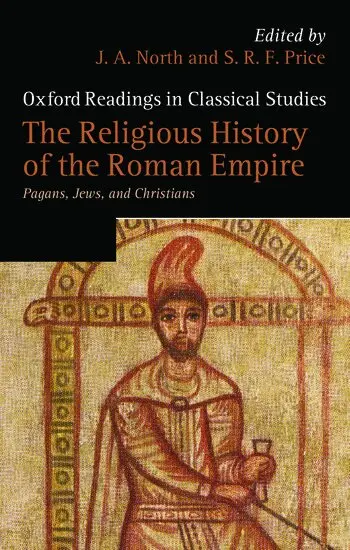
This collection of papers, many of them either published here in English for the first time or previously available only in specialist libraries, deals with the religious history of the Roman Empire. Written by leading scholars, the essays have contributed to a revolutionary change in our understanding of the religious situation of the time, and illuminate both the world religions of Christianity and Judaism and the religious life of the pagan Empire in which these developed and which deeply influenced their characters. No knowledge of ancient languages is presupposed, so the book is accessible to all who are interested in the history of this crucial period.
921 kr
Skickas inom 5-8 vardagar
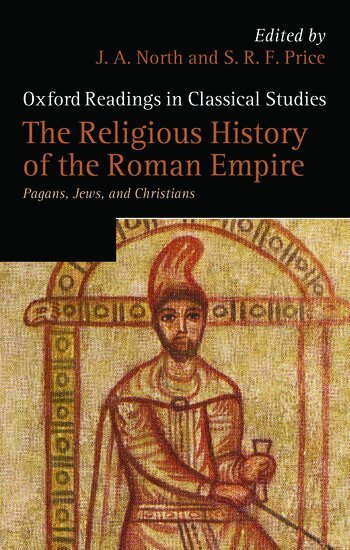
This collection of papers, many of them either published here in English for the first time or previously available only in specialist libraries, deals with the religious history of the Roman Empire. Written by leading scholars, the essays have contributed to a revolutionary change in our understanding of the religious situation of the time, and illuminate both the world religions of Christianity and Judaism and the religious life of the pagan Empire in which these developed and which deeply influenced their characters. No knowledge of ancient languages is presupposed, so the book is accessible to all who are interested in the history of this crucial period.
1 282 kr
Skickas inom 7-10 vardagar
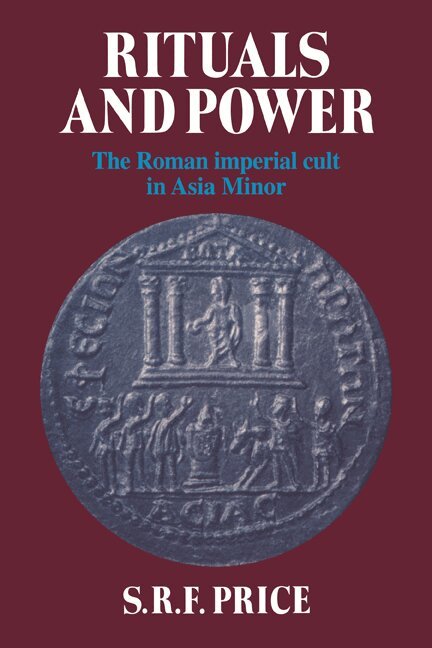
In his study of the Greek cults of the Roman emperor in Asia minor, Simon Price attempts to discover why the Roman Emperor was treated like a god. He contends that ever since the emergence of Christianity within the Roman Empire the problem has been misinterpreted; a Christianizing distinction between religion and politics has led to the cult being considered simply as a form of political honours. Drawing on anthropology as well as numismatics and archaeology, literary sources and inscriptions, Dr Price offers a fundamentally different perspective. He examines how the Greek cults of the Roman Emperor located the Emperor with their subjection to the external power of Rome. The book falls into two major parts. The first analyses the historical, social and cultural contexts of the Imperial cult, showing that the cult was deeply rooted in the Greek cities. The second focusses on the evocations of the rituals of temples, images and sacrifices. It casts light on the architechural development of Greek Cities, on cult statues in the ancient world and on the vitality and flexibility of the Greek religious system. In his concluding chapter the author draws out some of the general implications of the book; comparative material from Africa and Cambodia help our understanding of the relationship between religious ritual and political power. This book, which assumes no knowledge of Latin or Greek, will appeal to students and teachers of ancient history and archaeology. It will also attract anthropologists, historians and others interested in the interpretation of rituals and in the history of early Christianity.
550 kr
Skickas inom 7-10 vardagar
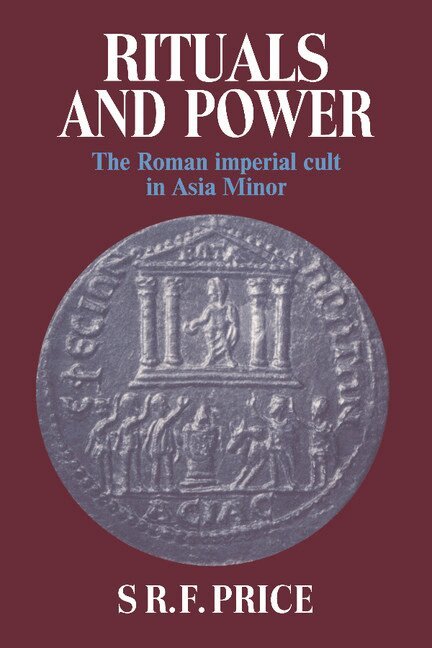
In his study of the Greek cults of the Roman emperor in Asia minor, Simon Price attempts to discover why the Roman Emperor was treated like a god. He contends that ever since the emergence of Christianity within the Roman Empire the problem has been misinterpreted; a Christianizing distinction between religion and politics has led to the cult being considered simply as a form of political honours. Drawing on anthropology as well as numismatics and archaeology, literary sources and inscriptions, Dr Price offers a fundamentally different perspective. He examines how the Greek cults of the Roman Emperor located the Emperor with their subjection to the external power of Rome. The book falls into two major parts. The first analyses the historical, social and cultural contexts of the Imperial cult, showing that the cult was deeply rooted in the Greek cities. The second focusses on the evocations of the rituals of temples, images and sacrifices. It casts light on the architechural development of Greek Cities, on cult statues in the ancient world and on the vitality and flexibility of the Greek religious system. In his concluding chapter the author draws out some of the general implications of the book; comparative material from Africa and Cambodia help our understanding of the relationship between religious ritual and political power. This book, which assumes no knowledge of Latin or Greek, will appeal to students and teachers of ancient history and archaeology. It will also attract anthropologists, historians and others interested in the interpretation of rituals and in the history of early Christianity.