S. Shanmugasundaram – författare
Visar alla böcker från författaren S. Shanmugasundaram. Handla med fri frakt och snabb leverans.
3 produkter
3 produkter
Inbunden, Engelska, 2025
1 954 kr
Skickas inom 10-15 vardagar
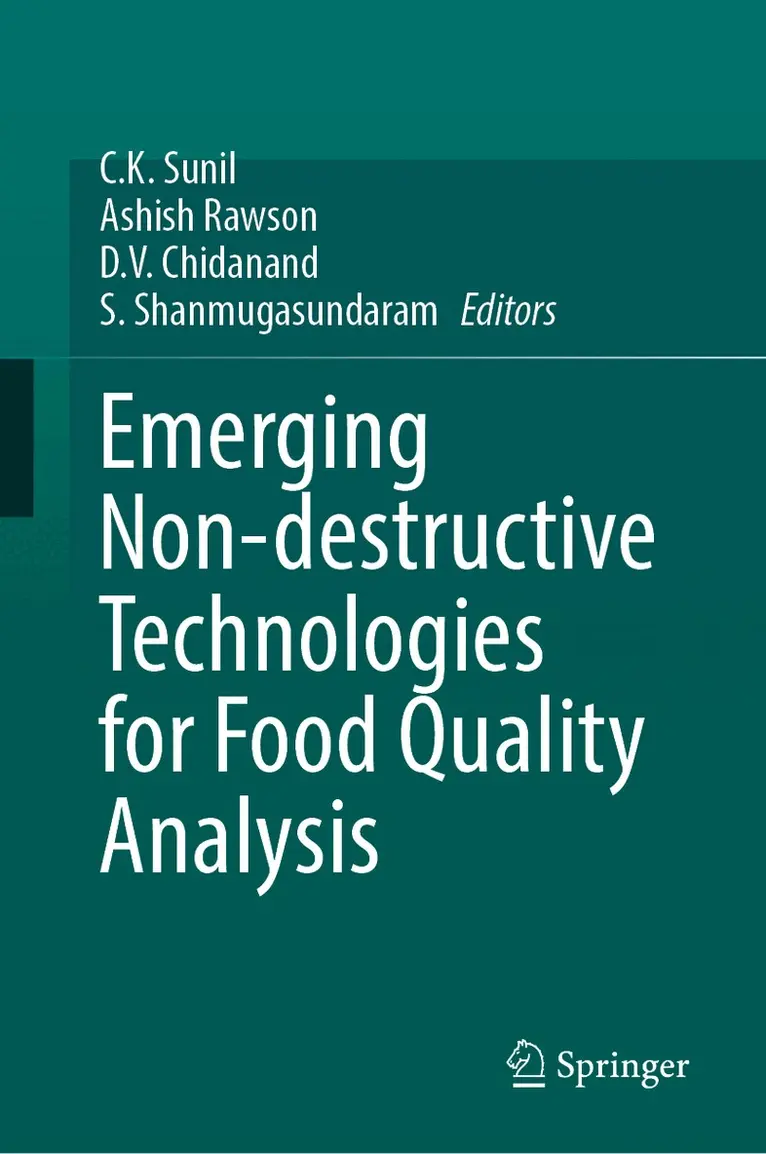
Non-destructive quality analysis refers to a method of food testing that is designed explicitly to eliminate the potential of damage to the food quality. There are various techniques by which this approach may be applied, all of which are being used recently for quality analysis, which provides important information on food characteristics such as texture, structure, and mechanical, physical and chemical properties. Conventional methods of quality analysis are time consuming, expensive and invasive in nature, particularly for long-duration analysis. Non-destructive methods have thus become highly appealing for their potential to reduce cost and waste and to shorten processing times. These approaches not only preserve the integrity of the product but also expedite the analysis process. The most common non-destructive methods used include machine vision, Spectroscopy, E-nose/tongue, Ultrasonics, and hyperspectral imaging, among others. While these methods have been in practice for some time, the technological advancements of the last decade have improved the precision and reliability of these tools, making them more popular. An overview of the dominant non-destructive methods, including the more novel technologies such as biosensors and terahertz application, have not until now been comprehensively covered in the form of a research volume. Emerging Non-destructive Technologies for Food Quality Analysis brings together detailed information on all these most current advances in technology and elucidates their application in food processing. Covering theory, principle, recent advances and practical applications in food analysis, this book will be an invaluable reference for students, researchers, food trainers and industry personnel.
E-bok
Engelska, 20252 435 kr
Läs direkt efter köp
Non-destructive quality analysis refers to a method of food testing that is designed explicitly to eliminate the potential of damage to the food quality. There are various techniques by which this approach may be applied, all of which are being used recently for quality analysis, which provides important information on food characteristics such as texture, structure, and mechanical, physical and chemical properties. Conventional methods of quality analysis are time consuming, expensive and invasive in nature, particularly for long-duration analysis. Non-destructive methods have thus become highly appealing for their potential to reduce cost and waste and to shorten processing times. These approaches not only preserve the integrity of the product but also expedite the analysis process. The most common non-destructive methods used include machine vision, Spectroscopy, E-nose/tongue, Ultrasonics, and hyperspectral imaging, among others. While these methods have been in practice for some time, the technological advancements of the last decade have improved the precision and reliability of these tools, making them more popular. An overview of the dominant non-destructive methods, including the more novel technologies such as biosensors and terahertz application, have not until now been comprehensively covered in the form of a research volume. Emerging Non-destructive Technologies for Food Quality Analysis brings together detailed information on all these most current advances in technology and elucidates their application in food processing. Covering theory, principle, recent advances and practical applications in food analysis, this book will be an invaluable reference for students, researchers, food trainers and industry personnel.
Inbunden, Engelska, 2024
2 727 kr
Skickas inom 5-8 vardagar
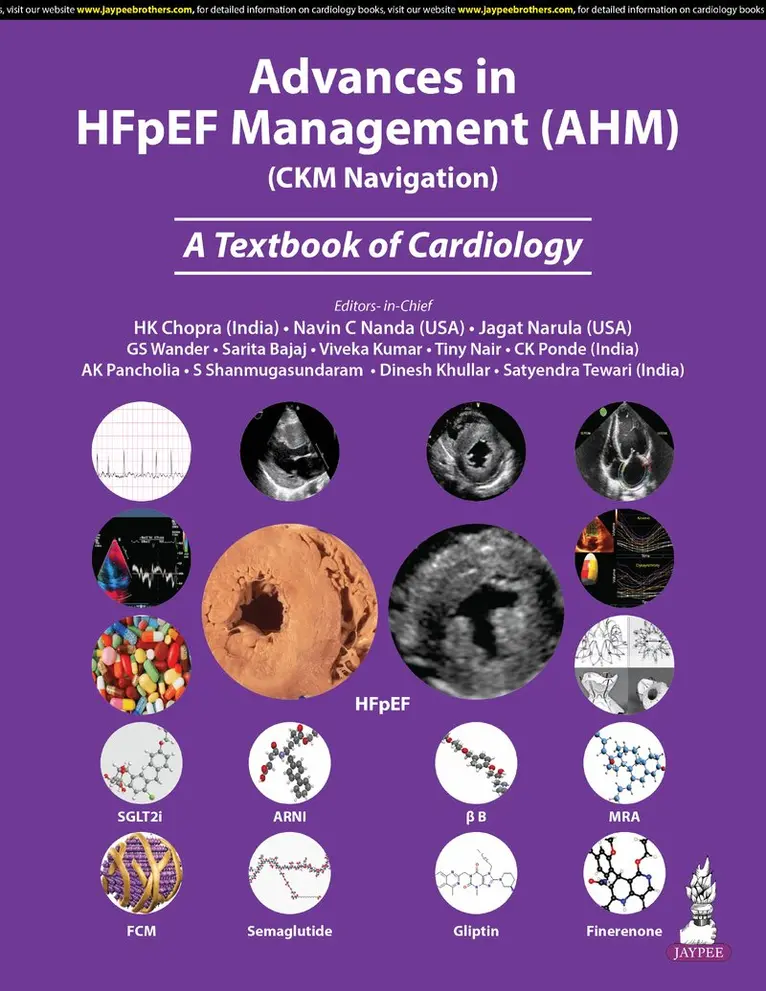
HFpEF, or Heart Failure with preserved ejection fraction, is a type of heart failure where the heart's main pumping chamber (the left ventricle) becomes too stiff to fill properly with blood, even though it can still contract normally. This leads to symptoms like breathlessness, fatigue, and swelling due to blood and fluid backing up in the lungs and body. HFpEF is often associated with other conditions such as high blood pressure, diabetes, obesity, and heart disease, and treatment focuses on managing these underlying factors and relieving symptoms.Based on the experience of more than 300 contributors, this book is a comprehensive guide to the diagnosis and management of HFpEF, explaining advances in clinical approach, imaging including echocardiography, and multimodality imaging; and drug, mechanical and surgical interventions.Comprising 21 sections and169 chapters, as many as 28 chapters in this book deal with echocardiography and HFpEF. Assessment of HFpEF using echocardiographic techniques such as three-dimensional echocardiography and more recent advances such as speckle tracking of echocardiography for assessment of left ventricular, left atrial, right ventricular, and right atrial strain, are covered in depth.Discussion on echocardiographic ventricular and atrial remodeling reversal with various therapeutic agents, including sodium‐glucose cotransporter‐2 (SGLT2) inhibitors, angiotensin receptor–neprilysin inhibitor (ARNI), and bisoprolol, is included.Exercise-induced left atrial hypertension in HFpEF and the effect of various therapeutic agents on left atrial stiffness index, left atrial function, and other left ventricular diastolic parameters are also examined.