Sabeth Buchmann – författare
172 kr
Skickas
230 kr
Läs direkt efter köp
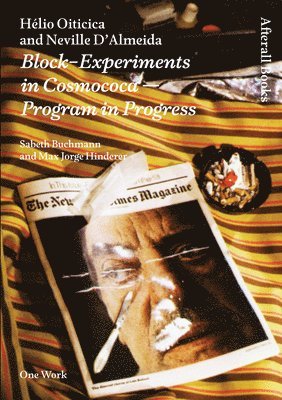
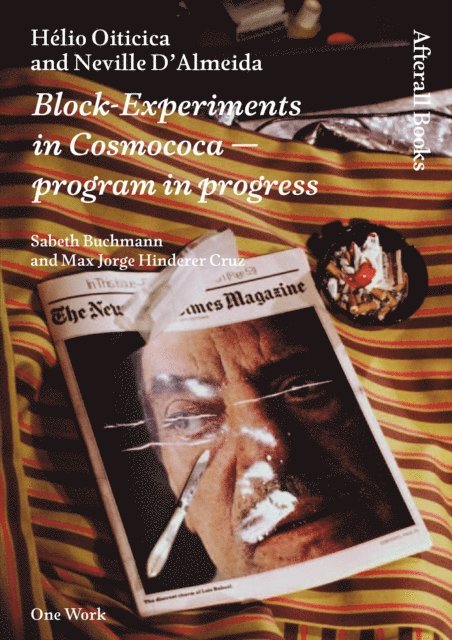
An illustrated study that casts a new light on Oiticica''s most important work of “quasi-cinema” on its fortieth anniversary.
Hélio Oiticica (1937–1980) occupies a central position in the Latin American avant-garde of the postwar era. Associated with the Rio de Janeiro-based neo-concretist movement at the beginning of his career, Oiticica moved from object production to the creation of chromatically opulent and sensually engulfing large-scale installations or wearable garments. Building on the idea for a film by Brazilian underground filmmaker Neville D''Almeida, Oiticica developed the concept for Block-Experiments in Cosmococa—Program in Progress (1973–1974) as an “open program”: a series of nine proposals for environments, each consisting of slide projections, soundtracks, leisure facilities, drawings (with cocaine used as pigment), and instructions for visitors. It is the epitome of what the artist called his “quasi-cinema” work—his most controversial production, and perhaps his most direct effort to merge art and life. Presented publicly for the first time in 1992, these works have been included in major international exhibitions in Los Angeles, Chicago, London, and New York.
Drawing on unpublished primary sources, letters, and writings by Oiticica himself, this illustrated examination of Oiticica''s work considers the vast catalog of theoretical references the artist''s work relies on, from anticolonial materialism to French phenomenology and postmodern media theory to the work of Jean-Luc Godard, Andy Warhol, and Brazilian avant-garde filmmakers. It discusses Oiticica''s work in relation to the diaspora of Brazilian intellectuals during the military dictatorship, the politics of media circulation, the commercialization of New York''s queer underground, the explicit use of cocaine as means of production, and possible future reappraisals of Oiticica''s work.
291 kr
Skickas inom 3-6 vardagar
550 kr
Skickas
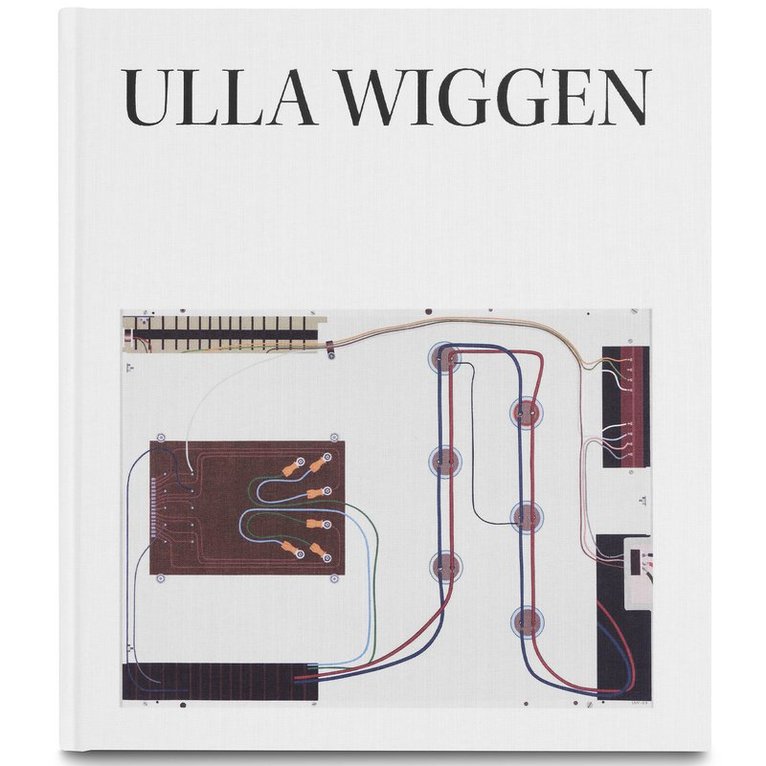
I början av 1960-talet skapade Ulla Wiggen en svit målningar föreställande elektroniska komponenter och datorer. Hon utforskade denna motivvärld då knappast någon kunde förutse hur den digitala teknologin skulle revolutionera våra dagliga liv. Kort därefter, 1966 deltog hon i föreställningarna 9 Evenings: Theatre & Engineering i New York då hon assisterade Öyvind Fahlström, vars radikala konstsyn varit av stor betydelse för henne. 1969 började hon måla människor och gjorde därefter också en serie porträtt. Hon utbildade sig även till legitimerad psykoterapeut som sedan blev hennes huvudsakliga yrke fram till 2013 då hon hade en utställning på Moderna Museet i Stockholm. Sedan dess har hennes fokus på datorernas inre och människans yttre flyttats till insidan av människokroppen och alltmer kommit att inriktas mot hjärnan och ögats iris.
In the early 1960s Ulla Wiggen created a suite of paintings depicting electronic components and computers. She explored this world when hardly anyone could predict how digital technology would revolutionize our daily lives. Shortly afterwards, in 1966, she participated in the performances 9 Evenings: Theatre & Engineering in New York assisting Öyvind Fahlström, whose radical view of art was of great importance to her. In 1969 she started painting humans and then made a series of portraits. She also became a licensed psychotherapist, which became her primary vocation until 2013 when she had an exhibtion at the Moderna Museet in Stockholm. Since then, her focus on the computer's interior and the human exterior has shifted to the inside of the human body and increasingly focused on the brain and iris of the eye.
354 kr
Tillfälligt slut