Sadiah Qureshi - Böcker
Visar alla böcker från författaren Sadiah Qureshi. Handla med fri frakt och snabb leverans.
4 produkter
4 produkter
158 kr
Kommande
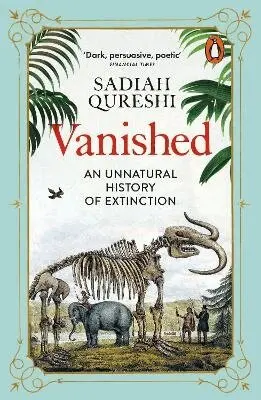
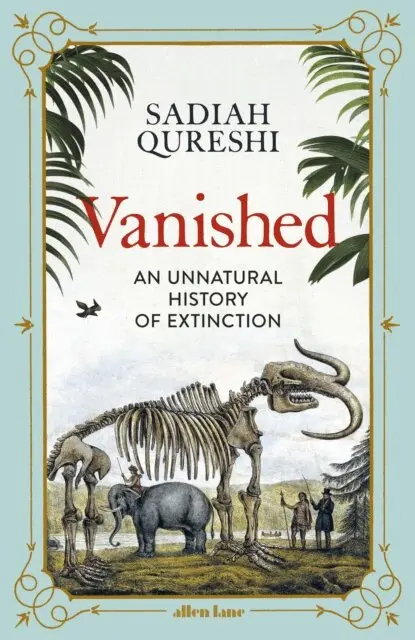
SHORTLISTED FOR THE ROYAL SOCIETY TRIVEDI SCIENCE BOOK PRIZE 2025'A vital and important book' David OlusogaFrom an award-winning historian of race, science and empire, a path-breaking and poignant history of extinction as a scientific idea, an imperial legacy and a political choiceAnyone alive today is among a tiny fraction of the once living: over 90% of species that ever existed are now extinct. How did we come to think of ourselves as survivors in a world where species can vanish forever, or as capable of pushing our planet to the verge of a sixth mass extinction?Extinction, Sadiah Qureshi shows us, is a surprisingly modern concept – and a phenomenon that’s not as natural as we might think. In Europe until the late eighteenth century, species were considered perfect and unchanging creations of God. Then in the age of revolutions, scientists gathered enough fossil evidence to determine that mammoth bones, for example, were not just large elephants but a lost species that once roamed the Earth alongside ancient humans. Extinction went from being regarded as theologically dangerous to pervasive, and even inevitable.Yet Vanished shows us that extinction is more than a scientific idea; it’s a political choice that has led to devasting consequences. Europeans and Americans quickly used the notion that extinction was a natural process to justify persecution and genocide, predicting that nations from Newfoundland’s Beothuk to Aboriginal Australians were doomed to die out from imperial expansion.Exploring the tangled and unnatural histories of extinction and empire, Vanished weaves together pioneering original research and breath-taking storytelling to show us extinction is both an evolutionary process and a human act: one which illuminates our past, and may alter our future.
1 084 kr
Skickas inom 11-20 vardagar
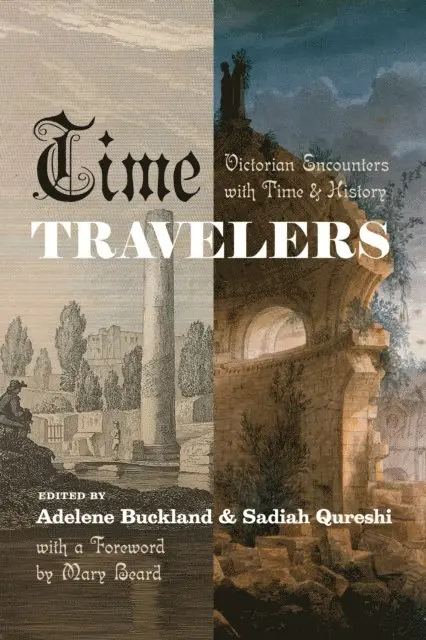
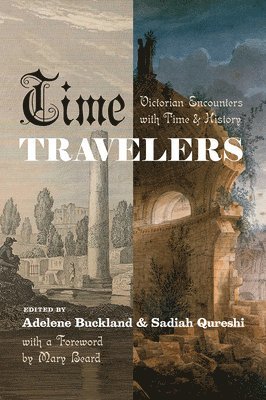
The Victorians, perhaps more than any Britons before them, were diggers and sifters of the past. Though they were not the first to be fascinated by history, the intensity and range of Victorian preoccupations with the past was unprecedented and of lasting importance. They paved the way for many of our modern disciplines, discovered the primeval monsters we now call the dinosaurs, and built many of Britain's most important national museums and galleries. To a large degree, they created the perceptual frameworks through which we continue to understand the past. Out of their discoveries, new histories emerged, giving rise to new debates, while seemingly well-known pasts were thrown into confusion by new tools and methods of scrutiny. If in the eighteenth century the study of the past had been the province of a handful of elites, new technologies and economic development in the nineteenth century meant that the past, in all its brilliant detail, was for the first time the property of the many, not the few. Time Travelers is a book about the myriad ways in which Victorians approached the past, offering a vivid new picture of the Victorian world and its historical obsessions.
250 kr
Skickas inom 7-10 vardagar
The Victorians, perhaps more than any Britons before them, were diggers and sifters of the past. Though they were not the first to be fascinated by history, the intensity and range of Victorian preoccupations with the past was unprecedented and of lasting importance. They paved the way for many of our modern disciplines, discovered the primeval monsters we now call the dinosaurs, and built many of Britain's most important national museums and galleries. To a large degree, they created the perceptual frameworks through which we continue to understand the past. Out of their discoveries, new histories emerged, giving rise to new debates, while seemingly well-known pasts were thrown into confusion by new tools and methods of scrutiny. If in the eighteenth century the study of the past had been the province of a handful of elites, new technologies and economic development in the nineteenth century meant that the past, in all its brilliant detail, was for the first time the property of the many, not the few. Time Travelers is a book about the myriad ways in which Victorians approached the past, offering a vivid new picture of the Victorian world and its historical obsessions.
309 kr
Skickas
SHORTLISTED FOR THE ROYAL SOCIETY TRIVEDI SCIENCE BOOK PRIZE 2025A GUARDIAN & TELEGRAPH BEST SCIENCE BOOK 2025WATERSTONES BEST POPULAR SCIENCE BOOK 2025'A vital and important book' David Olusoga From an award-winning historian of race, science and empire, a path-breaking and poignant history of extinction as a scientific idea, an imperial legacy and a political choiceAnyone alive today is among a tiny fraction of the once living: over 90% of species that ever existed are now extinct. How did we come to think of ourselves as survivors in a world where species can vanish forever, or as capable of pushing our planet to the verge of a sixth mass extinction? Extinction, Sadiah Qureshi shows us, is a surprisingly modern concept – and a phenomenon that’s not as natural as we might think. In Europe until the late eighteenth century, species were considered perfect and unchanging creations of God. Then in the age of revolutions, scientists gathered enough fossil evidence to determine that mammoth bones, for example, were not just large elephants but a lost species that once roamed the Earth alongside ancient humans. Extinction went from being regarded as theologically dangerous to pervasive, and even inevitable. Yet Vanished shows us that extinction is more than a scientific idea; it’s a political choice that has led to devasting consequences. Europeans and Americans quickly used the notion that extinction was a natural process to justify persecution and genocide, predicting that nations from Newfoundland’s Beothuk to Aboriginal Australians were doomed to die out from imperial expansion. Exploring the tangled and unnatural histories of extinction and empire, Vanished weaves together pioneering original research and breath-taking storytelling to show us extinction is both an evolutionary process and a human act: one which illuminates our past, and may alter our future.