Saira Khan - Böcker
Visar alla böcker från författaren Saira Khan. Handla med fri frakt och snabb leverans.
13 produkter
13 produkter
1 403 kr
Skickas inom 10-15 vardagar
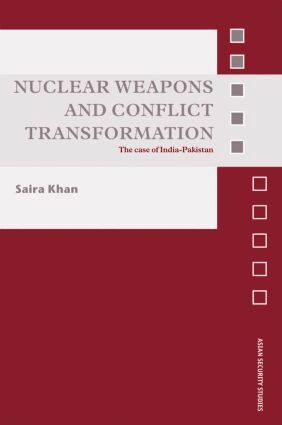
This new volume explores what the acquisition of nuclear weapons means for the life of a protracted conflict.The book argues that the significance of the possession of nuclear weapons in conflict resolution has been previously overlooked. Saira Khan argues that the acquisition of nuclear weapons by states keeps conflicts alive indefinitely, as they are maintained by frequent crises and low-to-medium intensity violence, rather than escalating to full-scale wars. This theory therefore emphasises the importance of nuclear weapons in both war-avoidance and peace-avoidance. The book opens with a section explaining its theory of conflict transformation with nuclear weapons, before testing this against the case study of the India--Pakistan protracted conflict in South Asia.This book will be of much interest to students of strategic studies, IR and Asian politics and security.
549 kr
Skickas inom 10-15 vardagar
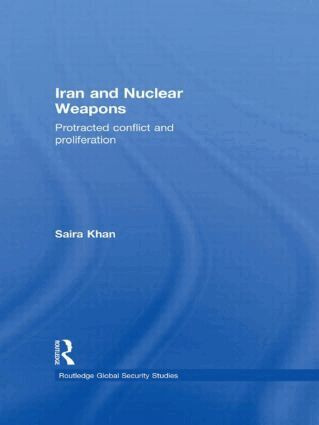
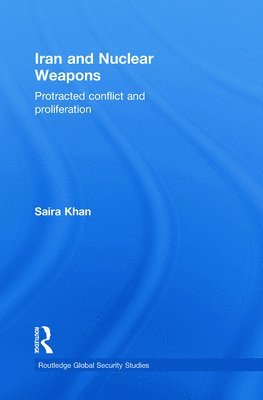
This book investigates what is driving Iran's nuclear weapons programme in a less-hostile regional environment, using a theory of protracted conflicts to explicate proliferation.Iran’s nuclear weapons program has alarmed the international community since the 1990s, but has come to the forefront of international security concerns since 2000. This book argues that Iran’s hostility with the United States remains the major causal factor for its proliferation activities. With the US administration pursuing aggressive foreign policies towards Iran since 2000, the latter’s security threat intensified. A society that is split on many important domestic issues remained united on the issue of nuclear weapons acquisition after the US war in Iraq. Consequently, Iran became determined in its drive to acquire nuclear weapons and boldly announced its decision to enrich uranium, leaving the US in no doubt about its nuclear status.This book underscores the importance of protracted conflicts in proliferation decisions, and underpinning this is the assumption that non-proliferation may be achieved through the termination of intractable conflicts. The aims of this work are to demonstrate that a state’s decision to acquire nuclear weapons depends largely on its engagement in protracted conflicts, which shows not only that the presence of nuclear rivals intensifies the nuclear ambition, but also that non-nuclear status of rival states can promote non-proliferation incentives in conflicting states inclined to proliferate.This study will be of great interest to students of Iran, Middle Eastern politics, nuclear proliferation and international relations theory.Saira Khan is a Research Associate in the McGill-University of Montreal Joint Research Group in International Security (REGIS).
524 kr
Skickas inom 10-15 vardagar
This new volume explores what the acquisition of nuclear weapons means for the life of a protracted conflict.The book argues that the significance of the possession of nuclear weapons in conflict resolution has been previously overlooked. Saira Khan argues that the acquisition of nuclear weapons by states keeps conflicts alive indefinitely, as they are maintained by frequent crises and low-to-medium intensity violence, rather than escalating to full-scale wars. This theory therefore emphasises the importance of nuclear weapons in both war-avoidance and peace-avoidance. The book opens with a section explaining its theory of conflict transformation with nuclear weapons, before testing this against the case study of the India--Pakistan protracted conflict in South Asia.This book will be of much interest to students of strategic studies, IR and Asian politics and security.
292 kr
Skickas inom 10-15 vardagar
This book investigates what is driving Iran's nuclear weapons programme in a less-hostile regional environment, using a theory of protracted conflicts to explicate proliferation.Iran’s nuclear weapons program has alarmed the international community since the 1990s, but has come to the forefront of international security concerns since 2000. This book argues that Iran’s hostility with the United States remains the major causal factor for its proliferation activities. With the US administration pursuing aggressive foreign policies towards Iran since 2000, the latter’s security threat intensified. A society that is split on many important domestic issues remained united on the issue of nuclear weapons acquisition after the US war in Iraq. Consequently, Iran became determined in its drive to acquire nuclear weapons and boldly announced its decision to enrich uranium, leaving the US in no doubt about its nuclear status.This book underscores the importance of protracted conflicts in proliferation decisions, and underpinning this is the assumption that non-proliferation may be achieved through the termination of intractable conflicts. The aims of this work are to demonstrate that a state’s decision to acquire nuclear weapons depends largely on its engagement in protracted conflicts, which shows not only that the presence of nuclear rivals intensifies the nuclear ambition, but also that non-nuclear status of rival states can promote non-proliferation incentives in conflicting states inclined to proliferate.This study will be of great interest to students of Iran, Middle Eastern politics, nuclear proliferation and international relations theory.Saira Khan is a Research Associate in the McGill-University of Montreal Joint Research Group in International Security (REGIS).
376 kr
Tillfälligt slut
Working with Domestic Violence and Coercive Control in Clinical Practice
A Practical Guide for Psychologists
Häftad, Engelska, 2026
575 kr
Kommande
Presently there is difficulty in finding information on how to work in the context of domestic violence and abuse in clinical practice within psychology, despite domestic violence being a significant public health concern. Working with Domestic Violence and Coercive Control in Clinical Practice argue that awareness and competence in this area is essential to good therapeutic work. The chapters offer conclusions and recommendations from research, experience in clinical practice, and survivor testimonies and consulting professionals in trauma services and the domestic violence sector. This book brings together psychological theory within an ecological and social understanding of the context the individual lives within to provide a nuanced understanding of DVA and dynamics of coercive control to best support mental well-being in this context. Specific topics covered include intimate partner violence, abuse post separation, family courts, and the impact of this on children and families. This book equips the practitioner with skills and offers a series of actionable recommendations that are embedded with knowledge about trauma and the impact of coercion viewed through an intersectional and feminist lens that considers power in relationships, and most importantly, from a stance that resonates with survivors. It is key reading for practitioner psychologists and clinicians across disciplines to equip themselves with the latest knowledge, skills and research in this area to best support the individuals, couples, families and communities they work with.
Working with Domestic Violence and Coercive Control in Clinical Practice
A Practical Guide for Psychologists
Inbunden, Engelska, 2026
2 250 kr
Kommande
Presently there is difficulty in finding information on how to work in the context of domestic violence and abuse in clinical practice within psychology, despite domestic violence being a significant public health concern. Working with Domestic Violence and Coercive Control in Clinical Practice argue that awareness and competence in this area is essential to good therapeutic work. The chapters offer conclusions and recommendations from research, experience in clinical practice, and survivor testimonies and consulting professionals in trauma services and the domestic violence sector. This book brings together psychological theory within an ecological and social understanding of the context the individual lives within to provide a nuanced understanding of DVA and dynamics of coercive control to best support mental well-being in this context. Specific topics covered include intimate partner violence, abuse post separation, family courts, and the impact of this on children and families. This book equips the practitioner with skills and offers a series of actionable recommendations that are embedded with knowledge about trauma and the impact of coercion viewed through an intersectional and feminist lens that considers power in relationships, and most importantly, from a stance that resonates with survivors. It is key reading for practitioner psychologists and clinicians across disciplines to equip themselves with the latest knowledge, skills and research in this area to best support the individuals, couples, families and communities they work with.
Nuclear Proliferation Dynamics in Protracted Conflict Regions
A Comparative Study of South Asia and the Middle East
Häftad, Engelska, 2019
535 kr
Skickas inom 10-15 vardagar
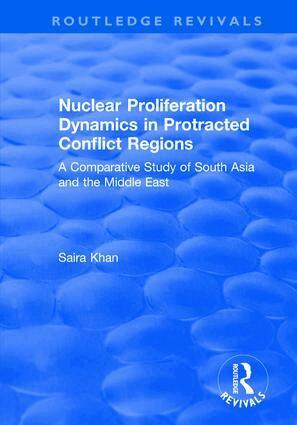
This title was first published in 2003:Using extensive case studies of the nuclear weapons programmes of India, Pakistan, Israel, Iraq, Iran, Egypt and Syria, this important work shows that a higher than normal probability of war in protracted conflict regions, prompts states to search for credible deterrents such as nuclear weapons. The book rigorously examines the factors that affect the pace of this proliferation such as regional power structures and geographical proximity, and challenges many prevailing theories on proliferation. This compelling text convincingly argues that simple conflict relationships are not sufficient for countries to go nuclear, thus providing insight into the true complexity of the issue. Explaining the similarities and differences between the nuclear policies of states in protracted conflict regions, the book commands the attention of anyone interested in nuclear proliferation and regional conflict.
Nuclear Proliferation Dynamics in Protracted Conflict Regions
A Comparative Study of South Asia and the Middle East
Inbunden, Engelska, 2017
1 953 kr
Skickas inom 10-15 vardagar
This title was first published in 2003:Using extensive case studies of the nuclear weapons programmes of India, Pakistan, Israel, Iraq, Iran, Egypt and Syria, this important work shows that a higher than normal probability of war in protracted conflict regions, prompts states to search for credible deterrents such as nuclear weapons. The book rigorously examines the factors that affect the pace of this proliferation such as regional power structures and geographical proximity, and challenges many prevailing theories on proliferation. This compelling text convincingly argues that simple conflict relationships are not sufficient for countries to go nuclear, thus providing insight into the true complexity of the issue. Explaining the similarities and differences between the nuclear policies of states in protracted conflict regions, the book commands the attention of anyone interested in nuclear proliferation and regional conflict.
157 kr
Skickas inom 5-8 vardagar
1 381 kr
Skickas inom 10-15 vardagar
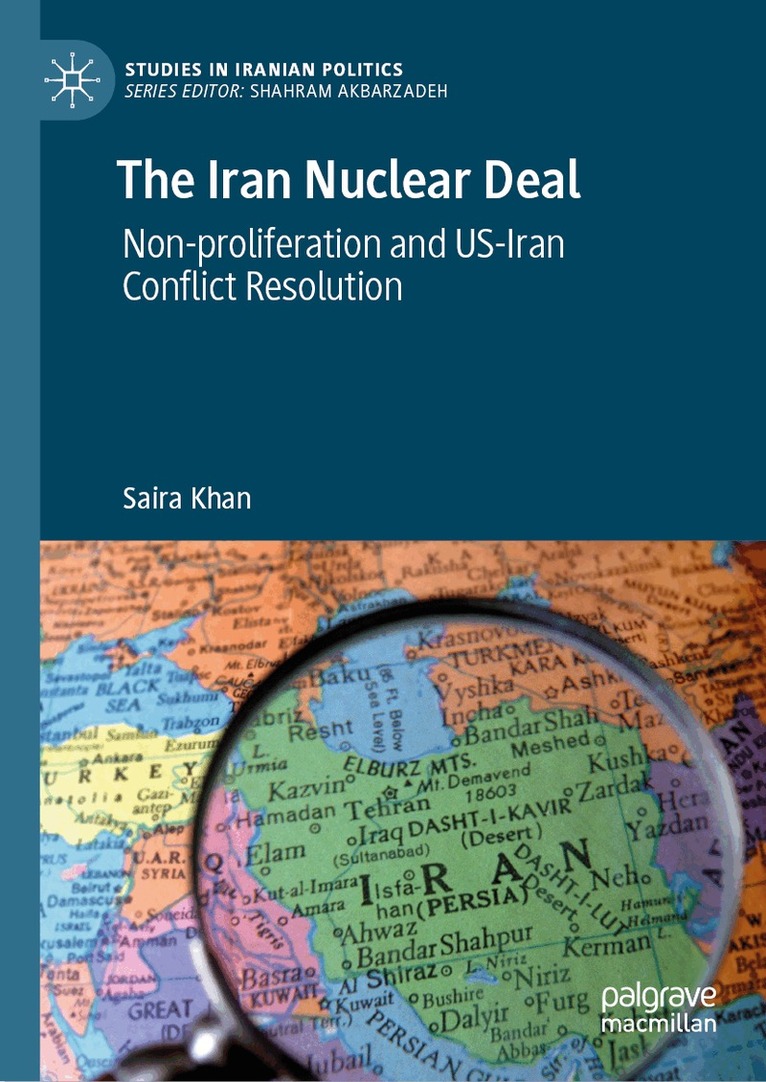
This book delves deep into the complex dynamics surrounding the Iran nuclear deal and its subsequent fracture. In a post-2018 world, following the United States’ withdrawal from the 2015 Iran nuclear agreement, this work dissects the ramifications of this geopolitical shift, particularly with respect to Iran's nuclear ambitions.The book's central premise revolves around the idea that Iran's pursuit of nuclear capabilities is intricately tied to its enduring conflicts with Iraq, Israel, and the United States. It argues that the nuclear deal had the potential to quell these conflicts, particularly the long-standing rivalry between Iran and the U.S., thus reshaping Iran's relationships in the Middle East. However, with the U.S. exit from the agreement and its accusations of Iranian sponsorship of terrorism, Iran now perceives a heightened threat, potentially leading it to consider nuclear weapons as a deterrent against a potential war with the U.S.The book challengesconventional international relations paradigms with regards to Iran: realism, which typically predicts all conflicting states will seek nuclear weapons regardless of cooperative arrangements, is shown to ignore the nuanced connection between cooperation and proliferation propensity; and liberalism's emphasis on cooperation is critiqued in this case for overlooking the negative consequences of failed cooperative endeavours. The book highlights the importance of trust and compliance in the success of cooperative agreements, as well as the adverse effects of their breakdown.The work contributes significantly to our understanding of international relations in the Middle East. It draws on an extensive examination of prior research while presenting novel theoretical insights. The detailed case study of Iran's nuclear aspirations before, during, and after the nuclear deal serves as a compelling application of the theoretical framework.Finally, the book provides an in-depth exploration of the intricate web of geopolitics, trust, and cooperation that has shaped the trajectory of Iran's nuclear ambitions. It offers not only theoretical contributions to the field of international relations but also valuable policy insights for managing this critical international issue.
1 381 kr
Skickas inom 7-10 vardagar
This book delves deep into the complex dynamics surrounding the Iran nuclear deal and its subsequent fracture. In a post-2018 world, following the United States’ withdrawal from the 2015 Iran nuclear agreement, this work dissects the ramifications of this geopolitical shift, particularly with respect to Iran's nuclear ambitions.The book's central premise revolves around the idea that Iran's pursuit of nuclear capabilities is intricately tied to its enduring conflicts with Iraq, Israel, and the United States. It argues that the nuclear deal had the potential to quell these conflicts, particularly the long-standing rivalry between Iran and the U.S., thus reshaping Iran's relationships in the Middle East. However, with the U.S. exit from the agreement and its accusations of Iranian sponsorship of terrorism, Iran now perceives a heightened threat, potentially leading it to consider nuclear weapons as a deterrent against a potential war with the U.S.The book challengesconventional international relations paradigms with regards to Iran: realism, which typically predicts all conflicting states will seek nuclear weapons regardless of cooperative arrangements, is shown to ignore the nuanced connection between cooperation and proliferation propensity; and liberalism's emphasis on cooperation is critiqued in this case for overlooking the negative consequences of failed cooperative endeavours. The book highlights the importance of trust and compliance in the success of cooperative agreements, as well as the adverse effects of their breakdown.The work contributes significantly to our understanding of international relations in the Middle East. It draws on an extensive examination of prior research while presenting novel theoretical insights. The detailed case study of Iran's nuclear aspirations before, during, and after the nuclear deal serves as a compelling application of the theoretical framework.Finally, the book provides an in-depth exploration of the intricate web of geopolitics, trust, and cooperation that has shaped the trajectory of Iran's nuclear ambitions. It offers not only theoretical contributions to the field of international relations but also valuable policy insights for managing this critical international issue.
1 276 kr
Skickas inom 10-15 vardagar
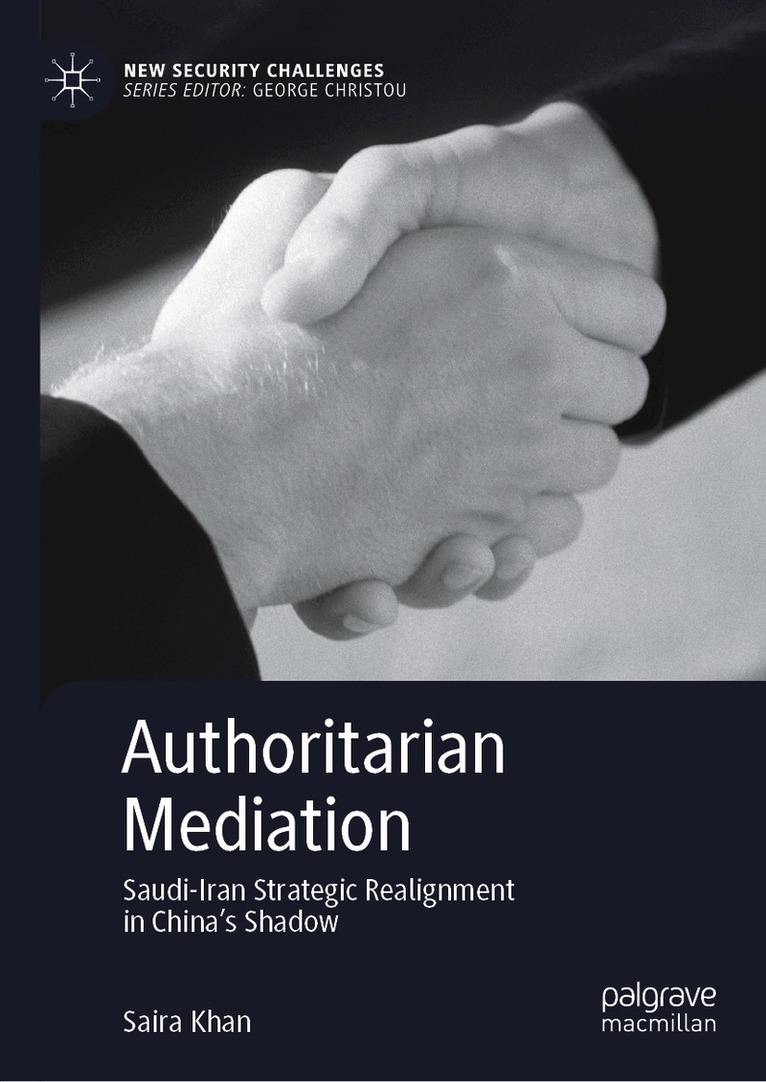
By situating this diplomatic realignment within the broader decline of Western influence in the Middle East, the book highlights how new patterns of engagement are emerging—ones that often bypass traditional Western channels in favor of authoritarian-led mediation.