• Fri frakt över 249 kr
  • •
  • Snabba leveranser
  • •
  • Billiga böcker
Kundservice

Du är på sajten för privatpersoner.

Företag, bibliotek eller offentlig verksamhet?

Du handlar på classic.bokus.com, där alla dina funktioner finns intakta.
Till classic.bokus.com
Bokus logotyp. Gå till startsidan.
  • Erbjudanden
  • Nyheter
  • Student
  • Topplistor
  • Barn & ungdom
  • Bokus Play
  • E-böcker
  • Pocketböcker
  • Spel & pussel

10% rabatt på allt med kod NYSTART10 →

Sidfot

Mina sidor

    Hjälp

    • Kundservice
    • Vanliga frågor och svar
    • Frakt och leverans
    • Retur vid ångerrätt
    • Reklamera vara
    • Betalning
    • Köpvillkor
    • Allmänna villkor
    • Information om webbplatsens tillgänglighet

    Om Bokus

    • Om oss
    • Pressrum
    • För studenter
    • För företag
    • För bibliotek och offentlig verksamhet
    • För leverantörer
    • Hållbarhet

    Populärt

    • Aktuella erbjudanden
    • Presentkort
    • Studentlitteratur
    • Nya böcker
    • Topplistor
    • Signerade böcker
    • Engelska böcker

    Inspiration

    • Boktips
    • BookTok
    • Populära bokserier
    • Barnbokskaraktärer
    • Populära författare
    Logotyp för Bokus
    Följ oss på Facebook (extern länk)Följ oss på Instagram (extern länk)Följ oss på YouTube (extern länk)Följ oss på TikTok (extern länk)
    bokus @ CookiesAnpassa cookiesIntegritetspolicyKöpvillkor
    Till Citymail hemsida (extern länk)Till Budbee hemsida (extern länk)Till Postnord hemsida (extern länk)Till Schenker hemsida (extern länk)Till Early Bird hemsida (extern länk)Till Walleys hemsida (extern länk)
    1. Samhälle och politik
    2. Samhälle och kultur
    3. Kultur och medier
    4. Referensverk och tvärvetenskap

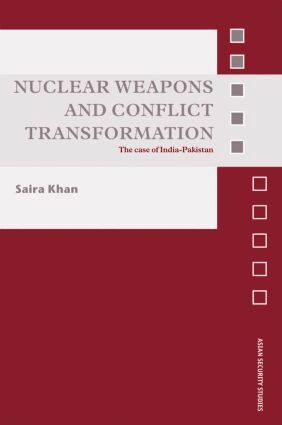
    Nuclear Weapons and Conflict Transformation

    The Case of India-Pakistan

    AvSaira Khan

    Inbunden, Engelska, 2008

    Del i serien Asian Security Studies

    1 511 kr

    Beställningsvara. Skickas inom 10-15 vardagar. Fri frakt över 249 kr.

    Fler format och utgåvor

    Häftad

    571 kr

    E-bok

    654 kr

    E-bok

    654 kr

    Beskrivning

    This new volume explores what the acquisition of nuclear weapons means for the life of a protracted conflict.The book argues that the significance of the possession of nuclear weapons in conflict resolution has been previously overlooked. Saira Khan argues that the acquisition of nuclear weapons by states keeps conflicts alive indefinitely, as they are maintained by frequent crises and low-to-medium intensity violence, rather than escalating to full-scale wars. This theory therefore emphasises the importance of nuclear weapons in both war-avoidance and peace-avoidance. The book opens with a section explaining its theory of conflict transformation with nuclear weapons, before testing this against the case study of the India--Pakistan protracted conflict in South Asia.This book will be of much interest to students of strategic studies, IR and Asian politics and security.

    Produktinformation

    • Utgivningsdatum:2008-09-09
    • Mått:156 x 234 x 16 mm
    • Vikt:560 g
    • Format:Inbunden
    • Språk:Engelska
    • Serie:Asian Security Studies
    • Antal sidor:216
    • Förlag:Taylor & Francis Ltd
    • ISBN:9780415375078

    Utforska kategorier

    • Referensverk och tvärvetenskap inom Samhälle och politik
    • Internationella relationer inom Samhälle och politik
    • Kärnvapen inom Samhälle och politik

    Mer om författaren

    Saira Khan is at the University of British Columbia, Canada.

    Innehållsförteckning

    • Introduction Part 1: Theory 1. Studies on Conflict Transformation 2. Scholarship on Ramifications of Nuclear Weapons Acquisition 3. Elucidating Conflict Transformation with Nuclear Weapons Part 2: The India-Pakistan Protracted Conflict 4. Life of the Protracted Conflict 5. Introduction of Nuclear Weapons in the Conflict 6. Crises and Wars in the Pre-Nuclear Period 7. Crises and Non-escalation in the Nuclear Period 8. Futile Peace Initiatives in the Midst of Violence 9. Conflict Transformed 10. Potential for Conflict Termination. Conclusion. Bibliography