Salim Yaqub - Böcker
Visar alla böcker från författaren Salim Yaqub. Handla med fri frakt och snabb leverans.
6 produkter
6 produkter
370 kr
Kommande
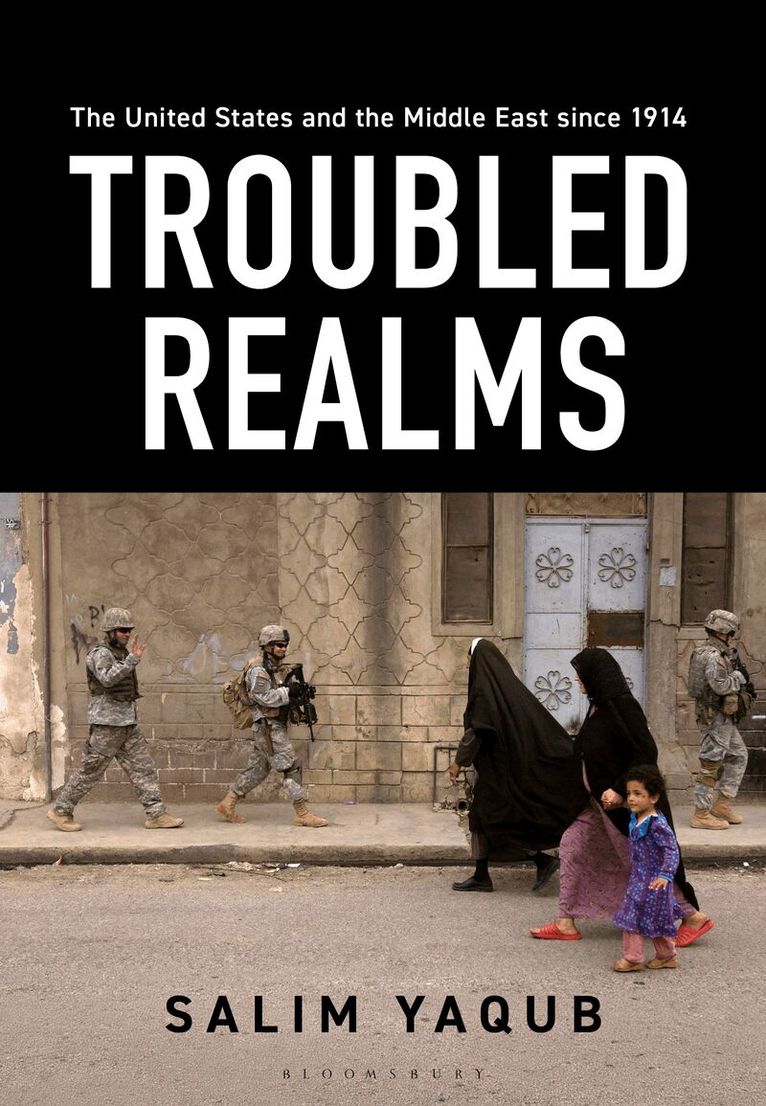
What events and circumstances fuelled America’s fixation with the Middle East? In this book, Professor Salim Yaqub covers over 100 years of US involvement in and policy towards the Middle East to explain this vital geopolitical relationship.Starting with the upheavals of World War I and the first stirrings of US geopolitical interest in the region, the book describes how and why the Middle East’s resources, location, conflicts and crises became key concerns for the United States. This includes:· The growing centrality of Middle Eastern oil to the global economy and to US military strategy· The region’s geographic location and efforts to combat strategic adversaries like the Axis powers during WWII and the Soviet Union during the Cold War· Israel’s cultural and political significance to American society and government · Anti-Western “rogue” states or terrorist groups using the region as a staging area for attacks and the US response Taking a chronological approach, the book explains how global upheavals and traumatic ruptures in the region shaped the trajectory of US-Middle East relations over successive eras. Yaqub covers the impact of WWI, WWII and decolonization as well significant events such as the 1956 Suez Crisis, the 1973 Arab-Israeli War, the Iran-Iraq War of the 1980s, Al-Qa’ida’s terrorist attacks of 2001, and the Hamas raid of October 7, 2023. Readers will understand what motivated Washington's foreign policy and how it impacted the Middle East.Pitched to university students and educated general readers, each chapter includes a timeline of relevant historical events, photographs, political cartoons, maps, and other graphics.
1 194 kr
Kommande
What events and circumstances fuelled America’s fixation with the Middle East? In this book, Professor Salim Yaqub covers over 100 years of US involvement in and policy towards the Middle East to explain this vital geopolitical relationship.Starting with the upheavals of World War I and the first stirrings of US geopolitical interest in the region, the book describes how and why the Middle East’s resources, location, conflicts and crises became key concerns for the United States. This includes:· The growing centrality of Middle Eastern oil to the global economy and to US military strategy· The region’s geographic location and efforts to combat strategic adversaries like the Axis powers during WWII and the Soviet Union during the Cold War· Israel’s cultural and political significance to American society and government · Anti-Western “rogue” states or terrorist groups using the region as a staging area for attacks and the US response Taking a chronological approach, the book explains how global upheavals and traumatic ruptures in the region shaped the trajectory of US-Middle East relations over successive eras. Yaqub covers the impact of WWI, WWII and decolonization as well significant events such as the 1956 Suez Crisis, the 1973 Arab-Israeli War, the Iran-Iraq War of the 1980s, Al-Qa’ida’s terrorist attacks of 2001, and the Hamas raid of October 7, 2023. Readers will understand what motivated Washington's foreign policy and how it impacted the Middle East.Pitched to university students and educated general readers, each chapter includes a timeline of relevant historical events, photographs, political cartoons, maps, and other graphics.
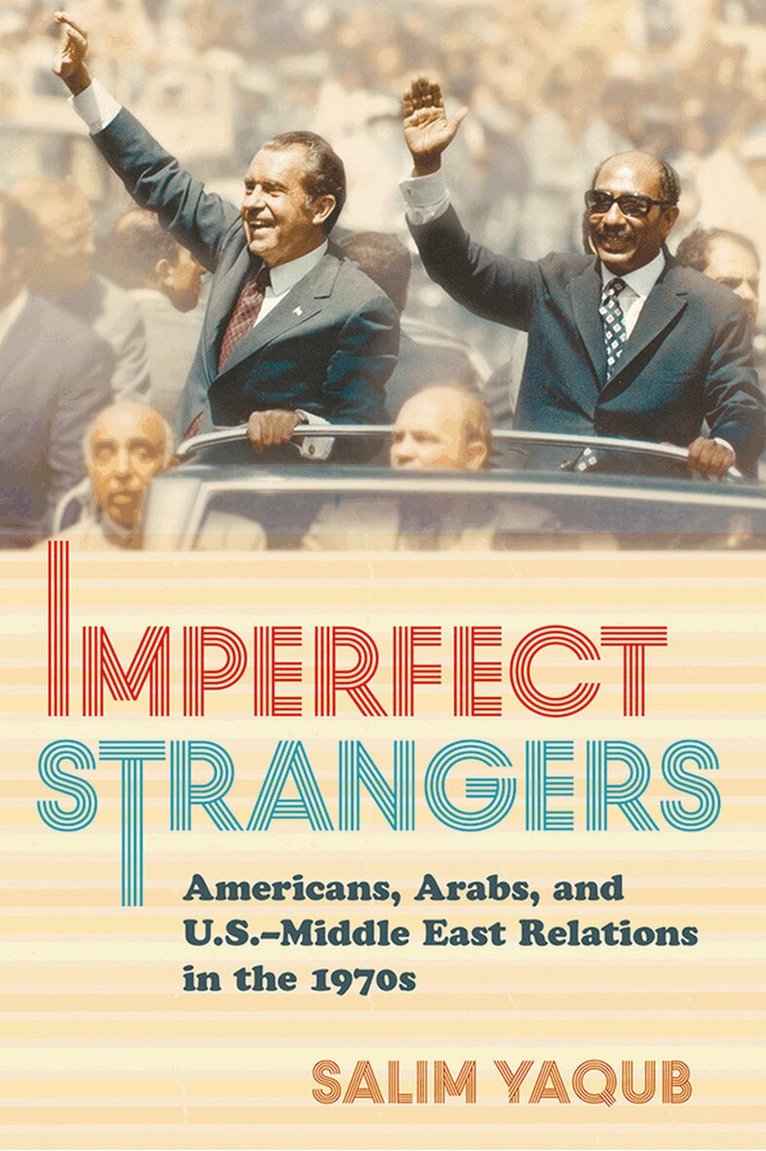
Imperfect Strangers
Americans, Arabs, and U.S.–Middle East Relations in the 1970s
Inbunden, Engelska, 2016
374 kr
Skickas inom 7-10 vardagar
In Imperfect Strangers, Salim Yaqub argues that the 1970s were a pivotal decade for U.S.-Arab relations, whether at the upper levels of diplomacy, in street-level interactions, or in the realm of the imagination. In those years, Americans and Arabs came to know each other as never before. With Western Europe's imperial legacy fading in the Middle East, American commerce and investment spread throughout the Arab world. The United States strengthened its strategic ties to some Arab states, even as it drew closer to Israel. Maneuvering Moscow to the sidelines, Washington placed itself at the center of Arab-Israeli diplomacy. Meanwhile, the rise of international terrorism, the Arab oil embargo and related increases in the price of oil, and expanding immigration from the Middle East forced Americans to pay closer attention to the Arab world.Yaqub combines insights from diplomatic, political, cultural, and immigration history to chronicle the activities of a wide array of American and Arab actors—political leaders, diplomats, warriors, activists, scholars, businesspeople, novelists, and others. He shows that growing interdependence raised hopes for a broad political accommodation between the two societies. Yet a series of disruptions in the second half of the decade thwarted such prospects. Arabs recoiled from a U.S.-brokered peace process that fortified Israel's occupation of Arab land. Americans grew increasingly resentful of Arab oil pressures, attitudes dovetailing with broader anti-Muslim sentiments aroused by the Iranian hostage crisis. At the same time, elements of the U.S. intelligentsia became more respectful of Arab perspectives as a newly assertive Arab American community emerged into political life. These patterns left a contradictory legacy of estrangement and accommodation that continued in later decades and remains with us today.
514 kr
Skickas inom 10-15 vardagar
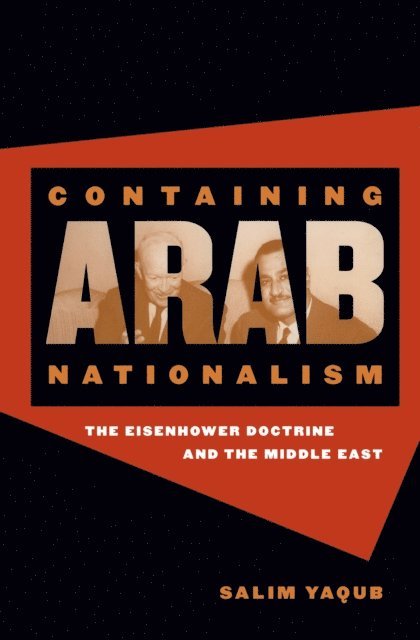
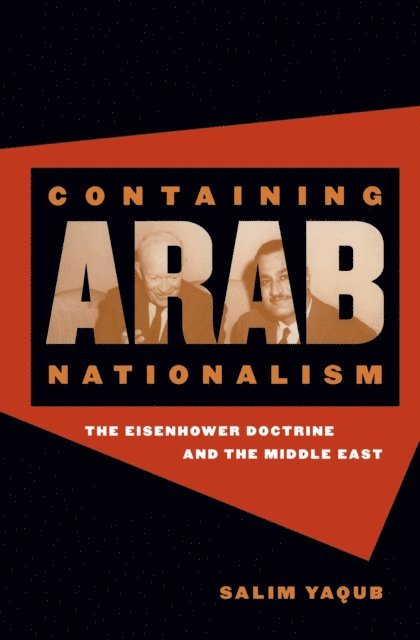
Under the Eisenhower Doctrine, the United States pledged to give increased economic and military aid to receptive Middle Eastern countries and to protect - with US armed forces if necessary - the territorial integrity and political independence of these nations from the threat of ""international communism"". Salim Yaqub demonstrates that although the United States officially aimed to protect the Middle East from Soviet encroachment, the Eisenhower Doctrine had the unspoken mission of containing the radical Arab nationalism of Egyptian president Gamal Abdel Nasser, whom Eisenhower regarded as an unwitting agent of Soviet expansionism. By offering aid and protection, the Eisenhower administration hoped to convince a majority of Arab governments to side openly with the West in the Cold War, thus isolating Nasser and decreasing the likelihood that the Middle East would fall under Soviet domination. Employing a wide range of declassified Egyptian, British and American archival sources, Yaqub offers a comprehensive account of Eisenhower's efforts to counter Nasserism's appeal throughout the Arab Middle East. Challenging interpretations of US-Arab relations that emphasize cultural antipathies and clashing values, Yaqub instead argues that the political dispute between the United States and the Nasserist movement occurred within a shared moral framework - a pattern that continues to characterize US-Arab controversies in the 21st century.
1 263 kr
Skickas inom 7-10 vardagar
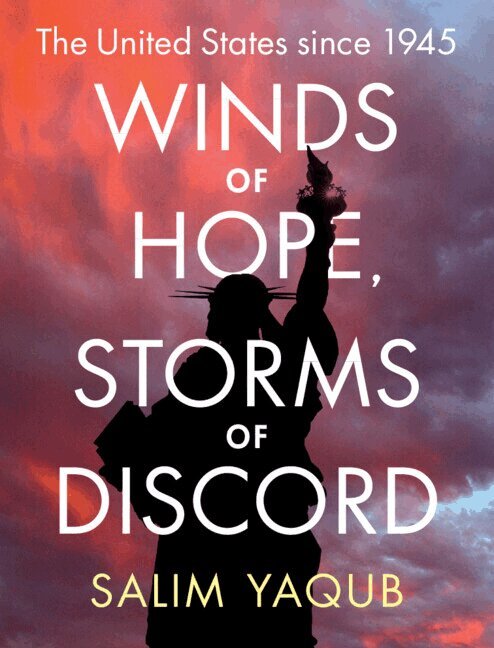
In brisk and engaging prose, this comprehensive introductory textbook traverses the broad sweep of US history since 1945. Winds of Hope, Storms of Discord explores how Americans from all walks of life - political leaders, businesspeople, public intellectuals, workers, students, activists, migrants, and others - struggled to define the nation's political, economic, geopolitical, demographic, and social character. It chronicles the nation's ceaseless ferment, from the rocky conversion to peacetime in the early aftermath of World War II; to the frightening emergence of the Cold War and repeated US military adventures abroad; to the struggles of African Americans and other minorities to claim a share of the American Dream; to the striking transformations in social attitudes catalyzed by the women's movement and struggles for gay and lesbian liberation; to the dynamic force of political, economic, and social conservatism. Carrying the story to the spring of 2022, Winds of Hope also shows how dizzying technological changes at times threatened to upend the nation's civic and political life.
422 kr
Skickas inom 7-10 vardagar
In brisk and engaging prose, this comprehensive introductory textbook traverses the broad sweep of US history since 1945. Winds of Hope, Storms of Discord explores how Americans from all walks of life - political leaders, businesspeople, public intellectuals, workers, students, activists, migrants, and others - struggled to define the nation's political, economic, geopolitical, demographic, and social character. It chronicles the nation's ceaseless ferment, from the rocky conversion to peacetime in the early aftermath of World War II; to the frightening emergence of the Cold War and repeated US military adventures abroad; to the struggles of African Americans and other minorities to claim a share of the American Dream; to the striking transformations in social attitudes catalyzed by the women's movement and struggles for gay and lesbian liberation; to the dynamic force of political, economic, and social conservatism. Carrying the story to the spring of 2022, Winds of Hope also shows how dizzying technological changes at times threatened to upend the nation's civic and political life.