Samantha Balaton-Chrimes – författare
Visar alla böcker från författaren Samantha Balaton-Chrimes. Handla med fri frakt och snabb leverans.
6 produkter
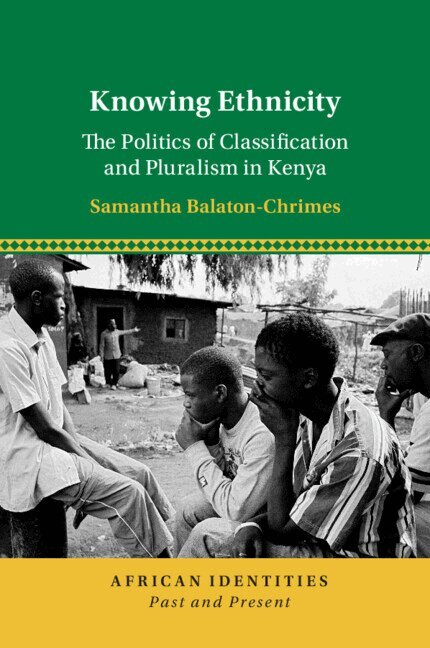
Knowing Ethnicity
The Politics of Classification and Pluralism in Kenya
Häftad, 2026
496 kr
Lägg i varukorg
There is a widespread assumption that both ethnicity itself and ethnic conflict, are inevitable. Yet, we know very little about how ethnic identifications function in bureaucratic terms in Africa. The stakes of this problem are rapidly escalating in moves to digital identification and population …
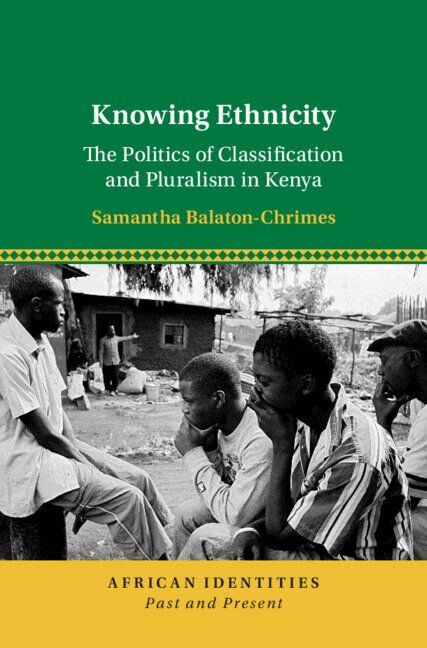
Knowing Ethnicity
The Politics of Classification and Pluralism in Kenya
Inbunden, 2026
1563 kr
Lägg i varukorg
There is a widespread assumption that both ethnicity itself and ethnic conflict, are inevitable. Yet, we know very little about how ethnic identifications function in bureaucratic terms in Africa. The stakes of this problem are rapidly escalating in moves to digital identification and population …
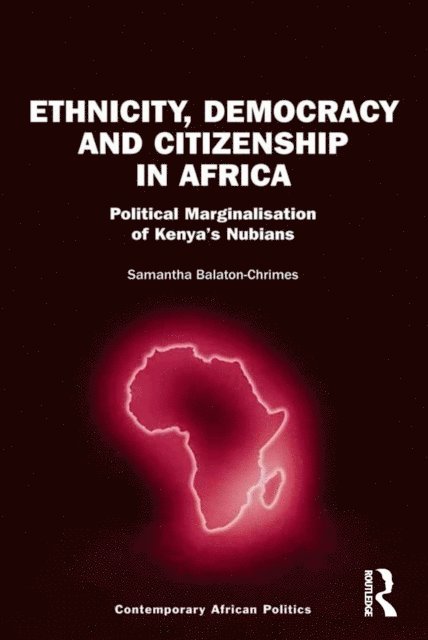
Ethnicity, Democracy and Citizenship in Africa
Political Marginalisation of Kenya's Nubians
Häftad, 2017
825 kr
Lägg i varukorg
As an ethnic minority the Nubians of Kenya are struggling for equal citizenship by asserting themselves as indigenous and autochthonous to Kibera, one of Nairobi’s most notorious slums. Having settled there after being brought by the British colonial authorities from Sudan as soldiers, this appears …
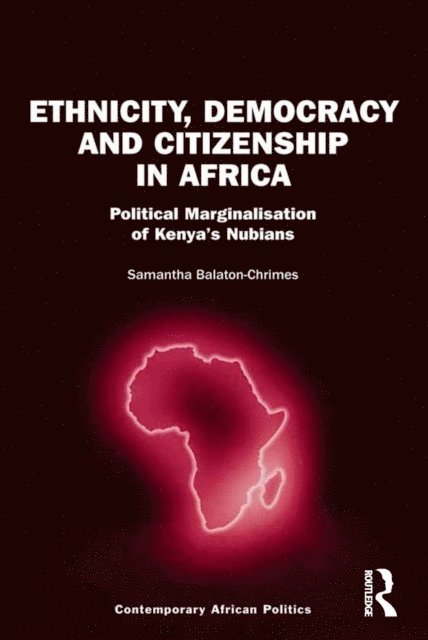
Ethnicity, Democracy and Citizenship in Africa
Political Marginalisation of Kenya's Nubians
E-bok, 2016
970 kr
Lägg i varukorg
As an ethnic minority the Nubians of Kenya are struggling for equal citizenship by asserting themselves as indigenous and autochthonous to Kibera, one of Nairobi’s most notorious slums. Having settled there after being brought by the British colonial authorities from Sudan as soldiers, this …
Ethnicity, Democracy and Citizenship in Africa
Political Marginalisation of Kenya's Nubians
E-bok, 2016
970 kr
Lägg i varukorg
As an ethnic minority the Nubians of Kenya are struggling for equal citizenship by asserting themselves as indigenous and autochthonous to Kibera, one of Nairobi’s most notorious slums. Having settled there after being brought by the British colonial authorities from Sudan as soldiers, this …
Ethnicity, Democracy and Citizenship in Africa
Political Marginalisation of Kenya's Nubians
Inbunden, 2015
2519 kr
Lägg i varukorg
As an ethnic minority the Nubians of Kenya are struggling for equal citizenship by asserting themselves as indigenous and autochthonous to Kibera, one of Nairobi’s most notorious slums. Having settled there after being brought by the British colonial authorities from Sudan as soldiers, this appears …