Samira Haj – författare
Visar alla böcker från författaren Samira Haj. Handla med fri frakt och snabb leverans.
4 produkter
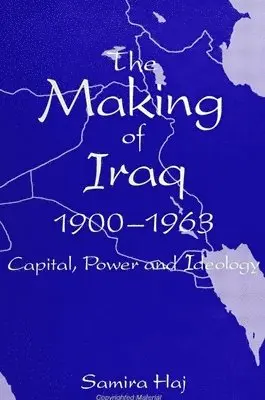
Making of Iraq, 1900-1963
Capital, Power, and Ideology
Av Samira Haj
Häftad, 1997
477 kr
Lägg i varukorg
This book's innovative approach makes it an important intervention into the field of modern Iraqi and Arab history. Samira Haj's discussion of the factors that led to, and paradoxically caused the failure of, the 1958 revolution in Iraq forms the framework for her critique of conventional …
Reconfiguring Islamic Tradition
Reform, Rationality, and Modernity
Av Samira Haj
Inbunden, 2008
1353 kr
Lägg i varukorg
Samira Haj conceptualizes Islam through a close reading of two Muslim reformers—Muhammad ibn 'Abdul Wahhab (1703–1787) and Muhammad 'Abduh (1849–1905)—each representative of a distinct trend, chronological as well as philosophical, in modern Islam. Their works are examined primarily through the …
Reconfiguring Islamic Tradition
Reform, Rationality, and Modernity
Av Samira Haj
E-bok, 2008
399 kr
Lägg i varukorg
Samira Haj conceptualizes Islam through a close reading of two Muslim reformers—Muhammad ibn 'Abdul Wahhab (1703–1787) and Muhammad 'Abduh (1849–1905)—each representative of a distinct trend, chronological as well as philosophical, in modern Islam. Their works are examined primarily through the …
Reconfiguring Islamic Tradition
Reform, Rationality, and Modernity
Av Samira Haj
Häftad, 2011
329 kr
Lägg i varukorg
Samira Haj conceptualizes Islam through a close reading of two Muslim reformers—Muhammad ibn 'Abdul Wahhab (1703–1787) and Muhammad 'Abduh (1849–1905)—each representative of a distinct trend, chronological as well as philosophical, in modern Islam. Their works are examined primarily through the …