Samuel Agbamu - Böcker
Visar alla böcker från författaren Samuel Agbamu. Handla med fri frakt och snabb leverans.
2 produkter
2 produkter
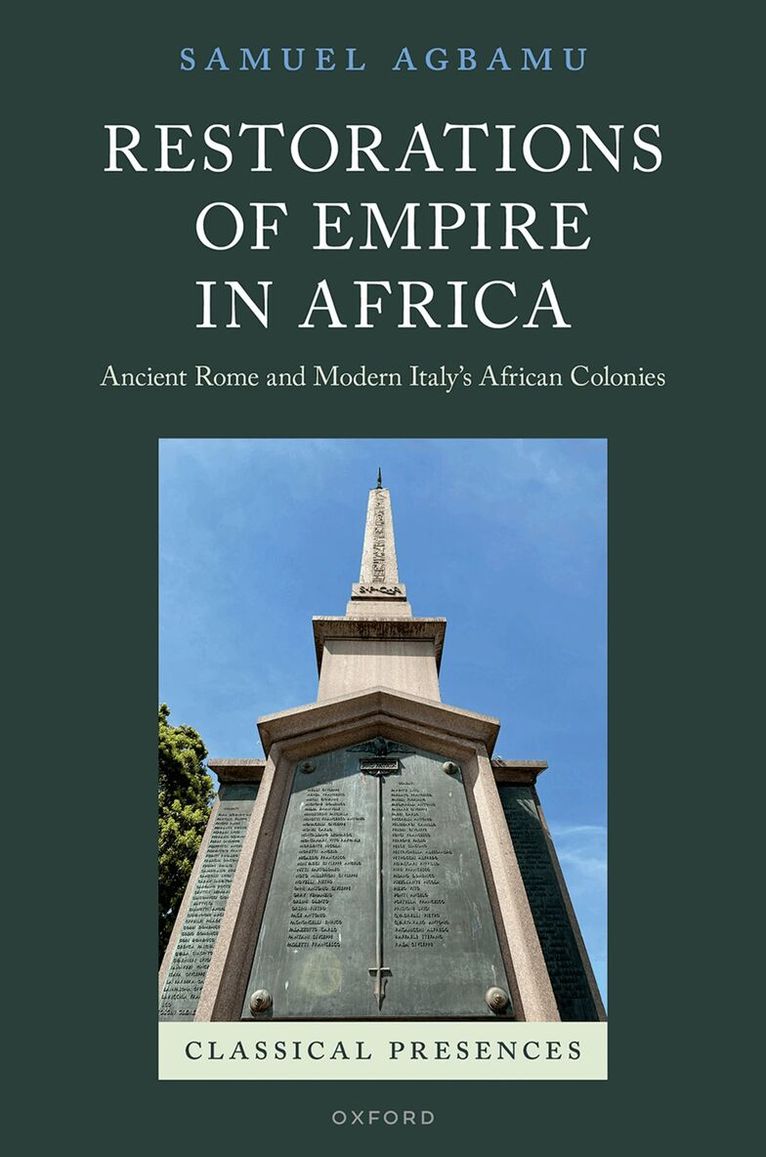
Restorations of Empire in Africa
Ancient Rome and Modern Italy's African Colonies
Inbunden, Engelska, 2024
1 489 kr
Skickas inom 5-8 vardagar
The histories of Europe and Africa are closely intertwined. At times, this closeness has been emphasized, at other times, suppressed and denied. Since the nineteenth century, European imperial powers have carved up the continent of Africa among themselves, drawing borders and charting shorelines; in the process, inventing Africa. This was a project anchored in ancient Greek and Roman representations of Africa. For Italy, colonialism in Africa was a matter of consolidating its project of national unification, nominally completed in 1870 with the capture of Rome. By asserting its position as an imperial power, the young nation of Italy hoped to join the club of European nation-states and, in so doing, be rid of the perception that it was a country somewhere in between Europe and Africa. Yet, Italy's colonial endeavour in Africa was also a project with deep historical meaning. Italy posed its imperial project in Africa as a national return to territory which was rightfully Italian. Italian ideologues of imperialism based this claim on the history of Roman history on the continent. When Italian soldiers disembarked on the beaches of Libya during Italy's invasion of 1911-1912, and came across the ruins of Roman imperialism, they were, according to prominent cultural and political figures in Italy, rediscovering the traces of their ancestors. Yet, when Italian imperial ambitions set their sights on East Africa, regions that had not been conquered by Rome, how could Italy nevertheless shape its imperial project in the image of ancient Rome?This book charts this story. Beginning with Italy's first imperial endeavours on the African continent in the last decades of the nineteenth century and continuing right through to Italy's current attitudes towards Africa, this book argues that empire in Africa was a central aspect of Italian nation-building, and that this was a project which anchored itself in memories of ancient Rome in Africa. Although Fascism's invasion of Ethiopia (1935-1936) is the best-known moment of Italian imperialism in Africa, this book shows that Italian imperialism, modelled on ancient Rome, has a history which long predates Mussolini's movement, and has a legacy which continues to be acutely felt.
1 617 kr
Kommande
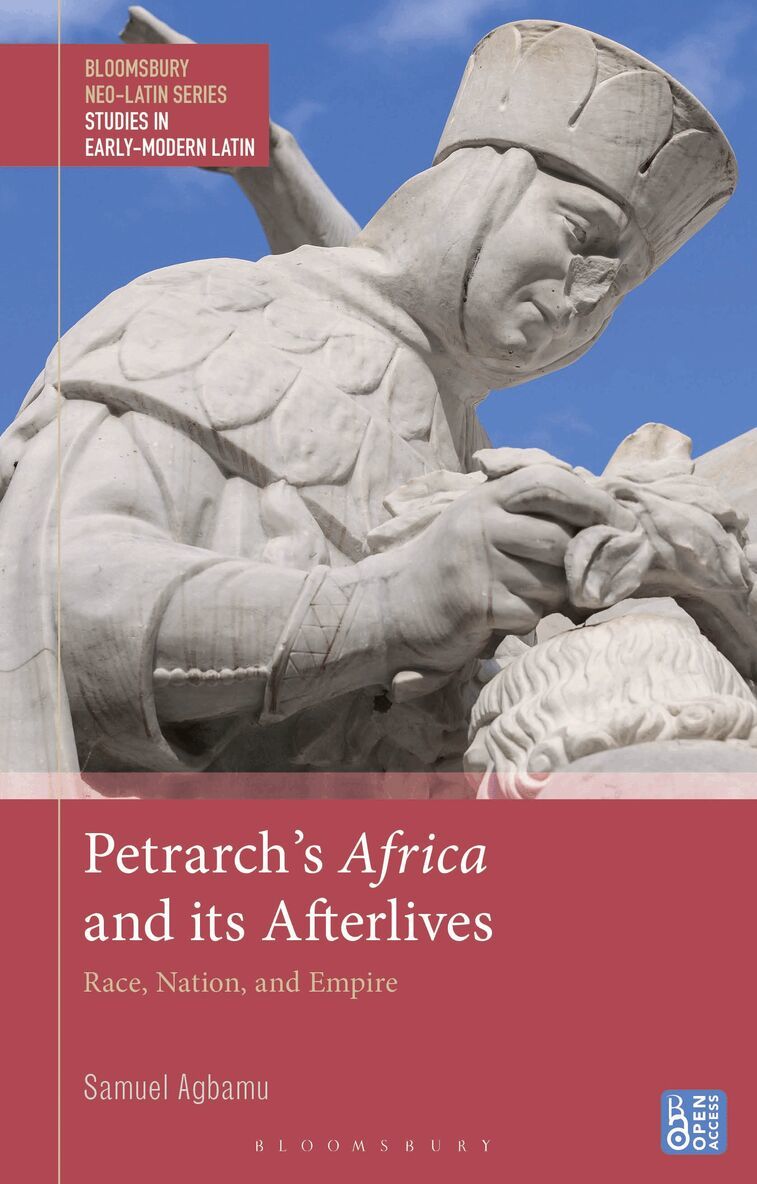
This open access monograph sheds new light on the epic by focusing on its importance as a vector for ideas about Africa and Africans between the 14th and 20th centuries. In Italy and abroad, the 14th-century poet Petrarch’s Italian verse has secured his place in literary history. Yet his greatest triumph was to be crowned in Rome in 1341, ostensibly for his then incomplete Latin epic of the Second Punic War, the Africa. However, soon after the poem’s posthumous publication, the Africa fell into relative obscurity. The afterlives of the epic remain largely unexplored, particularly with regard to Petrarch’s representation of the Second Punic War and the continent on which Scipio Africanus defeated Hannibal: Africa.The book also explores the contribution of the Africa to early modern and modern discourses of religion, nation and empire. Samuel Agbamu uncovers the role of the Africa in the intellectual archaeologies of nation, empire and race in the modern era and its role as a vector in the transmission and transformation of Roman ideas of empire and identity as reflected in accounts of the Punic War. This monograph makes its case through fresh close readings of the Africa, using new methodologies based on Premodern Critical Race Studies and Critical Muslim Studies.The eBook editions of this book are available open access under a CC BY-NC-ND 4.0 licence on bloomsburycollections.com. Open access was funded by the University of Reading.