Samuel Frederick - Böcker
Visar alla böcker från författaren Samuel Frederick. Handla med fri frakt och snabb leverans.
7 produkter
7 produkter
1 098 kr
Skickas inom 7-10 vardagar
For decades, we have been told we live in the “information age”—a time when disruptive technological advancement has reshaped the categories and social uses of knowledge and when quantitative assessment is increasingly privileged. Such methodologies and concepts of information are usually considered the provenance of the natural and social sciences, which present them as politically and philosophically neutral. Yet the humanities should and do play an important role in interpreting and critiquing the historical, cultural, and conceptual nature of information.This book is one of two companion volumes that explore theories and histories of information from a humanistic perspective. They consider information as a long-standing feature of social, cultural, and conceptual management, a matter of social practice, and a fundamental challenge for the humanities today. Bringing together essays by prominent critics, Information: Keywords highlights the humanistic nature of information practices and concepts by thinking through key terms. It describes and anticipates directions for how the humanities can contribute to our understanding of information from a range of theoretical, historical, and global perspectives. Together with Information: A Reader, it sets forth a major humanistic vision of the concept of information.
281 kr
Skickas inom 7-10 vardagar
For decades, we have been told we live in the “information age”—a time when disruptive technological advancement has reshaped the categories and social uses of knowledge and when quantitative assessment is increasingly privileged. Such methodologies and concepts of information are usually considered the provenance of the natural and social sciences, which present them as politically and philosophically neutral. Yet the humanities should and do play an important role in interpreting and critiquing the historical, cultural, and conceptual nature of information.This book is one of two companion volumes that explore theories and histories of information from a humanistic perspective. They consider information as a long-standing feature of social, cultural, and conceptual management, a matter of social practice, and a fundamental challenge for the humanities today. Bringing together essays by prominent critics, Information: Keywords highlights the humanistic nature of information practices and concepts by thinking through key terms. It describes and anticipates directions for how the humanities can contribute to our understanding of information from a range of theoretical, historical, and global perspectives. Together with Information: A Reader, it sets forth a major humanistic vision of the concept of information.
479 kr
Skickas inom 7-10 vardagar
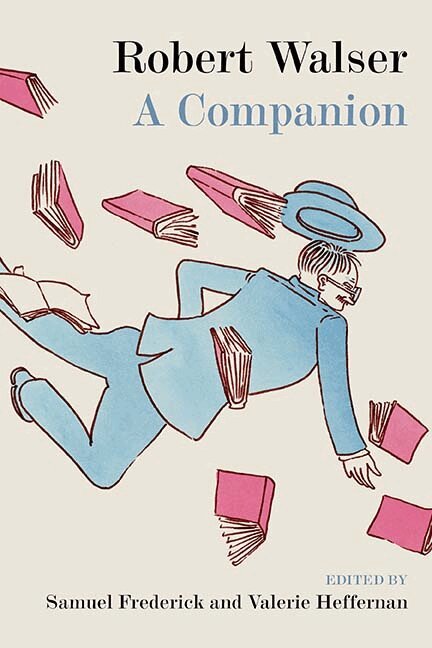
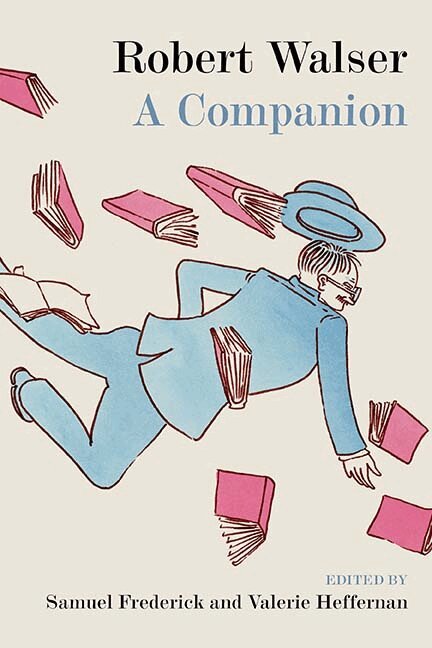
Interest in the Swiss modernist writer Robert Walser (1878-1956) has widened thanks to high praise from intellectuals such as Susan Sontag, W. G. Sebald, and J. M. Coetzee, and an increasing number of his books are now available in English translation. Robert Walser: A Companion offers the most comprehensive and authoritative guide to Walser’s work available in English to date.Examining Walser’s literary works, milieu, and idiosyncratic writing process, the twelve essays in Robert Walser: A Companion addresses aspects of his biography; discusses the various genres in which he wrote—the novel, short prose, drama, lyric poetry, and letters—and analyzes his best-known novels and short stories alongside lesser-known but no less fascinating poems, dramas, and prose pieces.A welcome addition to scholarship about this idiosyncratic, prolific, and influential writer’s work, Robert Walser: A Companion will be of interest both to established scholars and to those coming to the Walser literature for the first time.
1 487 kr
Skickas inom 10-15 vardagar
Interest in the Swiss modernist writer Robert Walser (1878-1956) has widened thanks to high praise from intellectuals such as Susan Sontag, W. G. Sebald, and J. M. Coetzee, and an increasing number of his books are now available in English translation. Robert Walser: A Companion offers the most comprehensive and authoritative guide to Walser’s work available in English to date.Examining Walser’s literary works, milieu, and idiosyncratic writing process, the twelve essays in Robert Walser: A Companion addresses aspects of his biography; discusses the various genres in which he wrote—the novel, short prose, drama, lyric poetry, and letters—and analyzes his best-known novels and short stories alongside lesser-known but no less fascinating poems, dramas, and prose pieces.A welcome addition to scholarship about this idiosyncratic, prolific, and influential writer’s work, Robert Walser: A Companion will be of interest both to established scholars and to those coming to the Walser literature for the first time.
Redemption of Things
Collecting and Dispersal in German Realism and Modernism
Inbunden, Engelska, 2022
1 754 kr
Skickas inom 10-15 vardagar
Collecting is usually understood as an activity that bestows permanence, unity, and meaning on otherwise scattered and ephemeral objects. In The Redemption of Things, Samuel Frederick emphasizes that to collect things, however, always entails displacing, immobilizing, and potentially disfiguring them, too. He argues that the dispersal of objects, seemingly antithetical to the collector's task, is essential to the logic of gathering and preservation. Through analyses of collecting as a dialectical process of preservation and loss, The Redemption of Things illustrates this paradox by focusing on objects that challenge notions of collectability: ephemera, detritus, and trivialities such as moss, junk, paper scraps, dust, scent, and the transitory moment. In meticulous close readings of works by Gotthelf, Stifter, Keller, Rilke, Glauser, and Frisch, and by examining an experimental film by Oskar Fischinger, Frederick reveals how the difficulties posed by these fleeting, fragile, and forsaken objects help to reconceptualize collecting as a poetic activity that makes the world of scattered things uniquely palpable and knowable.
455 kr
Skickas inom 10-15 vardagar
Collecting is usually understood as an activity that bestows permanence, unity, and meaning on otherwise scattered and ephemeral objects. In The Redemption of Things, Samuel Frederick emphasizes that to collect things, however, always entails displacing, immobilizing, and potentially disfiguring them, too. He argues that the dispersal of objects, seemingly antithetical to the collector's task, is essential to the logic of gathering and preservation. Through analyses of collecting as a dialectical process of preservation and loss, The Redemption of Things illustrates this paradox by focusing on objects that challenge notions of collectability: ephemera, detritus, and trivialities such as moss, junk, paper scraps, dust, scent, and the transitory moment. In meticulous close readings of works by Gotthelf, Stifter, Keller, Rilke, Glauser, and Frisch, and by examining an experimental film by Oskar Fischinger, Frederick reveals how the difficulties posed by these fleeting, fragile, and forsaken objects help to reconceptualize collecting as a poetic activity that makes the world of scattered things uniquely palpable and knowable.
320 kr
Skickas inom 7-10 vardagar
A penetrating new reading of Murnau's classic silent film that shows its transitional status, both historically and stylistically, while emphasizing its innovative camerawork and the ethical stakes of its story.An undisputed masterpiece of silent cinema, F. W. Murnau's The Last Laugh (1924) stars the larger-than-life Emil Jannings as a proud hotel porter who is demoted to lowly washroom attendant. One worker's misfortune becomes a tragic turning point in a social drama as much about the struggling Weimar Republic, which had just overcome several years of social, political, and economic instability, as about its working-class citizens. At once clinging to the symbols of the old order while helplessly thrust into an unforgiving modern world, Jannings's fallen porter embodies the contradictions of this transitional moment for the young democracy. Samuel Frederick shows us that Murnau's film is similarly transitional: born at the crossroads between the Expressionist style of the early 1920s and the emerging aesthetics of New Objectivity, it is both soberly realistic and oneirically distorted. With only one intertitle, The Last Laugh's flow of images is complemented by cinematographer Karl Freund's innovative mobile camera, which, "unchained" from the tripod, swims effortlessly through the film's different urban spaces. Here, inanimate objects become charged with potency and architecture is animated, conveying both allure and danger. Frederick's incisive analysis of the film foregrounds the visual dynamism of its technological and aesthetic experimentation while also pursuing the ethical implications of its central figure's downfall.