Michele Kennerly – författare
Visar alla böcker från författaren Michele Kennerly. Handla med fri frakt och snabb leverans.
9 produkter
9 produkter
1 254 kr
Kommande
A critical history of the recurring idea that technology will free us from work and bring about a truly democratic society.In popular thought, ancient Athens endures as a place ahead of its time—the birthplace of democracy, a cultural center, and a model toward which modern societies should strive. In Automated Athens, Michele Kennerly examines the many and frequent appeals to this nostalgic vision of the ancient city-state throughout the early age of computerized automation. In the mid-twentieth century, people hoped that automation would free us from mindless, dehumanizing work so that we could attend to creative and communal pursuits. Proponents appealed to ancient Athens, saying automated systems and machines would stand in for the craftsmen, enslaved people, and subordinated women who performed the undesirable work that enabled that city-state’s flourishing. Automated Athens scrutinizes this appeal as it moves chronologically into present debates about the promise of automation and AI. For Kennerly, our inability to settle debates about where accelerating automation may take us, especially politically, reveals a deeper cultural indecisiveness about how to live well and live well together.
360 kr
Kommande
A critical history of the recurring idea that technology will free us from work and bring about a truly democratic society.In popular thought, ancient Athens endures as a place ahead of its time—the birthplace of democracy, a cultural center, and a model toward which modern societies should strive. In Automated Athens, Michele Kennerly examines the many and frequent appeals to this nostalgic vision of the ancient city-state throughout the early age of computerized automation. In the mid-twentieth century, people hoped that automation would free us from mindless, dehumanizing work so that we could attend to creative and communal pursuits. Proponents appealed to ancient Athens, saying automated systems and machines would stand in for the craftsmen, enslaved people, and subordinated women who performed the undesirable work that enabled that city-state’s flourishing. Automated Athens scrutinizes this appeal as it moves chronologically into present debates about the promise of automation and AI. For Kennerly, our inability to settle debates about where accelerating automation may take us, especially politically, reveals a deeper cultural indecisiveness about how to live well and live well together.
1 106 kr
Skickas inom 5-8 vardagar
For decades, we have been told we live in the “information age”—a time when disruptive technological advancement has reshaped the categories and social uses of knowledge and when quantitative assessment is increasingly privileged. Such methodologies and concepts of information are usually considered the provenance of the natural and social sciences, which present them as politically and philosophically neutral. Yet the humanities should and do play an important role in interpreting and critiquing the historical, cultural, and conceptual nature of information.This book is one of two companion volumes that explore theories and histories of information from a humanistic perspective. They consider information as a long-standing feature of social, cultural, and conceptual management, a matter of social practice, and a fundamental challenge for the humanities today. Bringing together essays by prominent critics, Information: Keywords highlights the humanistic nature of information practices and concepts by thinking through key terms. It describes and anticipates directions for how the humanities can contribute to our understanding of information from a range of theoretical, historical, and global perspectives. Together with Information: A Reader, it sets forth a major humanistic vision of the concept of information.
283 kr
Skickas inom 5-8 vardagar
For decades, we have been told we live in the “information age”—a time when disruptive technological advancement has reshaped the categories and social uses of knowledge and when quantitative assessment is increasingly privileged. Such methodologies and concepts of information are usually considered the provenance of the natural and social sciences, which present them as politically and philosophically neutral. Yet the humanities should and do play an important role in interpreting and critiquing the historical, cultural, and conceptual nature of information.This book is one of two companion volumes that explore theories and histories of information from a humanistic perspective. They consider information as a long-standing feature of social, cultural, and conceptual management, a matter of social practice, and a fundamental challenge for the humanities today. Bringing together essays by prominent critics, Information: Keywords highlights the humanistic nature of information practices and concepts by thinking through key terms. It describes and anticipates directions for how the humanities can contribute to our understanding of information from a range of theoretical, historical, and global perspectives. Together with Information: A Reader, it sets forth a major humanistic vision of the concept of information.
1 099 kr
Skickas inom 5-8 vardagar
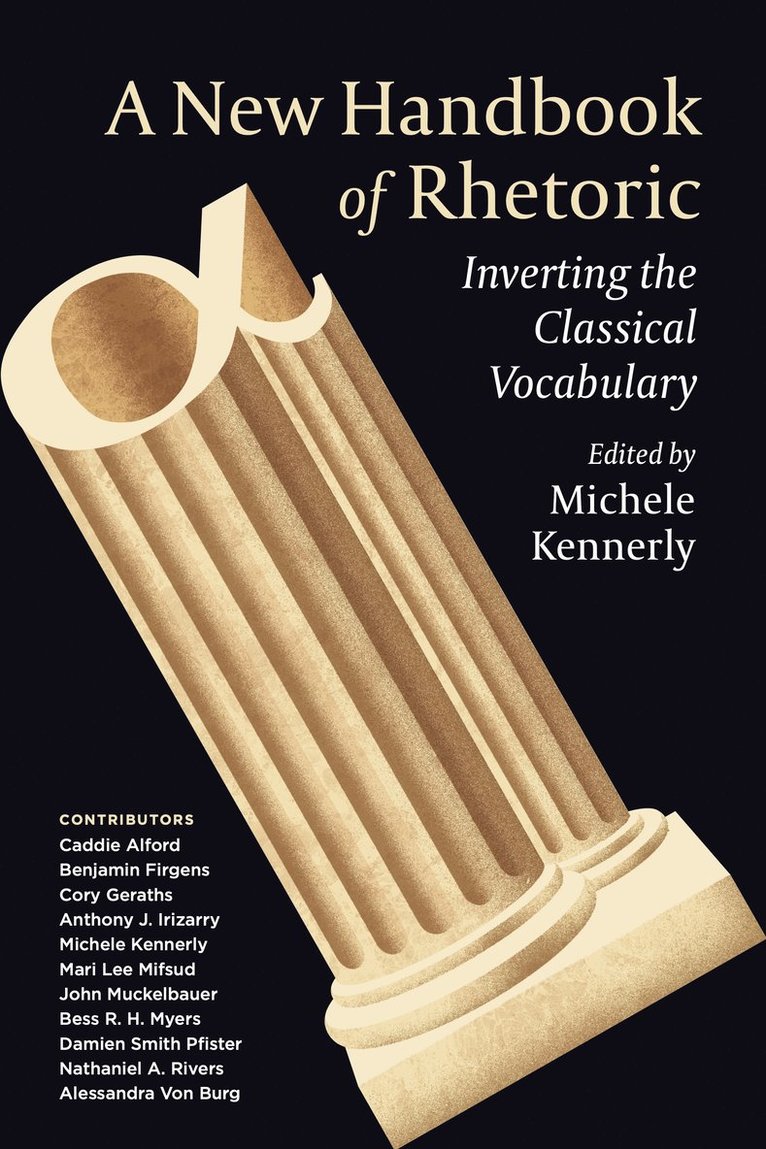
Like every discipline, Rhetorical Studies relies on a technical vocabulary to convey specialized concepts, but few disciplines rely so deeply on a set of terms developed so long ago. Pathos, kairos, doxa, topos—these and others originate from the so-called classical world, which has conferred on them excessive authority. Without jettisoning these rhetorical terms altogether, this handbook addresses critiques of their ongoing relevance, explanatory power, and exclusionary effects.A New Handbook of Rhetoric inverts the terms of classical rhetoric by applying to them the alpha privative, a prefix that expresses absence. Adding the prefix α- to more than a dozen of the most important terms in the field, the contributors to this volume build a new vocabulary for rhetorical inquiry. Essays on apathy, akairos, adoxa, and atopos, among others, explore long-standing disciplinary habits, reveal the denials and privileges inherent in traditional rhetorical inquiry, and theorize new problems and methods. Using this vocabulary in an analysis of current politics, media, and technology, the essays illuminate aspects of contemporary culture that traditional rhetorical theory often overlooks.Innovative and groundbreaking, A New Handbook of Rhetoric at once draws on and unsettles ancient Greek rhetorical terms, opening new avenues for studying values, norms, and phenomena often stymied by the tradition.In addition to the editor, the contributors include Caddie Alford, Benjamin Firgens, Cory Geraths, Anthony J. Irizarry, Mari Lee Mifsud, John Muckelbauer, Bess R. H. Myers, Damien Smith Pfister, Nathaniel A. Rivers, and Alessandra Von Burg.
335 kr
Skickas inom 5-8 vardagar
Like every discipline, Rhetorical Studies relies on a technical vocabulary to convey specialized concepts, but few disciplines rely so deeply on a set of terms developed so long ago. Pathos, kairos, doxa, topos—these and others originate from the so-called classical world, which has conferred on them excessive authority. Without jettisoning these rhetorical terms altogether, this handbook addresses critiques of their ongoing relevance, explanatory power, and exclusionary effects.A New Handbook of Rhetoric inverts the terms of classical rhetoric by applying to them the alpha privative, a prefix that expresses absence. Adding the prefix α- to more than a dozen of the most important terms in the field, the contributors to this volume build a new vocabulary for rhetorical inquiry. Essays on apathy, akairos, adoxa, and atopos, among others, explore long-standing disciplinary habits, reveal the denials and privileges inherent in traditional rhetorical inquiry, and theorize new problems and methods. Using this vocabulary in an analysis of current politics, media, and technology, the essays illuminate aspects of contemporary culture that traditional rhetorical theory often overlooks.Innovative and groundbreaking, A New Handbook of Rhetoric at once draws on and unsettles ancient Greek rhetorical terms, opening new avenues for studying values, norms, and phenomena often stymied by the tradition.In addition to the editor, the contributors include Caddie Alford, Benjamin Firgens, Cory Geraths, Anthony J. Irizarry, Mari Lee Mifsud, John Muckelbauer, Bess R. H. Myers, Damien Smith Pfister, Nathaniel A. Rivers, and Alessandra Von Burg.
432 kr
Skickas inom 5-8 vardagar
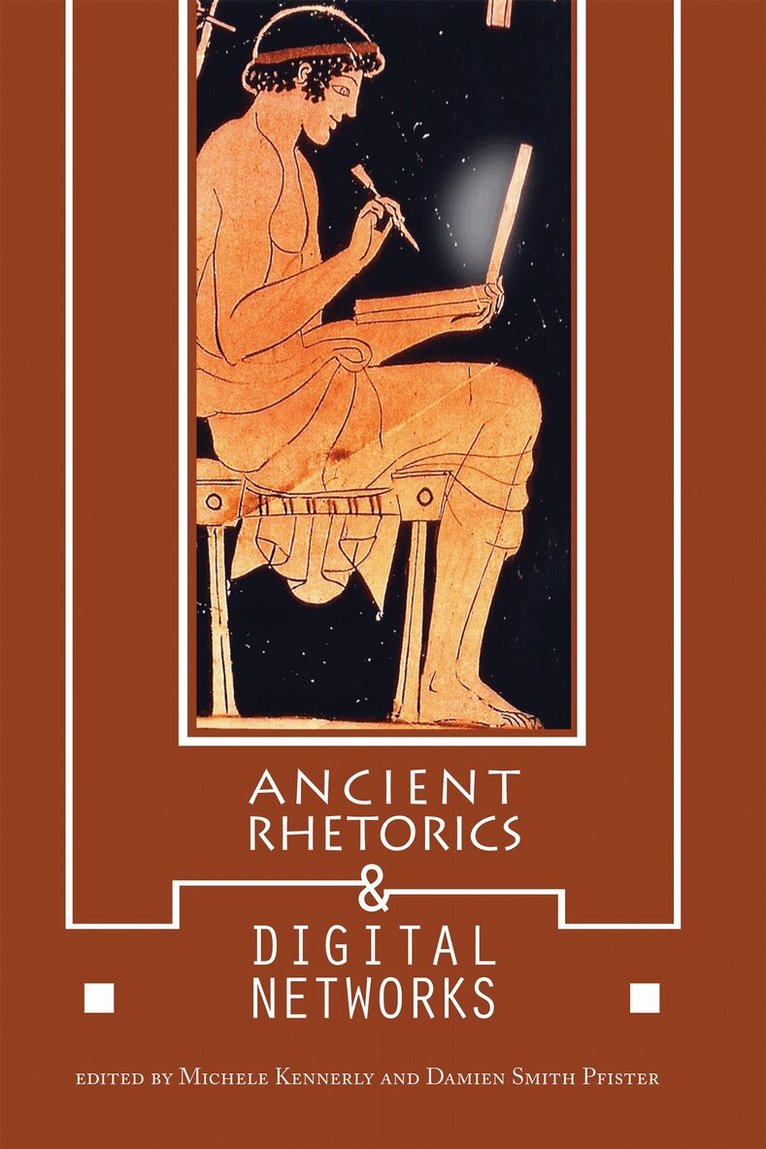
An examination of two seemingly incongruous areas of study: classical models of argumentation and modern modes of digital communication. What can ancient rhetorical theory possibly tell us about the role of new digital media technologies in contemporary public culture? Some central issues we currently deal with–making sense of information abundance, persuading others in our social network, navigating new media ecologies, and shaping broader cultural currents–also pressed upon the ancients. Ancient Rhetorics and Digital Networks makes this connection explicit, reexamining key figures, texts, concepts, and sensibilities from ancient rhetoric in light of the glow of digital networks, or, ordered conversely, surveying the angles and tangles of digital networks from viewpoints afforded by ancient rhetoric. By providing an orientation grounded in ancient rhetorics, this collection simultaneously historicizes contemporary developments and reenergizes ancient rhetorical vocabularies. Contributors engage with a variety of digital phenomena including remix, big data, identity and anonymity, memes and virals, visual images, decorum, and networking. Taken together, the essays in Ancient Rhetorics and Digital Networks help us to understand and navigate some of the fundamental communicative issues we deal with today.
1 291 kr
Skickas inom 11-20 vardagar
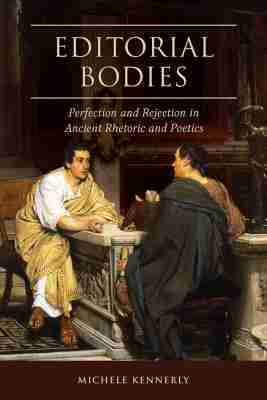
Reveals the emergence and endurance of vocabularies, habits, and preferences that sustained ancient textual cultures.Though typically considered oral cultures, ancient Greece and Rome also boasted textual cultures, enabled by efforts to perfect, publish, and preserve both new and old writing. In Editorial Bodies, Michele Kennerly argues that such efforts were commonly articulated through the extended metaphor of the body. They were also supported by people upon whom writers relied for various kinds of assistance and necessitated by lively debates about what sort of words should be put out and remain in public.Spanning ancient Athenian, Alexandrian, and Roman textual cultures, Kennerly shows that orators and poets attributed public value to their seemingly inward-turning compositional labors. After establishing certain key terms of writing and editing from classical Athens through late republican Rome, Kennerly focuses on works from specific orators and poets writing in Latin in the first century B.C.E. and the first century C.E.: Cicero, Horace, Ovid, Quintilian, Tacitus, and Pliny the Younger. The result is a rich and original history of rhetoric that reveals the emergence and endurance of vocabularies, habits, and preferences that sustained ancient textual cultures. This major contribution to rhetorical studies unsettles longstanding assumptions about ancient rhetoric and poetics by means of generative readings of both well-known and understudied texts.
253 kr
Skickas inom 5-8 vardagar
Reveals the emergence and endurance of vocabularies, habits, and preferences that sustained ancient textual cultures.Though typically considered oral cultures, ancient Greece and Rome also boasted textual cultures, enabled by efforts to perfect, publish, and preserve both new and old writing. In Editorial Bodies, Michele Kennerly argues that such efforts were commonly articulated through the extended metaphor of the body. They were also supported by people upon whom writers relied for various kinds of assistance and necessitated by lively debates about what sort of words should be put out and remain in public.Spanning ancient Athenian, Alexandrian, and Roman textual cultures, Kennerly shows that orators and poets attributed public value to their seemingly inward-turning compositional labors. After establishing certain key terms of writing and editing from classical Athens through late republican Rome, Kennerly focuses on works from specific orators and poets writing in Latin in the first century B.C.E. and the first century C.E.: Cicero, Horace, Ovid, Quintilian, Tacitus, and Pliny the Younger. The result is a rich and original history of rhetoric that reveals the emergence and endurance of vocabularies, habits, and preferences that sustained ancient textual cultures. This major contribution to rhetorical studies unsettles longstanding assumptions about ancient rhetoric and poetics by means of generative readings of both well-known and understudied texts.