Samuel Helfont - Böcker
Visar alla böcker från författaren Samuel Helfont. Handla med fri frakt och snabb leverans.
5 produkter
5 produkter
Compulsion in Religion
Saddam Hussein, Islam, and the Roots of Insurgencies in Iraq
Inbunden, Engelska, 2018
537 kr
Skickas inom 5-8 vardagar
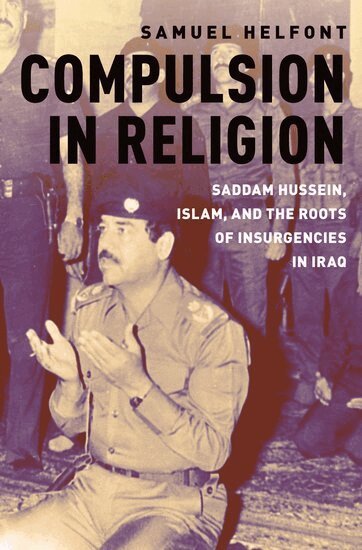
Samuel Helfont draws on extensive research with Ba'thist archives to investigate the roots of the religious insurgencies that erupted in Iraq following the American-led invasion in 2003. In looking at Saddam Hussein's policies in the 1990s, many have interpreted his support for state-sponsored religion as evidence of a dramatic shift away from Arab nationalism toward political Islam. While Islam did play a greater role in the regime's symbols and Saddam's statements in the 1990s than it had in earlier decades, the regime's internal documents challenge this theory. The "Faith Campaign" Saddam launched during this period was the culmination of a plan to use religion for political ends, begun upon his assumption of the Iraqi presidency in 1979. At this time, Saddam began constructing the institutional capacity to control and monitor Iraqi religious institutions. The resulting authoritarian structures allowed him to employ Islamic symbols and rhetoric in public policy, but in a controlled manner. Saddam ultimately promoted a Ba'thist interpretation of religion that subordinated it to Arab nationalism, rather than depicting it as an independent or primary political identity.The point of this examination of Iraqi history, other than to correct the current understanding of Saddam Hussein's political use of religion throughout his presidency, is to examine how Saddam's controlled use of religion was dismantled during the US-Iraq war, and consequently set free extremists that were suppressed under his regime. When the American-led invasion destroyed the regime's authoritarian structures, it unwittingly unhinged the forces that these structures were designed to contain, creating an atmosphere infused with religion, but lacking the checks provided by the former regime. Groups such as the Sadrists, al-Qaida, and eventually the Islamic State emerged out of this context to unleash the insurgencies that have plagued post-2003 Iraq.
360 kr
Skickas inom 5-8 vardagar
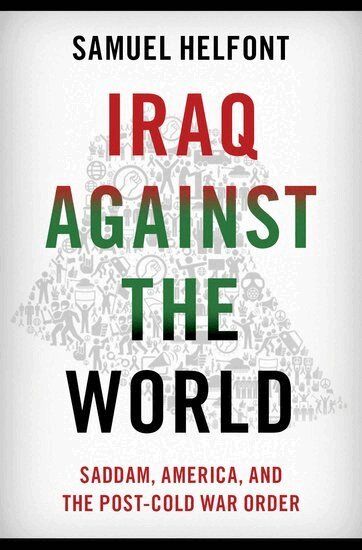
The move away from post-Cold War unipolarity and the rise of revisionist states like Russia and China pose a rapidly escalating and confounding threat for the liberal international order. In Iraq against the World, Samuel Helfont offers a new narrative of Iraqi foreign policy after the 1991 Gulf War to argue that Saddam Hussein executed a political warfare campaign that facilitated this disturbance to global norms. Following the Gulf War, the UN imposed sanctions and inspections on the Iraqi state--conditions that Saddam Hussein was in no position to challenge militarily or through traditional diplomacy. Hussein did, however, wage an influence campaign designed to break the unity of the UN Security Council. The Iraqis helped to impede emerging norms of international cooperation and prodded potentially revisionist states to act on latent inclinations to undermine a liberal post-Cold War order.Drawing on internal files from the ruling Ba'th Party, Helfont highlights previously unknown Iraqi foreign policy strategies, including the prominent use of influence operations and manipulative statesmanship. He traces Ba'thist operations around the globe--from the streets of New York and Stockholm, to the mosques of Pakistan and Saudi Arabia, to the halls of power in Paris and Moscow. Iraqi Ba'thists carried out espionage, planted stories in the foreign press, established overt and covert relations with various political parties, and attempted to silence anyone who disrupted their preferred political narrative. They presented themselves simply as Iraqis concerned about the suffering of their friends and families in their home country, and, consequently, were able to assemble a loose political coalition that was unknowingly being employed to meet Iraq's strategic goals. This, in turn, divided Western states and weakened norms of cooperation and consensus toward rules-based solutions to international disputes, causing significant damage to liberal internationalism and the institutions that were supposed to underpin it. A powerful reconsideration of the history of Iraqi foreign policy in the 1990s and the early 2000s, Iraq against the World offers new insights into the evolution of the post-Cold War order.
Compulsion in Religion
Saddam Hussein, Islam, and the Roots of Insurgencies in Iraq
Häftad, Engelska, 2021
340 kr
Skickas inom 5-8 vardagar
Samuel Helfont draws on extensive research with Ba'thist archives to investigate the roots of the religious insurgencies that erupted in Iraq following the American-led invasion in 2003. In looking at Saddam Hussein's policies in the 1990s, many have interpreted his support for state-sponsored religion as evidence of a dramatic shift away from Arab nationalism toward political Islam. While Islam did play a greater role in the regime's symbols and Saddam's statements in the 1990s than it had in earlier decades, the regime's internal documents challenge this theory. The "Faith Campaign" Saddam launched during this period was the culmination of a plan to use religion for political ends, begun upon his assumption of the Iraqi presidency in 1979. At this time, Saddam began constructing the institutional capacity to control and monitor Iraqi religious institutions. The resulting authoritarian structures allowed him to employ Islamic symbols and rhetoric in public policy, but in a controlled manner. Saddam ultimately promoted a Ba'thist interpretation of religion that subordinated it to Arab nationalism, rather than depicting it as an independent or primary political identity.The point of this examination of Iraqi history, other than to correct the current understanding of Saddam Hussein's political use of religion throughout his presidency, is to examine how Saddam's controlled use of religion was dismantled during the US-Iraq war, and consequently set free extremists that were suppressed under his regime. When the American-led invasion destroyed the regime's authoritarian structures, it unwittingly unhinged the forces that these structures were designed to contain, creating an atmosphere infused with religion, but lacking the checks provided by the former regime. Groups such as the Sadrists, al-Qaida, and eventually the Islamic State emerged out of this context to unleash the insurgencies that have plagued post-2003 Iraq.
111 kr
Skickas inom 5-8 vardagar
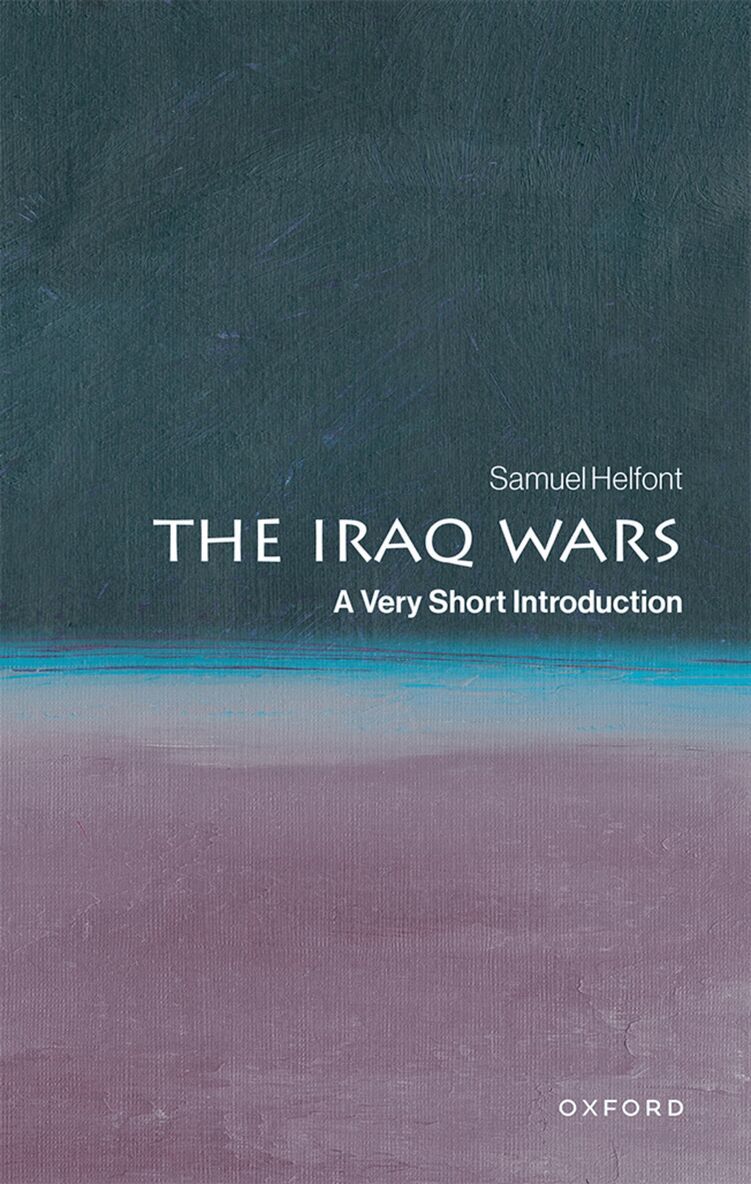
American wars in Iraq were a defining feature of global politics for almost thirty years. The Gulf War of 1991, the American invasion of Iraq in 2003, and the campaign against the Islamic State beginning in 2014 each had their own logic. Each occurrence was a distinct conflict; however they must not only be considered in isolation. The United States spent the 1990s trying but failing to implement the Gulf War's cease fire agreement. After the terrorist attacks of September 11, 2001, American leaders decided to settle the open-ended aftermath of the Gulf War by launching the Iraq War of 2003. The Iraq War unleashed resistance, civil war, insurgency and eventually the Islamic State in Iraq and Syria. Thus, following the Gulf War, each war was fought to finish the previous conflict. The Iraq Wars, therefore, are perhaps best understood as a chain of events.Academics, journalists, statesmen, and soldiers have produced many library shelves of books on the Iraq Wars. Yet, no short, easily digestible volume exists to synthesize this vast literature of both English and Arabic sources. The Iraq Wars: A Very Short Introduction covers this series of important conflicts as a whole, in a highly succinct and uniquely readable way.
677 kr
Kommande
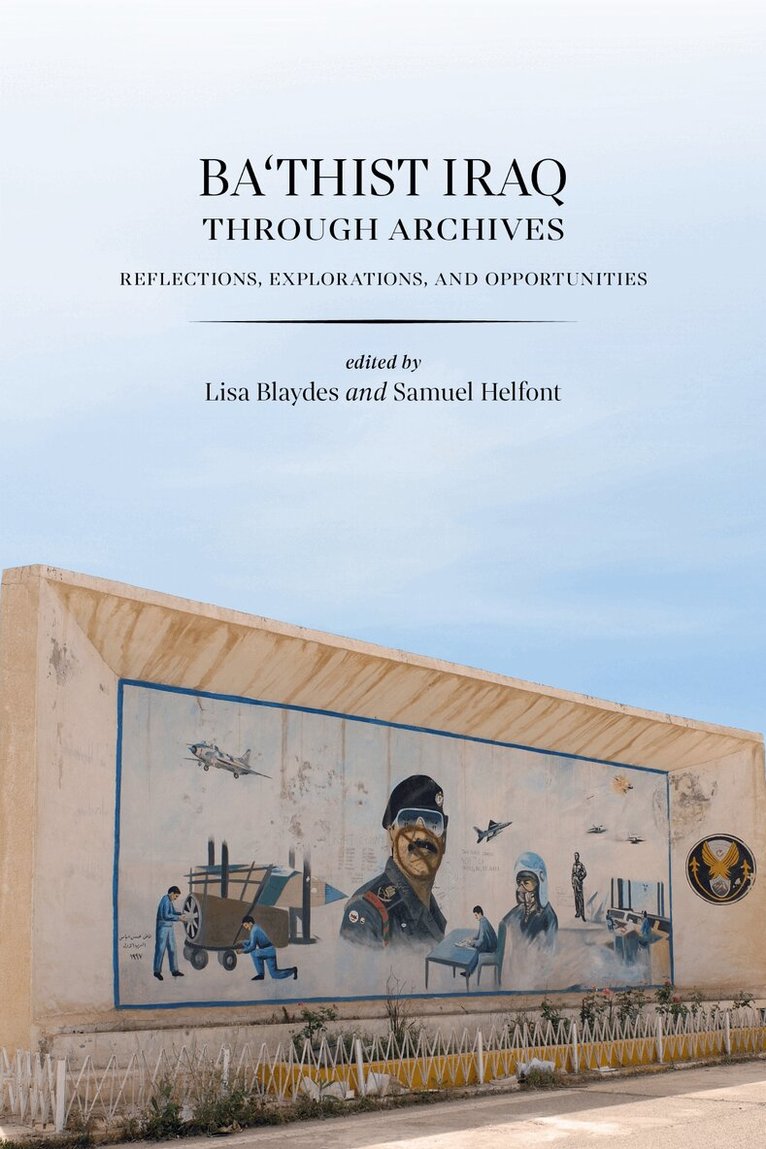
The opening of Iraq's Ba'th Party archives revolutionized the study of Iraqi politics and history, offering scholars unprecedented access to the inner workings of one of the world's most impenetrable autocracies. This volume brings together leading scholars to take stock of what we have learned from over a decade of research using the Ba'thist archives, contributing to a new understanding of Iraq's history, with wider implications for understanding authoritarianism in general.The contributors show how research in these unique archives challenges previous assumptions about Ba'thist Iraq and the workings of authoritarian regimes. Their chapters provide fresh insights into how Saddam Hussein's regime functioned both at the elite level and through everyday bureaucratic practices, shedding light on state power, social relations, and international politics of the Middle East. The volume also critically reflects on the ethical questions posed by the archives, including their origins, the impact of their removal from Iraq, and access barriers for local scholars. Rich in empirical detail yet framed by cutting-edge theoretical questions, this book demonstrates how the Iraqi archives have reshaped debates about authoritarianism, governance, repression, and state-society relations well beyond the Iraqi case.