Samuel K. Cohn, Jr. - Böcker
Visar alla böcker från författaren Samuel K. Cohn, Jr.. Handla med fri frakt och snabb leverans.
14 produkter
14 produkter
1 438 kr
Skickas inom 7-10 vardagar
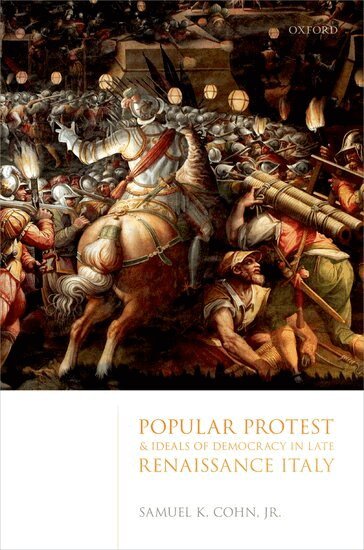
Popular Protest and Ideals of Democracy in Late Renaissance Italy is the first study to analyse popular protest across the Italian peninsula and the Venetian colonies during the early modern period, 1494 to 1559. Drawing on over 100 contemporary chronicles and diaries, the fifty-eight volumes of Marin Sanudo's diplomatic dispatches, mercantile letters, and commentary, and 586 collective supplications scattered through archival sources from towns and villages in the Grand duchy of Milan, Samuel K. Cohn, Jr. places these incidents and their patterns in comparative perspectives, first with the late medieval heyday of popular revolt and then with regions north of the Alps. Cohn finds new developments during the early modern period such as an increase in women rebels, mutinies of soldiers, and new tactics of revolts such as shop closures, peaceful demonstrations of strength, and use of religious processions for discussions of tactics and strategies for obtaining logistic advantage. At the same time, these protests show convergences with the medieval Italian past, with leaders coming almost exclusively from the ranks of nonelites, religious ideology playing a surprisingly minor role, and the majority of revolts centring overwhelming in towns and cities. Finally, this study demonstrates that democracies do not just die under the duress of military occupation and growing powers of autocratic regimes. Ideals of representation and equality not only persisted; they could emerge in new forms and with greater sophistication.
661 kr
Skickas inom 5-8 vardagar
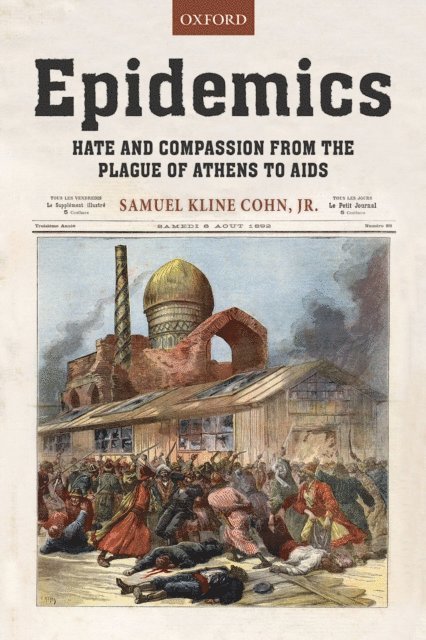
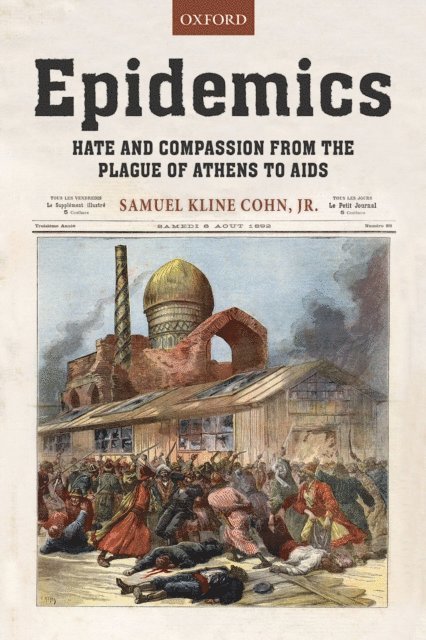
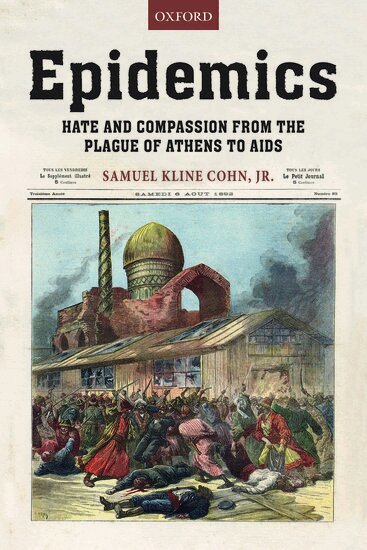
By investigating thousands of descriptions of epidemics reaching back before the fifth-century-BCE Plague of Athens to the distrust and violence that erupted with Ebola in 2014, Epidemics challenges a dominant hypothesis in the study of epidemics, that invariably across time and space, epidemics provoked hatred, blaming of the 'other', and victimizing bearers of epidemic diseases, particularly when diseases were mysterious, without known cures or preventive measures, as with AIDS during the last two decades of the twentieth century.However, scholars and public intellectuals, especially post-AIDS, have missed a fundamental aspect of the history of epidemics. Instead of sparking hatred and blame, this study traces epidemics' socio-psychological consequences across time and discovers a radically different picture: that epidemic diseases have more often unified societies across class, race, ethnicity, and religion, spurring self-sacrifice and compassion.
1 434 kr
Skickas inom 3-6 vardagar
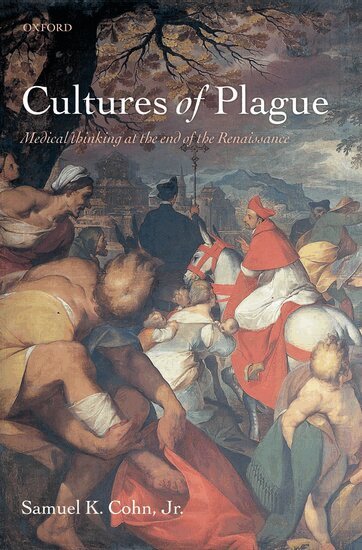
Cultures of Plague opens a new chapter in the history of medicine. Neither the plague nor the ideas it stimulated were static, fixed in a timeless Galenic vacuum over five centuries, as historians and scientists commonly assume. As plague evolved in its pathology, modes of transmission, and the social characteristics of its victims, so too did medical thinking about plague develop.This study of plague imprints from academic medical treatises to plague poetry highlights the most feared and devastating epidemic of the sixteenth-century, one that threatened Italy top to toe from 1575 to 1578 and unleashed an avalanche of plague writing. From erudite definitions, remote causes, cures and recipes, physicians now directed their plague writings to the prince and discovered their most 'valiant remedies' in public health: strict segregation of the healthy and ill, cleaning streets and latrines, addressing the long-term causes of plague-poverty. Those outside the medical profession joined the chorus. In the heartland of Counter-Reformation Italy, physicians along with those outside the profession questioned the foundations of Galenic and Renaissance medicine, even the role of God. Assaults on medieval and Renaissance medicine did not need to await the Protestant-Paracelsian alliance of seventeenth-century in northern Europe. Instead, creative forces planted by the pandemic of 1575-8 sowed seeds of doubt and unveiled new concerns and ideas within that supposedly most conservative form of medical writing, the plague tract. Relying on health board statistics and dramatized with eyewitness descriptions of bizarre happenings, human misery, and suffering, these writers created the structure for plague classics of the eighteenth century, and by tracking the contagion's complex and crooked paths, they anticipated trends of nineteenth-century epidemiology.
775 kr
Skickas inom 7-10 vardagar
Cultures of Plague opens a new chapter in the history of medicine. Neither the plague nor the ideas it stimulated were static, fixed in a timeless Galenic vacuum over five centuries, as historians and scientists commonly assume. As plague evolved in its pathology, modes of transmission, and the social characteristics of its victims, so too did medical thinking about plague develop. This study of plague imprints, from academic medical treatises to plague poetry, highlights the most feared and devastating epidemic of the sixteenth-century, one that threatened Italy top to toe from 1575 to 1578 and unleashed an avalanche of plague writing. From erudite definitions, remote causes, cures and recipes, physicians now directed their plague writings to the prince and discovered their most 'valiant remedies' in public health: strict segregation of the healthy and ill, cleaning streets and latrines, addressing the long-term causes of plague-poverty. Those outside the medical profession joined the chorus. In the heartland of Counter-Reformation Italy, physicians, along with those outside the profession, questioned the foundations of Galenic and Renaissance medicine, even the role of God. Assaults on medieval and Renaissance medicine did not need to await the Protestant-Paracelsian alliance of seventeenth-century in northern Europe. Instead, creative forces planted by the pandemic of 1575-8 sowed seeds of doubt and unveiled new concerns and ideas within that supposedly most conservative form of medical writing, the plague tract. Relying on health board statistics and dramatized with eyewitness descriptions of bizarre happenings, human misery, and suffering, these writers created the structure for plague classics of the eighteenth century, and by tracking the contagion's complex and crooked paths, they anticipated trends of nineteenth-century epidemiology.
544 kr
Skickas inom 10-15 vardagar
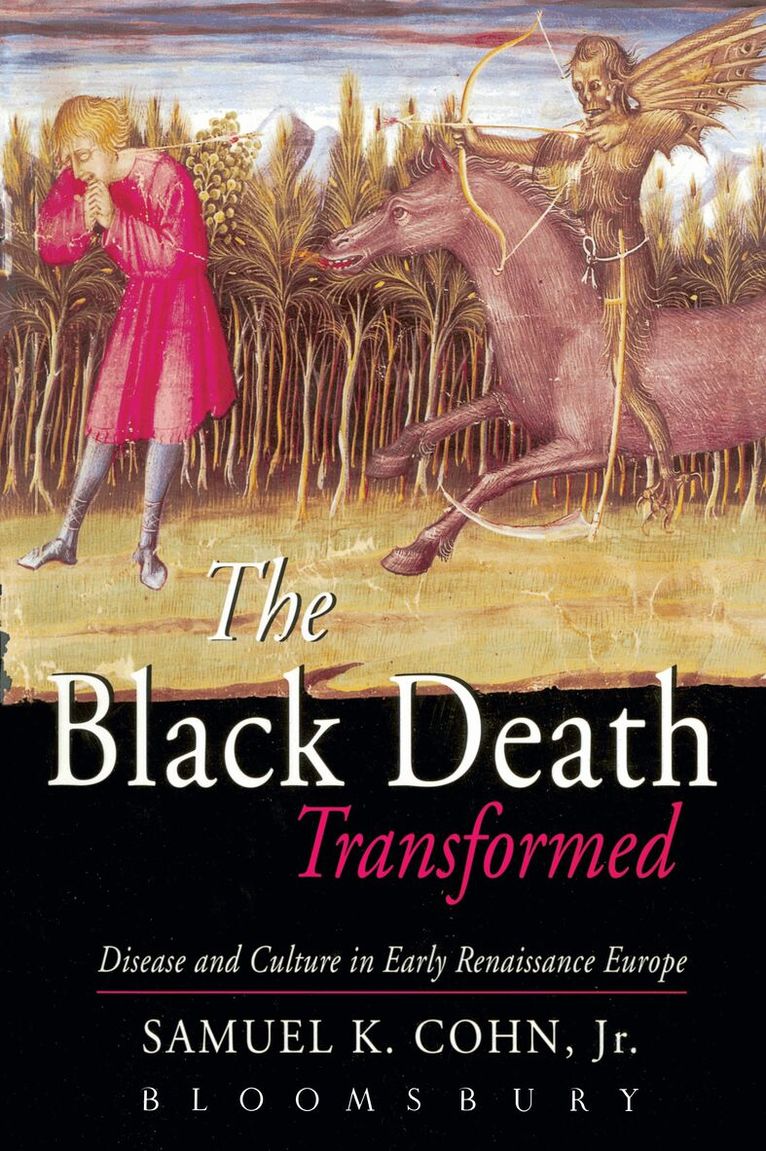
The Black Death in Europe, from its arrival in 1347-52 through successive waves into the early modern period, has been seriously misunderstood. It is clear from the compelling evidence presented in this revolutionary account that the Black Death was almost any disease other than the rat-based bubonic plague whose bacillus was discovered in 1894. Since the late nineteenth century, the rat and flea have stood wrongly accused as the agents of transmission and historians and scientists have uncritically imposed the epidemiology of modern plague on the past. Unshackled from this misconception, The Black Death Transformed turns to its subject afresh, using sources spread across a huge geographical tract, from Lisbon to Uzbekistan, Sicily to Scotland: more than 40,000 death documents (from last wills and testaments to the earliest surviving burial records), over 400 chronicles, 250 plague tracts, 50 saints' lives, merchant letters, and much more. These sources confirm the terror of the medieval plague, the rapidity of its spread (unlike modern plague), and the utter despondency left in the wake of its first strike.But they also point to significant differences between medieval and modern plague, none more significant than the ability of humans to acquire natural immunity to the former but not the latter.
577 kr
Skickas inom 7-10 vardagar
This book offers a comprehensive approach to the study of the political history of the Renaissance: its analysis of government is embedded in the context of geography and social conflict. Instead of the usual institutional history, it examines the Florentine state from the mountainous periphery - a periphery both of geography and class - where Florence met its most strenuous opposition to territorial incorporation. Yet, far from being acted upon, Florence's highlanders were instrumental in changing the attitudes of the Florentine ruling class: the city began to see its own self-interest as intertwined with that of its region and the welfare of its rural subjects at the beginning of the fifteenth century. Contemporaries either remained silent or purposely obscured the reasons for this change, which rested on widespread and successful peasant uprisings across the mountainous periphery of the Florentine state, hitherto unrecorded by historians.
1 228 kr
Skickas inom 7-10 vardagar
This book offers a comprehensive approach to the study of the political history of the Renaissance: its analysis of government is embedded in the context of geography and social conflict. Instead of the usual institutional history, it examines the Florentine state from the mountainous periphery - a periphery both of geography and class - where Florence met its most strenuous opposition to territorial incorporation. Yet, far from being acted upon, Florence's highlanders were instrumental in changing the attitudes of the Florentine ruling class: the city began to see its own self-interest as intertwined with that of its region and the welfare of its rural subjects at the beginning of the fifteenth century. Contemporaries either remained silent or purposely obscured the reasons for this change, which rested on widespread and successful peasant uprisings across the mountainous periphery of the Florentine state, hitherto unrecorded by historians.
266 kr
Skickas inom 7-10 vardagar
Lust for Liberty challenges long-standing views of popular medieval revolts. Comparing rebellions in northern and southern Europe over two centuries, Samuel Cohn analyzes their causes and forms, their leadership, the role of women, and the suppression or success of these revolts. Popular revolts were remarkably common--not the last resort of desperate people. Leaders were largely workers, artisans, and peasants. Over 90 percent of the uprisings pitted ordinary people against the state and were fought over political rights--regarding citizenship, governmental offices, the barriers of ancient hierarchies--rather than rents, food prices, or working conditions. After the Black Death, the connection of the word "liberty" with revolts increased fivefold, and its meaning became more closely tied with notions of equality instead of privilege.The book offers a new interpretation of the Black Death and the increase of and change in popular revolt from the mid-1350s to the early fifteenth century. Instead of structural explanations based on economic, demographic, and political models, this book turns to the actors themselves--peasants, artisans, and bourgeois--finding that the plagues wrought a new urgency for social and political change and a new self- and class-confidence in the efficacy of collective action.
226 kr
Skickas inom 7-10 vardagar
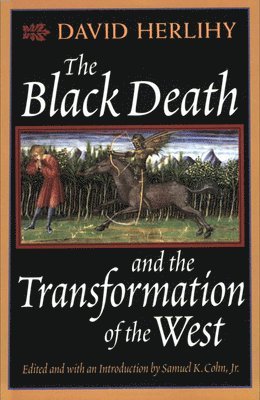
In this small book David Herlihy makes subtle and subversive inquiries that challenge historical thinking about the Black Death. Looking beyond the view of the plague as unmitigated catastrophe, Herlihy finds evidence for its role in the advent of new population controls, the establishment of universities, the spread of Christianity, the dissemination of vernacular cultures, and even the rise of nationalism. This book, which displays a distinguished scholar's masterly synthesis of diverse materials, reveals that the Black Death can be considered the cornerstone of the transformation of Europe.
382 kr
Skickas inom 5-8 vardagar
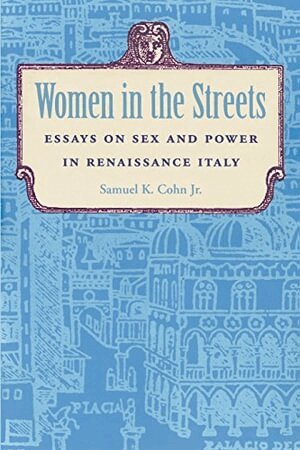
"These seven essays on women, sex, violence, and piety in Renaissance Italy," writes historian Samuel Cohn Jr., "bespeak the darker side of the Renaissance and, in particular, the decline in Italian women's status from the late fourteenth century until the Counter Reformation visitations of the 1570s. In this sense, these essays run directly counter to Jacob Burckhardt's claim for Renaissance Italy, 'that women stood on a footing of perfect equality with men." Challenging conventional views of the history of women in the Italian Renaissance, Cohn examines the lives primarily of non-elite women and looks at their experiences in various city-states and regions, thus offering a different perspective from the history of aristocratic and well-to-do women in the large city-states. Drawing on a wide range of archival documentation, Cohn also relies on large sets of quantitative material to reveal a multifaceted view of women's social worlds not seen from the letters of patrician ladies or the prescriptive judgments of Renaissance moralists.Within the larger historical contexts of the Black Death, the growth of territorial states, and the Counter Reformation, Women in the Streets charts changes in law, the structure and accessibility of the criminal courts, and the customs and mentalities that shaped women's lot, from infanticide to the control of sexual mores. Ultimately, Cohn argues, women are the protagonists of this book, whether the issue is their support of other women or the resolution of conflict in the streets of Florence, the control of their own dowries or the salvation of their own souls.
Cult of Remembrance and the Black Death
Six Renaissance Cities in Central Italy
Häftad, Engelska, 1997
356 kr
Tillfälligt slut
In 1363 the Black Death struck central Italy for the second time, causing a detectable shift in notions of the afterlife and patterns of charitable giving. Throughout Tuscany and Umbria, patricians and peasants alike abandoned their previous practice of dividing bequests into small sums, combining them instead into last gifts to enhance their "fame and glory" and that of their lineages. Illustrative of the new mentality, religious art patronage spread to new social classes, touching even peasants, who sought to be represented "in their very likeness" at the feet of their patron saints. From the supposed center of Renaissance culture-Florence-to the citadel of Franciscan devotion-Assisi-this change in sentiment spurred new levels of demand for monumental burials, testamentary commissions for art, and other efforts to exert control over the living from the grave. In his award-winning study, Death and Property in Siena, historian Samuel K. Cohn, Jr., used close analysis of last wills to chart transformations in mentalities over a six-hundred-year history.In The Cult of Remembrance and the Black Death, he applies the same methods to compare six Italian city-states-Arezzo, Florence, Perugia, Assisi, Pisa, and Siena-showing the rise of a new Renaissance cult of remembrance. But this new cult was not Burckhardt's Renaissance "individualism" tout court. Instead, the new piety grew in tandem with reverence for the ancestors and a strong sense of family identity that flowed down male blood lines.
1 485 kr
Skickas inom 7-10 vardagar
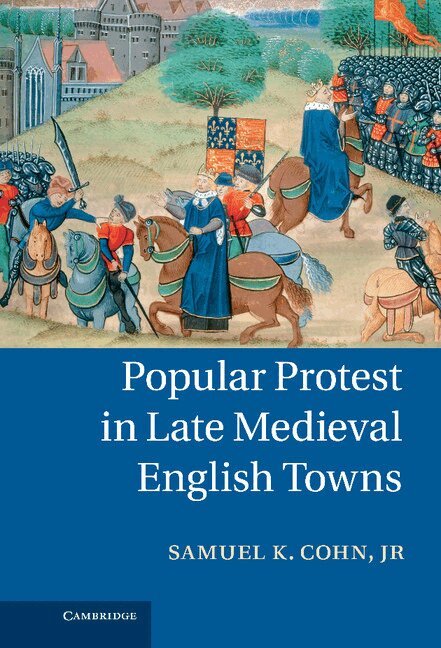
Contrary to received opinion, revolts and popular protests in medieval English towns were as frequent and as sophisticated, if not more so, as those in the countryside. This groundbreaking study refocuses attention on the varied nature of popular movements in towns from Carlisle to Dover and from the London tax revolt of Longbeard in 1196 to Jack Cade's Rebellion in 1450, exploring the leadership, social composition, organisation and motives of popular rebels. The book charts patterns of urban revolt in times of strong and weak kingship, contrasting them with the broad sweep of ecological and economic change that inspired revolts on the continent. Samuel Cohn demonstrates that the timing and character of popular revolt in England differed radically from revolts in Italy, France and Flanders. In addition, he analyses repression and waves of hate against Jews, foreigners and heretics, opening new vistas in the comparative history of late medieval Europe.
523 kr
Skickas inom 7-10 vardagar
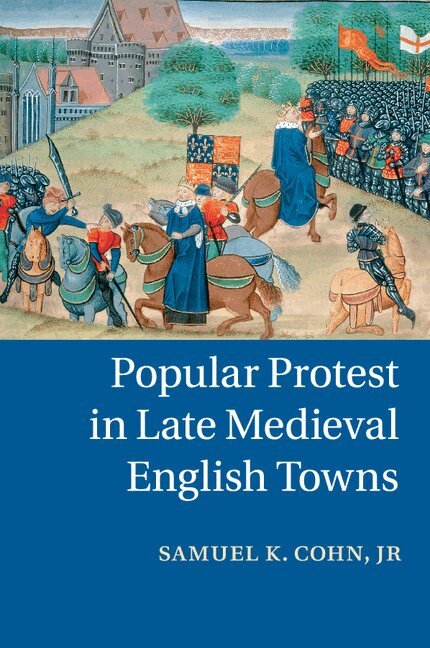
Contrary to received opinion, revolts and popular protests in medieval English towns were as frequent and as sophisticated, if not more so, as those in the countryside. This groundbreaking study refocuses attention on the varied nature of popular movements in towns from Carlisle to Dover and from the London tax revolt of Longbeard in 1196 to Jack Cade's Rebellion in 1450, exploring the leadership, social composition, organisation and motives of popular rebels. The book charts patterns of urban revolt in times of strong and weak kingship, contrasting them with the broad sweep of ecological and economic change that inspired revolts on the continent. Samuel Cohn demonstrates that the timing and character of popular revolt in England differed radically from revolts in Italy, France and Flanders. In addition, he analyses repression and waves of hate against Jews, foreigners and heretics, opening new vistas in the comparative history of late medieval Europe.
241 kr
Skickas inom 7-10 vardagar
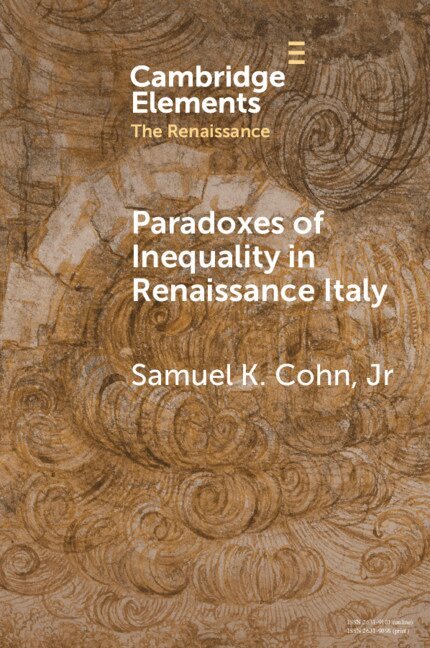
This Element explores the longest spell that can be computed from quantifiable fiscal records when the gap between rich and poor narrowed. It was the post-Black-Death century, c. 1375 to c. 1475. Paradoxically, with economic equality and prosperity on the rise, peasants, artisans and shopkeepers suffered losses in political representation and status within cultural spheres. Threatened by growing economic equality after the Black Death, elites preserved and then enhanced their political, social, and cultural distinction predominantly through noneconomic means and within political and cultural spheres. By investigating the interactions between three 'elements'-economics, politics, and culture-this Element presents new facets in the emergence of early Renaissance society in Italy.