Sandhya Shukla - Böcker
Visar alla böcker från författaren Sandhya Shukla. Handla med fri frakt och snabb leverans.
4 produkter
4 produkter
1 273 kr
Skickas inom 7-10 vardagar
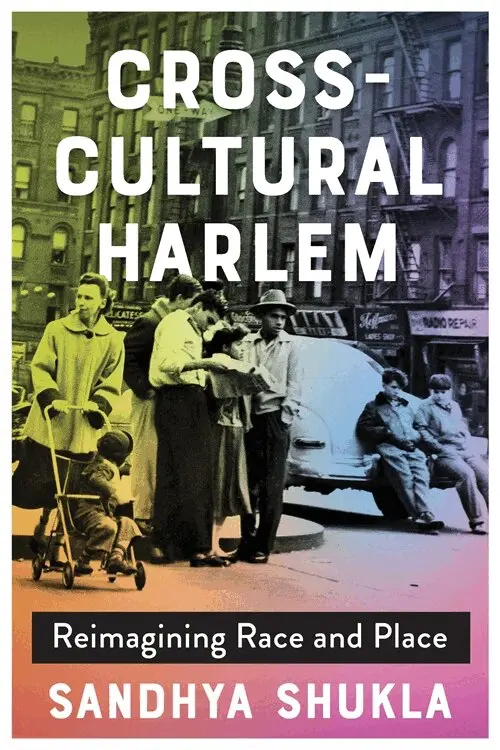
Over the course of the twentieth and twenty-first centuries, Harlem has been the capital of both Black America and a global African diaspora, an early home for Italian and Jewish immigrant communities, an important Puerto Rican neighborhood, and a representative site of gentrification. How do we understand the power of a place with so many claims and identifications? Drawing on fiction, sociology, political speech, autobiography, and performance, Sandhya Shukla develops a living theory of Harlem, in which peoples of different backgrounds collide, interact, and borrow from each other, even while Blackness remains crucial.Cross-Cultural Harlem reveals a dynamic of exchange that provokes a rethinking of spaces such as Black Harlem, El Barrio, and Italian Harlem. Cross-cultural encounters among African Americans, West Indians, Puerto Ricans, Jews, and Italians provide a story of multiplicity that challenges the framework of territorial enclaves. Shukla illuminates the historical processes that have shaped the diversity of Harlem, examining the many dimensions of its Blackness—Southern, African, Caribbean, Puerto Rican, and more—as well as how white ethnicities have been constructed. Considering literary and historical examples such as Langston Hughes’s short story “Spanish Blood,” the career of the Italian American left-wing Harlem congressman Vito Marcantonio, and the autobiography of Puerto Rican–Cuban writer Piri Thomas, Shukla argues that cosmopolitanism and racial belonging need not be seen as contradictory. Cross-Cultural Harlem offers a vision of sustained dialogue to respond to the challenges of urban transformations and to affirm the future of Harlem as actual place and global symbol.
324 kr
Skickas inom 7-10 vardagar
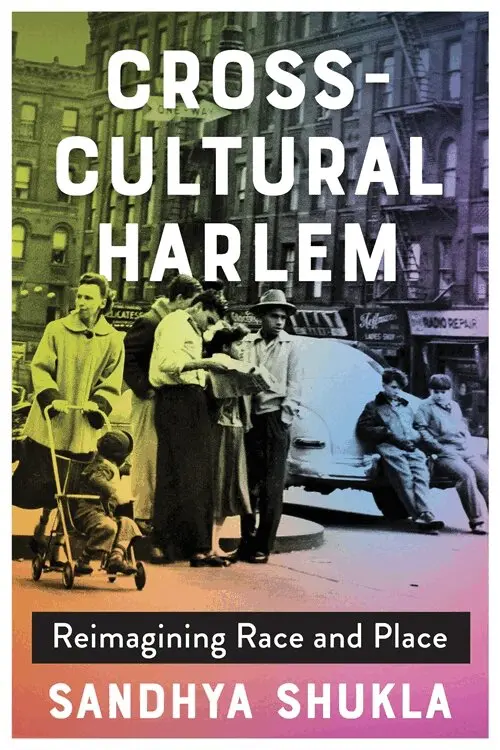
Over the course of the twentieth and twenty-first centuries, Harlem has been the capital of both Black America and a global African diaspora, an early home for Italian and Jewish immigrant communities, an important Puerto Rican neighborhood, and a representative site of gentrification. How do we understand the power of a place with so many claims and identifications? Drawing on fiction, sociology, political speech, autobiography, and performance, Sandhya Shukla develops a living theory of Harlem, in which peoples of different backgrounds collide, interact, and borrow from each other, even while Blackness remains crucial.Cross-Cultural Harlem reveals a dynamic of exchange that provokes a rethinking of spaces such as Black Harlem, El Barrio, and Italian Harlem. Cross-cultural encounters among African Americans, West Indians, Puerto Ricans, Jews, and Italians provide a story of multiplicity that challenges the framework of territorial enclaves. Shukla illuminates the historical processes that have shaped the diversity of Harlem, examining the many dimensions of its Blackness—Southern, African, Caribbean, Puerto Rican, and more—as well as how white ethnicities have been constructed. Considering literary and historical examples such as Langston Hughes’s short story “Spanish Blood,” the career of the Italian American left-wing Harlem congressman Vito Marcantonio, and the autobiography of Puerto Rican–Cuban writer Piri Thomas, Shukla argues that cosmopolitanism and racial belonging need not be seen as contradictory. Cross-Cultural Harlem offers a vision of sustained dialogue to respond to the challenges of urban transformations and to affirm the future of Harlem as actual place and global symbol.
400 kr
Skickas inom 7-10 vardagar
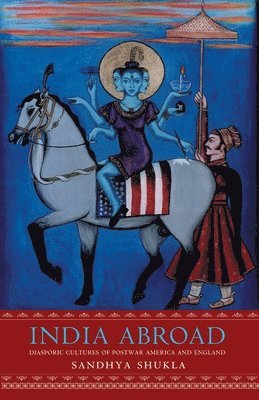
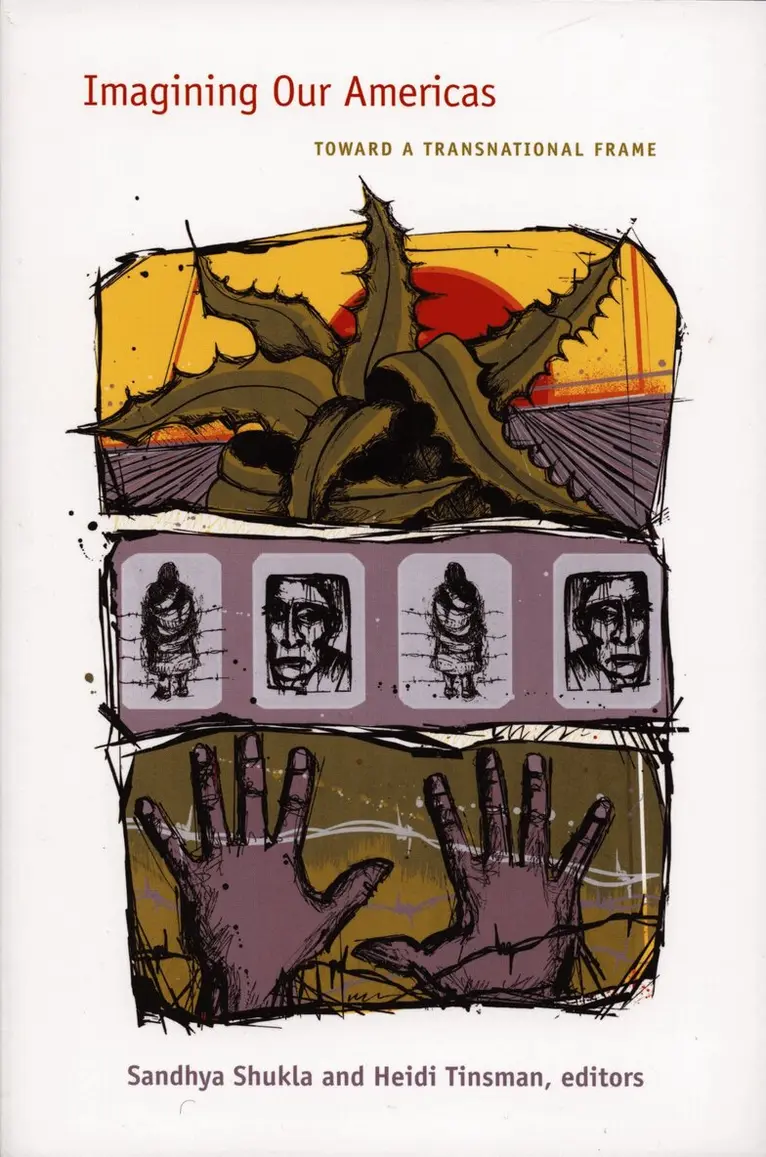
India Abroad analyzes the development of Indian diasporas in the United States and England from 1947, the year of Indian independence, to the present. Across different spheres of culture--festivals, entrepreneurial enclaves, fiction, autobiography, newspapers, music, and film--migrants have created India as a way to negotiate life in the multicultural United States and Britain. Sandhya Shukla considers how Indian diaspora has become a contact zone for various formations of identity and discourses of nation. She suggests that carefully reading the production of a diasporic sensibility, one that is not simply an outgrowth of the nation-state, helps us to conceive of multiple imaginaries, of America, England, and India, as articulated to one another. Both the connections and disconnections among peoples who see themselves as in some way Indian are brought into sharp focus by this comparativist approach. This book provides a unique combination of rich ethnographic work and textual readings to illuminate the theoretical concerns central to the growing fields of diaspora studies and transnational cultural studies.Shukla argues that the multi-sitedness of diaspora compels a rethinking of time and space in anthropology, as well as in other disciplines. Necessarily, the standpoint of global belonging and citizenship makes the boundaries of the "America" in American studies a good deal more porous. And in dialogue with South Asian studies and Asian American studies, this book situates postcolonial Indian subjectivity within migrants' transnational recastings of the meanings of race and ethnicity. Interweaving conceptual and material understandings of diaspora, India Abroad finds that in constructed Indias, we can see the contradictions of identity and nation that are central to the globalized condition in which all peoples, displaced and otherwise, live.
156 kr
Skickas inom 7-10 vardagar
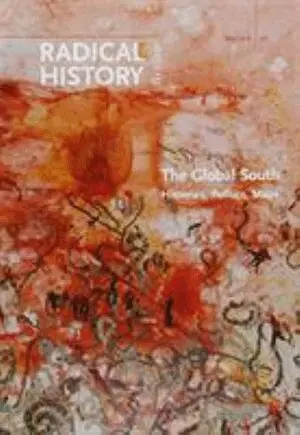
This special issue of Radical History Review offers a range of perspectives on the intellectual formation of the global South. Spanning time periods and objects of study across the global South, the essays develop new theoretical frameworks for thinking about geography, inequality, and subjectivity. Contributors investigate the construction of gender and racial formation in the global South and also explore what is politically and theoretically at stake in considering under-studied places like Guyana, or peripheries like Melanesia. One essay considers how encounters between spaces in the global South, specifically between Lebanon and West Africa, help to refocus attention from the preoccupations of northern nations with their former colonies to the frictions of decolonization. Several articles focus on the role of popular culture in regard to the geopolitical formation of the global South, with topics ranging from film to music to the career of Muhammad Ali.Contributors: Afro-Asian Networks Research Collective, Phineas Bbaala, Emily Callaci, Aharon de Grassi, Pamila Gupta, Mingwei Huang, Sean Jacobs, Maurice Jr. M. LaBelle, Christopher J. Lee, Roseann Liu, Marissa J. Moorman, Michelle Moyd, Ronald C. Po, Savannah Shange, Sandhya Shukla, Pahole Sookkasikon, Quito Swan, Sarah Van Beurden, Sarah E. Vaughn, Jelmer Vos, Keith B. Wagner