Sandra Laursen - Böcker
Visar alla böcker från författaren Sandra Laursen. Handla med fri frakt och snabb leverans.
2 produkter
2 produkter
516 kr
Skickas inom 5-8 vardagar
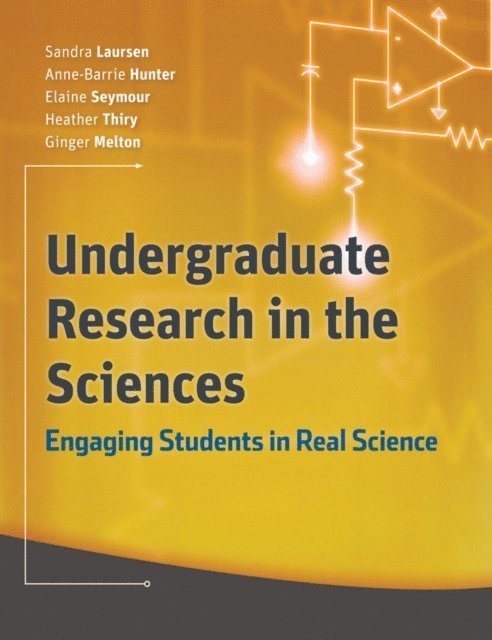
Undergraduate research enhances the learning experience of students in science, technology, engineering, and mathematics. Undergraduate Research in the Sciences offers a groundbreaking and practical research-based book on the topic. This comprehensive resource addresses how undergraduate research benefits undergraduate participants, including those populations that are underrepresented in the sciences; compares its benefits with other types of educational activities and experiences; and assesses its long-term value to students and faculty as both a scholarly and educational endeavor.In laying out the processes by which these benefits are achieved, this important book can assist faculty and program directors with practical guidance for design and evaluation of both new and existing undergraduate research programs.Praise for Undergraduate Research in the Sciences"This meticulous, definitive study of the effects of working with a faculty member on research as an undergraduate confirms the overall value of the experience by taking us deep into the minds and actions of participantsboth faculty and students. As a result we now have many more compelling reasons to get more students involved with research mentors and ways to optimize the benefits for all parties."George D. Kuh, Chancellor's Professor and director, Indiana University Center for Postsecondary Research"This timely book offers a unique, comprehensive analysis of undergraduate research in the sciences, based on the voices of college students and faculty mentors who have participated in these voyages of discovery. As our nation struggles to train more scientists, this book will be a valuable resource for designing undergraduate research experiences that can build our country's capacity for discovery and innovation."Arthur B. Ellis, Vice Chancellor for Research, University of California, San Diego"The text is written in a lucid and engaging style and will be a valuable guide to policymakers, academic administrators, and faculty members who want to find ways to engage undergraduates in the 'real work' of investigation."Judith A. Ramaley, president, Winona State University"This book is a 'must-read' for anyone who directs undergraduates in research. It presents an impressive and rigorous body of work that brings fresh insights into the field of undergraduate research. The next generation of scientists will benefit greatly from the findings and recommendations!"Jo Handelsman, Howard Hughes Medical Institute Professor, Yale University
393 kr
Skickas inom 7-10 vardagar
An evidence-based, action-oriented response to the persistent, everyday inequity of academic workplaces.Despite decades of effort by federal science funders to increase the numbers of women holding advanced degrees and faculty jobs in science and engineering, they are persistently underrepresented in academic STEM disciplines, especially in positions of seniority, leadership, and prestige. Women filled 47% of all US jobs in 2015, but held only 24% of STEM jobs. Barriers to women are built into academic workplaces: biased selection and promotion systems, inadequate structures to support those with family and personal responsibilities, and old-boy networks that can exclude even very successful women from advancing into top leadership roles. But this situation can—and must—change.In Building Gender Equity in the Academy, Sandra Laursen and Ann E. Austin offer a concrete, data-driven approach to creating institutions that foster gender equity. Focusing on STEM fields, where gender equity is most lacking, Laursen and Austin begin by outlining the need for a systemic approach to gender equity. Looking at the successful work being done by specific colleges and universities around the country, they analyze twelve strategies these institutions have used to create more inclusive working environments, including• implementing inclusive recruitment and hiring practices• addressing biased evaluation methods• establishing equitable tenure and promotion processes• strengthening accountability structures, particularly among senior leadership• improving unwelcoming department climates and cultures• supporting dual-career couples• offering flexible work arrangements that accommodate personal lives• promoting faculty professional development and advancementLaursen and Austin also discuss how to bring these strategies together to create systemic change initiatives appropriate for specific institutional contexts. Drawing on three illustrative case studies—at Case Western Reserve University, the University of Texas at El Paso, and the University of Wisconsin–Madison—they explain how real institutions can strategically combine several equity-driven approaches, thereby leveraging their individual strengths to make change efforts comprehensive. Grounded in scholarship but written for busy institutional leaders, Building Gender Equity in the Academy is a handbook of actionable strategies for faculty and administrators working to improve the inclusion and visibility of women and others who are marginalized in the sciences and in academe more broadly.