Sanford Budick - Böcker
Visar alla böcker från författaren Sanford Budick. Handla med fri frakt och snabb leverans.
8 produkter
8 produkter
1 123 kr
Skickas inom 10-15 vardagar
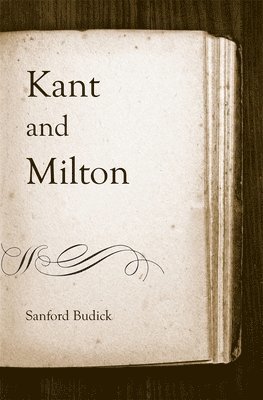
Kant and Milton brings to bear new evidence and long-neglected materials to show the importance of Kant’s encounter with Milton’s poetry to the formation of Kant’s moral and aesthetic thought. Sanford Budick reveals the relation between a poetic vision and a philosophy that theorized what that poetry was doing. As Plato and Aristotle contemplate Homer, so Kant contemplates Milton. In all these cases philosophy and poetry allow us to better understand each other. Milton gave voice to the transformation of human understanding effected by the Protestant Revolt, making poetry of the idea that human reason is created self-sufficient. Kant turned that religiously inflected poetry into the richest modern philosophy. Milton’s bold self-reliance is Kant’s as well.Using lectures of Kant that have been published only in the past decade, Budick develops an account of Kant based on his lifelong absorption in the poetry of Milton, especially Paradise Lost. By bringing to bear the immense power of his reflections on aesthetic and moral form, Kant produced one of the most penetrating interpretations of Milton’s achievement that has ever been offered and, at the same time, reached new peaks in the development of aesthetics and moral reason.
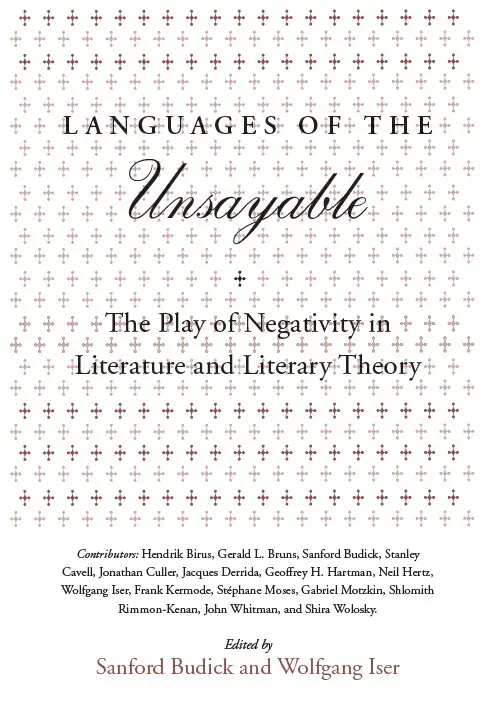
Languages of the Unsayable
The Play of Negativity in Literature and Literary Theory
Häftad, Engelska, 1987
447 kr
Skickas inom 7-10 vardagar
The articulation of the unsayable, of negativity—that which has been excluded by what is sayable—is one of the most important areas of contemporary humanistic study. This volume brings together fifteen outstanding literary theorists and philosophers to examine ways to make the unsayable tangible.
1 686 kr
Skickas inom 7-10 vardagar
A Stanford University Press classic.
416 kr
Skickas inom 7-10 vardagar
A Stanford University Press classic.
2 089 kr
Skickas inom 3-6 vardagar
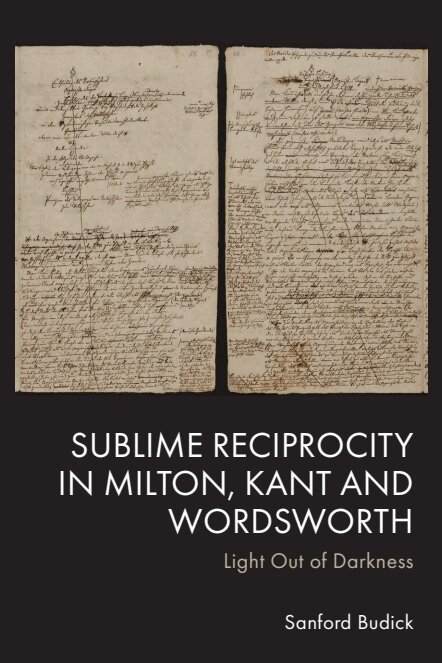
In Paradise Lost the reciprocal forces of 'first matter' are centrally located in 'Light Ethereal, first of things', 'that light', as Raphael explains, that is constituted from its inhering 'reciprocal' forces. This study argues that the workings of this Miltonic reciprocity were first understood in concrete specificity by Immanuel Kant, though buried on two intricately argued manuscript pages of his Opus postumum. Almost as remarkable as Kant's Miltonic recognitions, William Wordsworth directly inspired by earlier Kantian ideas of reciprocity and of the sublime made his own way to this Miltonic poetics of co-existent being, most spectacularly in The Prelude. In this fascinating study, Budick demonstrates how Milton, Kant and Wordsworth together offer a revolutionary understanding of the function of poetry in the quest of human consciousness for participation in being.
342 kr
Kommande
In Paradise Lost the reciprocal forces of ‘first matter’ are centrally located in ‘Light Ethereal, first of things’, ‘that light’, as Raphael explains, that is constituted from its inhering ‘reciprocal’ forces. This study argues that the workings of this Miltonic reciprocity were first understood in concrete specificity by Immanuel Kant, though buried on two intricately argued manuscript pages of his Opus postumum. Almost as remarkable as Kant’s Miltonic recognitions, William Wordsworth – directly inspired by earlier Kantian ideas of reciprocity and of the sublime – made his own way to this Miltonic poetics of co-existent being, most spectacularly in The Prelude. In this fascinating study, Budick demonstrates how Milton, Kant and Wordsworth together offer a revolutionary understanding of the function of poetry in the quest of human consciousness for participation in being.
2 009 kr
Skickas inom 3-6 vardagar
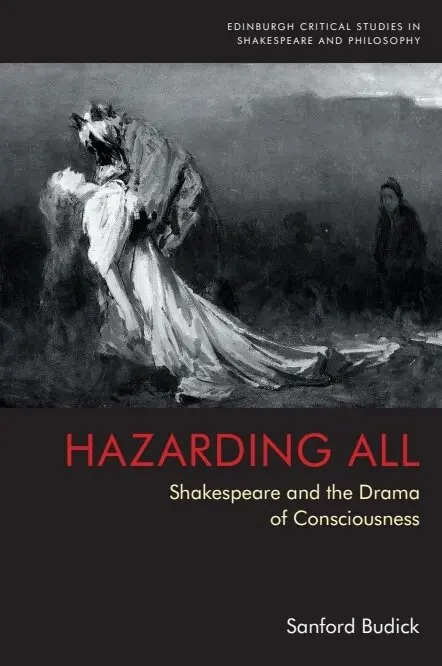
Philosophers speak of newly accessed ways of knowing reality as epistemological shifts. This book demonstrates how Shakespeare effected a massive shift of just this kind in his bold management of theatricalisation itself. These pages levy on terms of Kant and Husserl that they elaborated in proposals for such shifts. It will be seen that Shakespeare exceeds the proposals of the philosophers. He anticipates and already brings to a working consummation a systematic and immediate access to the ways of knowing reality that they contemplate as hoped-for desiderata. In, and through, the drama of consciousness played out in the pairs of plays examined here, the playwright and the spectator together – intersubjectively – attain to an ‘onlooker’ consciousness that exits the fictionality, the play-acting, of theatricalisation; and they are enabled to recover the actuality of objects in their worlds.
571 kr
Skickas inom 3-6 vardagar
Demonstrates how theatre and theatricalisation serve as the indispensable means for creating a kind of consciousness that exits as an unmediated encounter with actualityShows the pervasiveness of Shakespeare's chiasmus of theatricalisation: the back-and-forth, and forth-and-back, movements between role-playing consciousness and a would-be non-role-playing consciousness that is never free from role-playingDemonstrates and explains how Shakespeare opens a shared space of negativity within partnered chiastic relation of two playsExplores that the product of this chiastic relation for the playwright and the spectator is an object of reflection that they encounter outside theatreExplains that, as a result, the playwright and the spectator move toward an intersubjectivity and a reciprocal intentionality toward sustained beingPhilosophers speak of newly accessed ways of knowing reality as epistemological shifts. This book demonstrates how Shakespeare effected a massive shift of just this kind in his bold management of theatricalisation itself. These pages levy on terms of Kant and Husserl that they elaborated in proposals for such shifts. It will be seen that Shakespeare exceeds the proposals of the philosophers. He anticipates and already brings to a working consummation a systematic and immediate access to the ways of knowing reality that they contemplate as hoped-for desiderata. In, and through, the drama of consciousness played out in the pairs of plays examined here, the playwright and the spectator together intersubjectively attain to an 'onlooker' consciousness that exits the fictionality, the play-acting, of theatricalisation; and they are enabled to recover the actuality of objects in their worlds.