Sangamesh G. Kum bar – författare
Visar alla böcker från författaren Sangamesh G. Kum bar. Handla med fri frakt och snabb leverans.
6 produkter
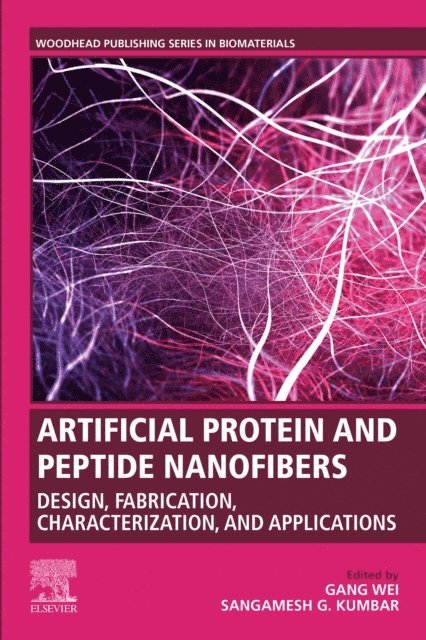
Artificial Protein and Peptide Nanofibers
Design, Fabrication, Characterization, and Applications
Häftad, 2020
2452 kr
Lägg i varukorg
Artificial Protein and Peptide Nanofibers: Design, Fabrication, Characterization, and Applications provides comprehensive knowledge of the preparation, modification and applications of protein and peptide nanofibers. The book reviews the synthesis and strategies necessary to create protein and …
Artificial Protein and Peptide Nanofibers
Design, Fabrication, Characterization, and Applications
Av Sangamesh G. Kum bar, Gang Wei
E-bok, 2020
3392 kr
Lägg i varukorg
Artificial Protein and Peptide Nanofibers: Design, Fabrication, Characterization, and Applications provides comprehensive knowledge of the preparation, modification and applications of protein and peptide nanofibers. The book reviews the synthesis and strategies necessary to create protein and …
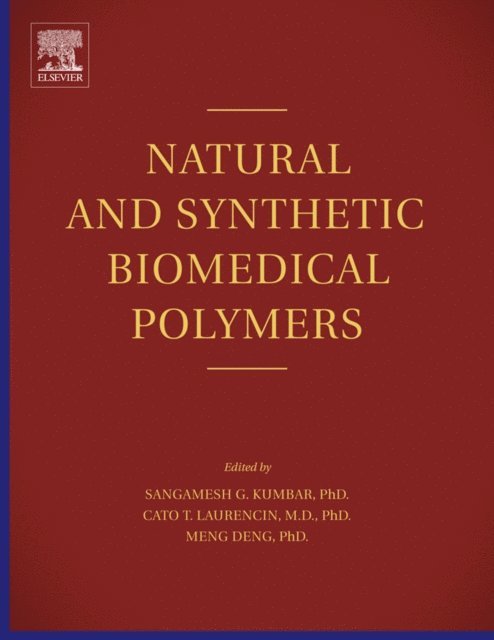
Natural and Synthetic Biomedical Polymers
Av Sangamesh G. Kum bar, Cato Laurencin m. fl.
Inbunden, 2014
1162 kr
Lägg i varukorg
Polymers are important and attractive biomaterials for researchers and clinical applications due to the ease of tailoring their chemical, physical and biological properties for target devices. Due to this versatility they are rapidly replacing other classes of biomaterials such as ceramics or …
Natural and Synthetic Biomedical Polymers
Av Meng Deng, Cato Laurencin m. fl.
E-bok, 2014
1271 kr
Lägg i varukorg
Polymers are important and attractive biomaterials for researchers and clinical applications due to the ease of tailoring their chemical, physical and biological properties for target devices. Due to this versatility they are rapidly replacing other classes of biomaterials such as ceramics or …
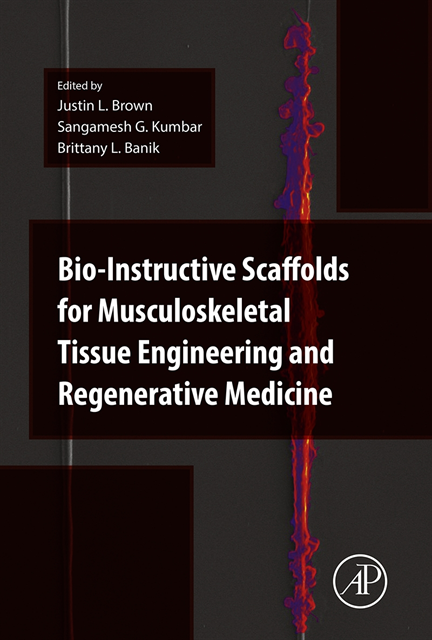
Bio-Instructive Scaffolds for Musculoskeletal Tissue Engineering and Regenerative Medicine
Av Justin Brown, Sangamesh G. Kum bar m. fl.
Inbunden, 2016
1831 kr
Lägg i varukorg
Bio-Instructive Scaffolds for Musculoskeletal Tissue Engineering and Regenerative Medicine explores musculoskeletal tissue growth and development across populations, ranging from elite athletes to the elderly. The regeneration and reparation of musculoskeletal tissues present the unique challenges …
Bio-Instructive Scaffolds for Musculoskeletal Tissue Engineering and Regenerative Medicine
Av Brittany Banik, Sangamesh G. Kum bar m. fl.
E-bok, 2016
2360 kr
Lägg i varukorg
Bio-Instructive Scaffolds for Musculoskeletal Tissue Engineering and Regenerative Medicine explores musculoskeletal tissue growth and development across populations, ranging from elite athletes to the elderly. The regeneration and reparation of musculoskeletal tissues present the unique challenges …