
Sankaran Krishna - Böcker
Visar alla böcker från författaren Sankaran Krishna. Handla med fri frakt och snabb leverans.
3 produkter
3 produkter
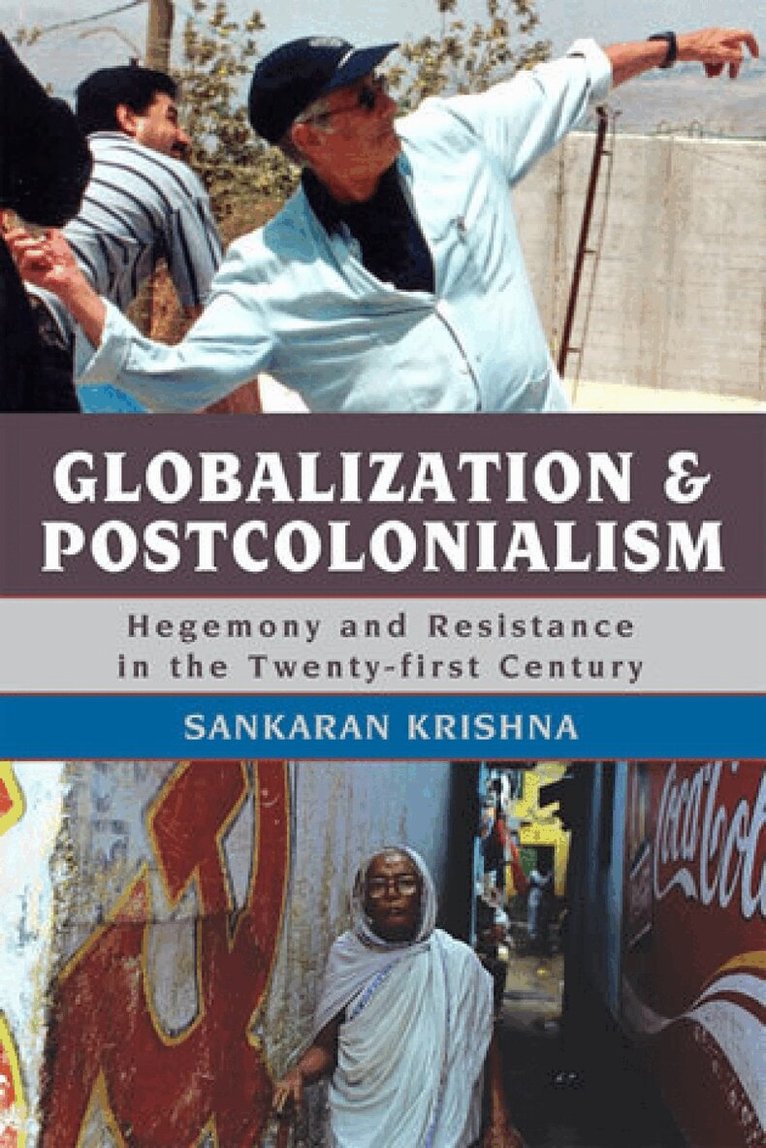
Globalization and Postcolonialism
Hegemony and Resistance in the Twenty-first Century
Inbunden, Engelska, 2009
197 kr
Skickas
Globalization has become a widely used buzzword, yet popular discussions often miss its deeper realities. This book offers the first clear explanation of the impact of colonialist legacies in a globalized world in an era defined by the "War on Terror." Sankaran Krishna explores the history of the relationship between Western dominance and the forms of resistance that have emerged to challenge it. Moving beyond the simple formulation of "They hate us because we are rich, we are free, and they are crazy," he asks, "What have we done that might generate such animosity? What face has the United States presented to the developing world over time? Krishna argues that we live on an interrelated globe, that history matters a great deal in constructing contemporary realities, and that others create stories or narratives about the world based on their experiences just as we do based on ours. He contends that the interactions between the West and the non-West have not been politically innocent, economically egalitarian, or culturally benign in their consequences. Presenting a lucid exploration of the intertwined histories of both globalization and postcolonialism, this book uses compelling real-world examples to make sense of this crucial relationship.
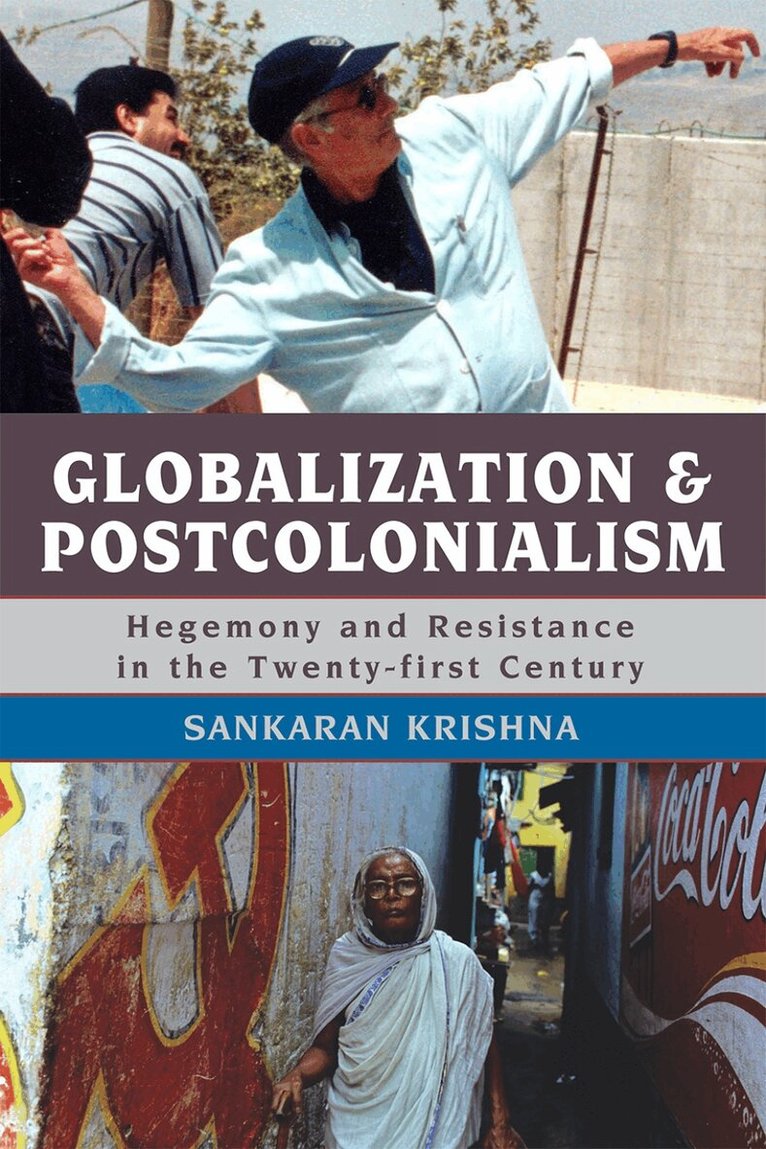
Globalization and Postcolonialism
Hegemony and Resistance in the Twenty-first Century
Häftad, Engelska, 2008
659 kr
Skickas inom 3-6 vardagar
Globalization has become a widely used buzzword, yet popular discussions often miss its deeper realities. This book offers the first clear explanation of the impact of colonialist legacies in a globalized world in an era defined by the "War on Terror." Sankaran Krishna explores the history of the relationship between Western dominance and the forms of resistance that have emerged to challenge it. Moving beyond the simple formulation of "They hate us because we are rich, we are free, and they are crazy," he asks, "What have we done that might generate such animosity? What face has the United States presented to the developing world over time? Krishna argues that we live on an interrelated globe, that history matters a great deal in constructing contemporary realities, and that others create stories or narratives about the world based on their experiences just as we do based on ours. He contends that the interactions between the West and the non-West have not been politically innocent, economically egalitarian, or culturally benign in their consequences. Presenting a lucid exploration of the intertwined histories of both globalization and postcolonialism, this book uses compelling real-world examples to make sense of this crucial relationship.
283 kr
Skickas inom 7-10 vardagar
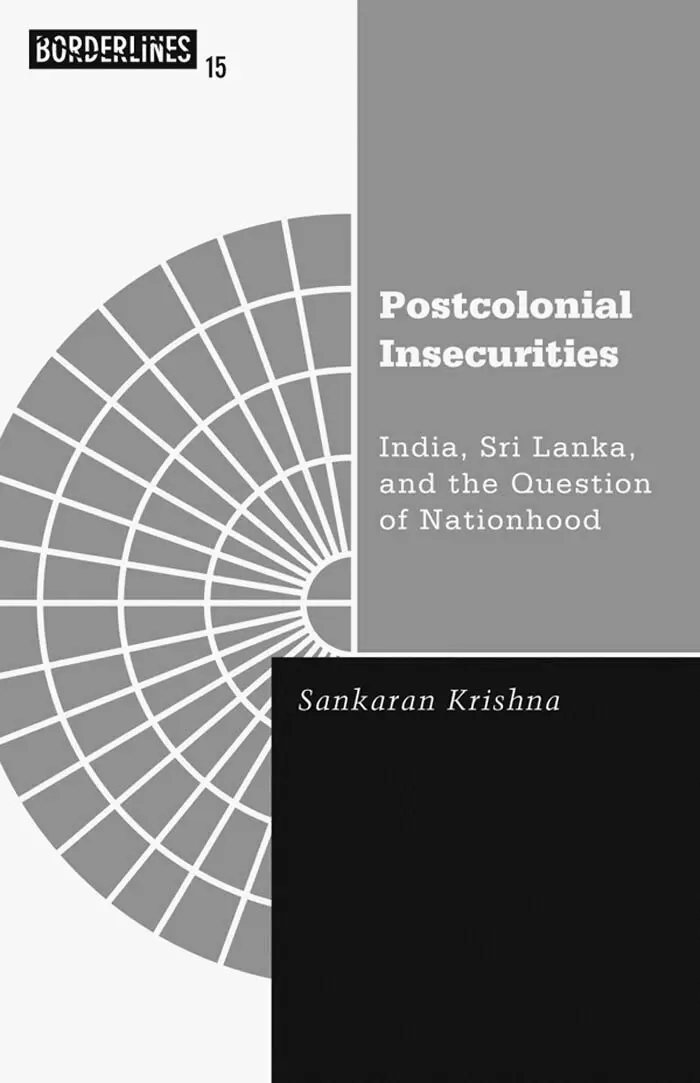
An exploration of the connections between ethnicity and nation-building.This ambitious work explores the vexed connections among nation-building, ethnic identity, and regional conflict by focusing on a specific event: Indian political and military intervention in the ethnic conflict between the Sinhalese and Tamils in Sri Lanka.Drawing on interviews with leading players in the Indian–Sri Lankan debacle, Sankaran Krishna offers a persuasive analysis of this episode. The intervention serves as a springboard to a broader inquiry into the interworkings of nation building, ethnicity, and “foreign” policy. Krishna argues that the modernist effort to construct nation-states on the basis of singular notions of sovereignty and identity has reached a violent dead end in the postcolonial world of South Asia. Showing how the nationalist agenda that seeks to align territory with identity has unleashed a spiral of regional, statist, and insurgent violence, he makes an eloquent case for reimagining South Asia along postnational lines-as a “confederal” space.Postcolonial Insecurities counters the perception of “ethnicity” as an inferior and subversive principle compared with the progressive ideal of the “nation.” Krishna, in fact, shows ethnicity to be indispensable to the production and reproduction of the nation itself.