
Sara HeinA¤maa – författare
870 kr
Läs direkt efter köp
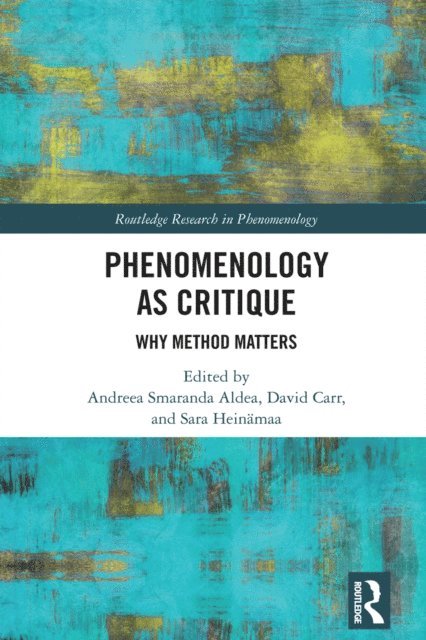
Drawing on classical Husserlian resources as well as existentialist and hermeneutical approaches, this book argues that critique is largely a question of method. It demonstrates that phenomenological discussions of acute social and political problems draw from a rich tradition of radically critical investigations in epistemology, social ontology, political theory, and ethics.
The contributions show that contemporary phenomenological investigations of various forms of oppression and domination develop new critical-analytical tools that complement those of competing theoretical approaches, such as analytics of power, critical theory, and liberal philosophy of justice. More specifically, the chapters pay close attention to the following methodological themes: the conditions for the possibility of phenomenology as critique; critique as radical reflection and free thinking; eidetic analysis and reflection of transcendental facticity and contingency of the self, of others, of the world; phenomenology and immanent critique; the self-reflective dimensions of phenomenology; and phenomenological analysis and self-transfermation and world transformation. All in all, the book explicates the multiple critical resources phenomenology has to offer, precisely in virtue of its distinctive methods and methodological commitments, and thus shows its power in tackling timely issues of social injustice.
Phenomenology as Critique: Why Method Matters will appeal to researchers and advanced students working in phenomenology, Continental philosophy, and critical theory.
870 kr
Läs direkt efter köp
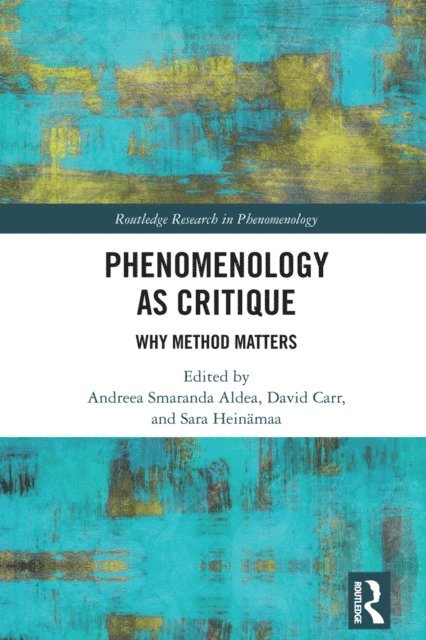
Drawing on classical Husserlian resources as well as existentialist and hermeneutical approaches, this book argues that critique is largely a question of method. It demonstrates that phenomenological discussions of acute social and political problems draw from a rich tradition of radically critical investigations in epistemology, social ontology, political theory, and ethics.
The contributions show that contemporary phenomenological investigations of various forms of oppression and domination develop new critical-analytical tools that complement those of competing theoretical approaches, such as analytics of power, critical theory, and liberal philosophy of justice. More specifically, the chapters pay close attention to the following methodological themes: the conditions for the possibility of phenomenology as critique; critique as radical reflection and free thinking; eidetic analysis and reflection of transcendental facticity and contingency of the self, of others, of the world; phenomenology and immanent critique; the self-reflective dimensions of phenomenology; and phenomenological analysis and self-transfermation and world transformation. All in all, the book explicates the multiple critical resources phenomenology has to offer, precisely in virtue of its distinctive methods and methodological commitments, and thus shows its power in tackling timely issues of social injustice.
Phenomenology as Critique: Why Method Matters will appeal to researchers and advanced students working in phenomenology, Continental philosophy, and critical theory.
757 kr
Läs direkt efter köp
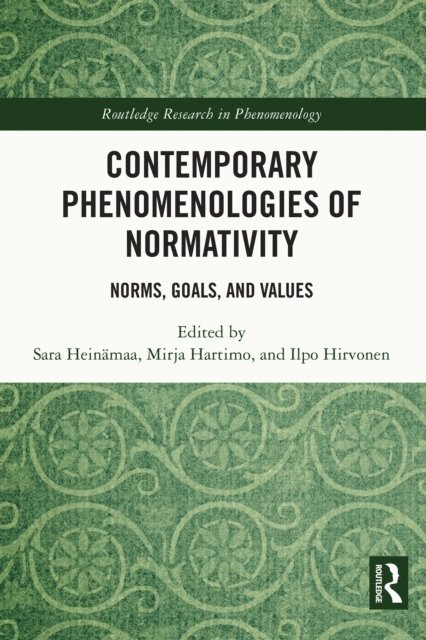
This volume investigates forms of normativity through the phenomenological methods of description, analysis, and interpretation. It takes a broad approach to norms, covering not only rules and commands but also goals, values, and passive drives and tendencies.
Part I "Basic Perspectives" begins with an overview of the phenomena of normativity and then clarifies the constitution of norms by Husserlian and Heideggerian concepts. It offers phenomenological alternatives to the neo-Kantian and neo-Hegelian approaches that dominate contemporary debates on the "sources of normativity." Part II "From Perception to Imagination" turns to the normativity of three basic types of experiences. This part first sheds light on the normativity of perception and then illuminates the kind of normativity characteristic of imagination and drive intentionality. Part III "Social Dimensions" analyzes the norms that regulate the formation of practical communities. It takes a broad view of practical norms, discussing social and moral norms as well as the epistemic norms of scientific practices. By clarifying the divergences and interrelations between various types and levels of norms, the volume demonstrates that normativity is not one phenomenon but a complex set of various phenomena with multiple sources.
Contemporary Phenomenologies of Normativity: Norms, Goals, and Values will be of interest to researchers and advanced students working on issues of normativity in phenomenology, epistemology, ethics, and social philosophy.
757 kr
Läs direkt efter köp
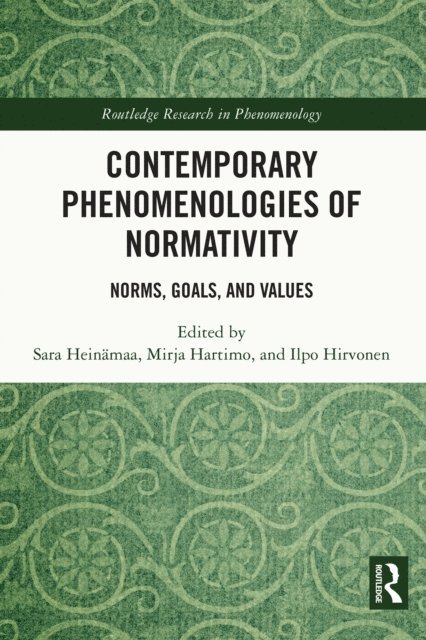
This volume investigates forms of normativity through the phenomenological methods of description, analysis, and interpretation. It takes a broad approach to norms, covering not only rules and commands but also goals, values, and passive drives and tendencies.
Part I "Basic Perspectives" begins with an overview of the phenomena of normativity and then clarifies the constitution of norms by Husserlian and Heideggerian concepts. It offers phenomenological alternatives to the neo-Kantian and neo-Hegelian approaches that dominate contemporary debates on the "sources of normativity." Part II "From Perception to Imagination" turns to the normativity of three basic types of experiences. This part first sheds light on the normativity of perception and then illuminates the kind of normativity characteristic of imagination and drive intentionality. Part III "Social Dimensions" analyzes the norms that regulate the formation of practical communities. It takes a broad view of practical norms, discussing social and moral norms as well as the epistemic norms of scientific practices. By clarifying the divergences and interrelations between various types and levels of norms, the volume demonstrates that normativity is not one phenomenon but a complex set of various phenomena with multiple sources.
Contemporary Phenomenologies of Normativity: Norms, Goals, and Values will be of interest to researchers and advanced students working on issues of normativity in phenomenology, epistemology, ethics, and social philosophy.
807 kr
Läs direkt efter köp
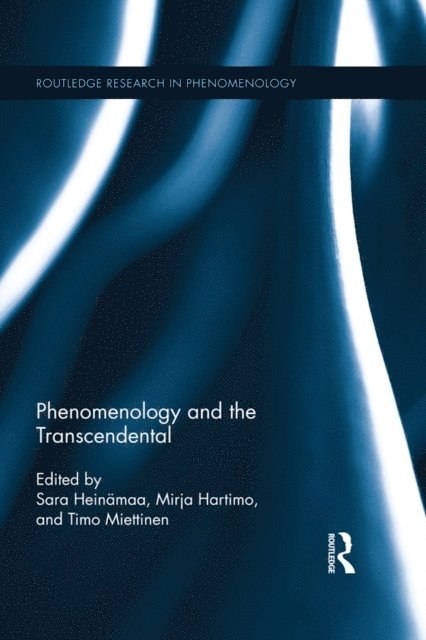
The aim of this volume is to offer an updated account of the transcendental character of phenomenology. The main question concerns the sense and relevance of transcendental philosophy today: What can such philosophy contribute to contemporary inquiries and debates after the many reasoned attacks against its idealistic, aprioristic, absolutist and universalistic tendencies—voiced most vigorously by late 20th century postmodern thinkers—as well as attacks against its apparently circular arguments and suspicious metaphysics launched by many analytic philosophers? Contributors also aim to clarify the relations of transcendental phenomenology to other post-Kantian philosophies, most importantly to pragmatism and Wittgenstein’s philosophical investigations. Finally, the volume offers a set of reflections on the meaning of post-transcendental phenomenology.
807 kr
Läs direkt efter köp
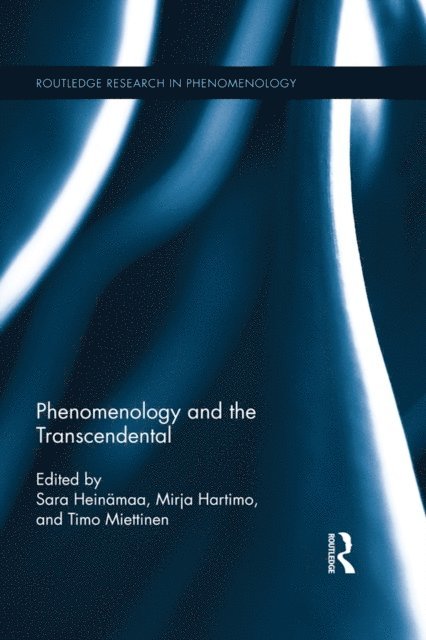
The aim of this volume is to offer an updated account of the transcendental character of phenomenology. The main question concerns the sense and relevance of transcendental philosophy today: What can such philosophy contribute to contemporary inquiries and debates after the many reasoned attacks against its idealistic, aprioristic, absolutist and universalistic tendencies—voiced most vigorously by late 20th century postmodern thinkers—as well as attacks against its apparently circular arguments and suspicious metaphysics launched by many analytic philosophers? Contributors also aim to clarify the relations of transcendental phenomenology to other post-Kantian philosophies, most importantly to pragmatism and Wittgenstein’s philosophical investigations. Finally, the volume offers a set of reflections on the meaning of post-transcendental phenomenology.