Sara Sturm-Maddox - Böcker
Visar alla böcker från författaren Sara Sturm-Maddox. Handla med fri frakt och snabb leverans.
5 produkter
5 produkter
1 215 kr
Tillfälligt slut
Explores the significance of Alexander the Great in French medieval literature and culture.Alexander the Great was one of the legendary Nine Worthies in the medieval canon of ancient and modern heroes, and medieval writers exploited his legend in a wide variety of literary and didactic texts. Addressing the classical legacy to the Middle Ages as expressed in four centuries of vernacular narratives, this volume offers the first systematic collective study of Alexander the Great's thematic prominence in medieval culture. Contributors from Britain, France, the Netherlands, and the United States combine sensitive textual analyses with perspectives from such diverse fields as art history, codicology, anthropology, sociology, the history of mentalities, and postcolonial theory. Overall, the collection offers a provocative rethinking of the monumental medieval French tradition of Alexander the Great, as well as valuable insight into the emergence and transformations of French literature between the early twelfth century and the end of the Middle Ages.
463 kr
Tillfälligt slut
Explores the significance of Alexander the Great in French medieval literature and culture.Alexander the Great was one of the legendary Nine Worthies in the medieval canon of ancient and modern heroes, and medieval writers exploited his legend in a wide variety of literary and didactic texts. Addressing the classical legacy to the Middle Ages as expressed in four centuries of vernacular narratives, this volume offers the first systematic collective study of Alexander the Great's thematic prominence in medieval culture. Contributors from Britain, France, the Netherlands, and the United States combine sensitive textual analyses with perspectives from such diverse fields as art history, codicology, anthropology, sociology, the history of mentalities, and postcolonial theory. Overall, the collection offers a provocative rethinking of the monumental medieval French tradition of Alexander the Great, as well as valuable insight into the emergence and transformations of French literature between the early twelfth century and the end of the Middle Ages.
894 kr
Skickas inom 3-6 vardagar
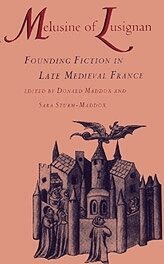
This volume of original essays is the first collection devoted to the monumental Roman de Melusine (1393) by Jean d'Arras. A masterwork of late fourteenth-century French prose fiction, Melusine tells of the powerful medieval dynasty of Lusignan from its founding as a city by the legendary Melusine, an enigmatic fairy-figure subject to periodic monstrous transformations, through its expansion in Europe and the Near East, to its ultimate evanescence.Melusine offers a singular blend of history and fiction as it upholds the proprietary claims to Lusignan of the work's illustrious patron, Jean, Duc de Berry. The great deeds of Melusine, her forebears, and her progeny unfold in a narrative that blends elements of myth, folklore, and popular traditions with epic, Crusade narrative, romance, and theological doctrine.Advancing a wealth of new material and fresh insight, the essays in this volume address the complex interplay of the conventions of medieval fictional, historical, and genealogical writing from a wide variety of critical perspectives. Together, they offer a new, more balanced and comprehensive understanding of one of the most significant literary works of late medieval European culture.
652 kr
Skickas inom 3-6 vardagar
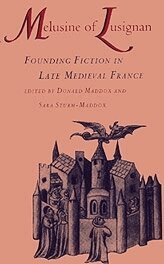
This volume of original essays is the first collection devoted to the monumental Roman de Melusine (1393) by Jean d'Arras. A masterwork of late fourteenth-century French prose fiction, Melusine tells of the powerful medieval dynasty of Lusignan from its founding as a city by the legendary Melusine, an enigmatic fairy-figure subject to periodic monstrous transformations, through its expansion in Europe and the Near East, to its ultimate evanescence.Melusine offers a singular blend of history and fiction as it upholds the proprietary claims to Lusignan of the work's illustrious patron, Jean, Duc de Berry. The great deeds of Melusine, her forebears, and her progeny unfold in a narrative that blends elements of myth, folklore, and popular traditions with epic, Crusade narrative, romance, and theological doctrine.Advancing a wealth of new material and fresh insight, the essays in this volume address the complex interplay of the conventions of medieval fictional, historical, and genealogical writing from a wide variety of critical perspectives. Together, they offer a new, more balanced and comprehensive understanding of one of the most significant literary works of late medieval European culture.
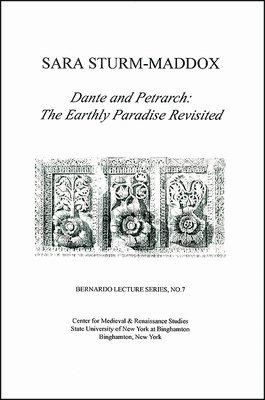
Dante and Petrarch: The Earthly Paradise Revisited
Bernardo Lecture Series, No. 7
Häftad, Engelska, 1999
255 kr
Tillfälligt slut
Explores the nature and significance of Petrarch's indebtedness to Dante in the Rime sparse.Dante and Petrarch: The Earthly Paradise Revisited is the seventh in a series of publications occasioned by the annual Bernardo Lecture at the Center for Medieval and Early Renaissance Studies (CEMERS) at Binghamton University. This series offers public lectures which have been given by distinguished medieval and Renaissance scholars on topics and figures representative of these two important historical, religious, and intellectual periods.The nature and significance of Petrarch's indebtedness to Dante in the Rime sparse, Sara Sturm-Maddox argues, is revealed not only in the many individual poems or isolated echoes disclosed by recent studies. Here it is explored in a strategically placed sequence of poems, the well-known canzoni 125-127. In each of them we find the reinscription of elements drawn from the scene of Dante's encounter with Beatrice in the Earthly Paradise. Read together, these poems constitute a rewriting of the episode in the Purgatorio that affords insight into the nature of Petrarch's rivalry with his unacknowledged master. The contrasts that emerge between the scenes as written by Dante and by Petrarch, moreover, have far-reaching implications from the reading of the poet's story in the Rime sparse as a whole.